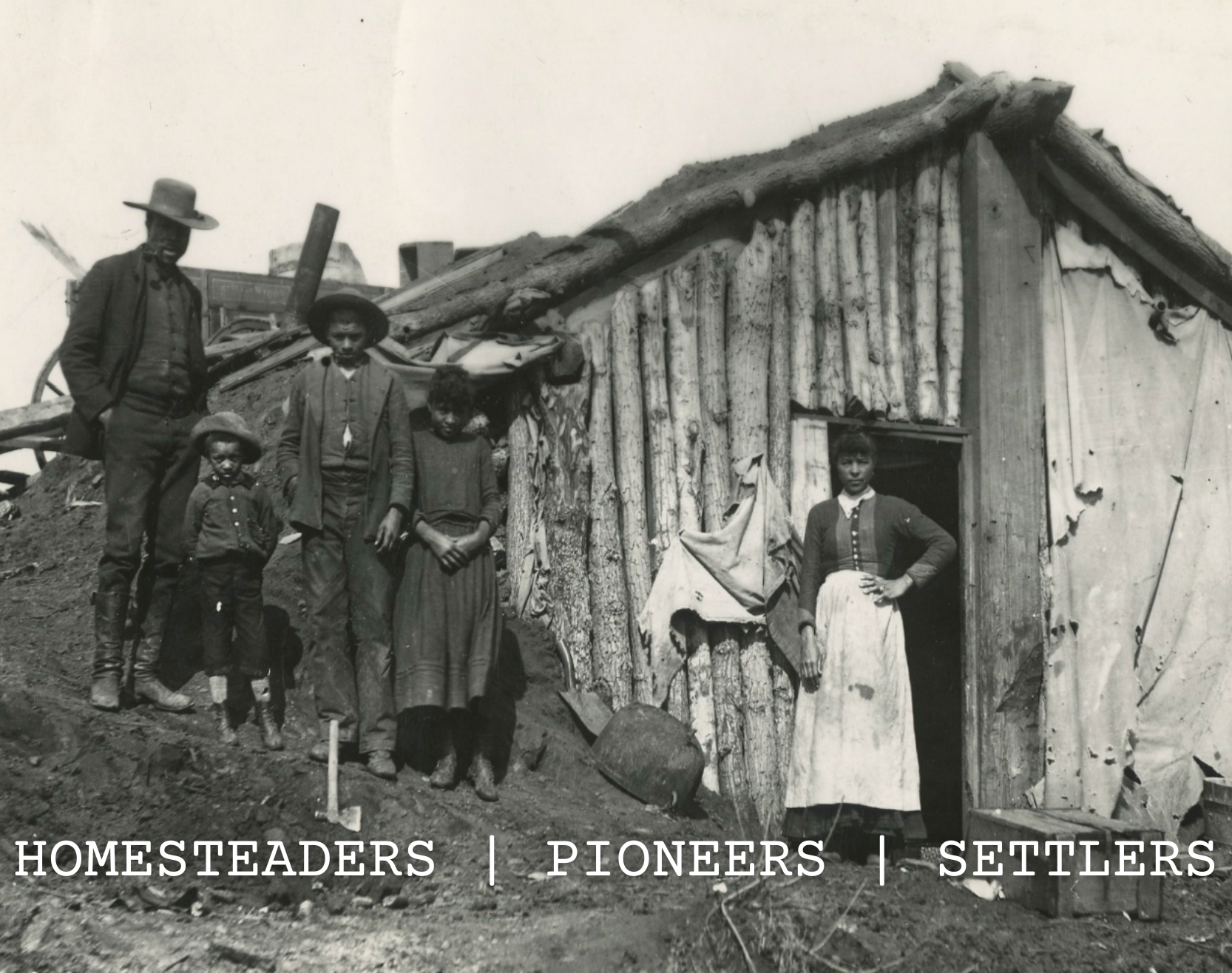
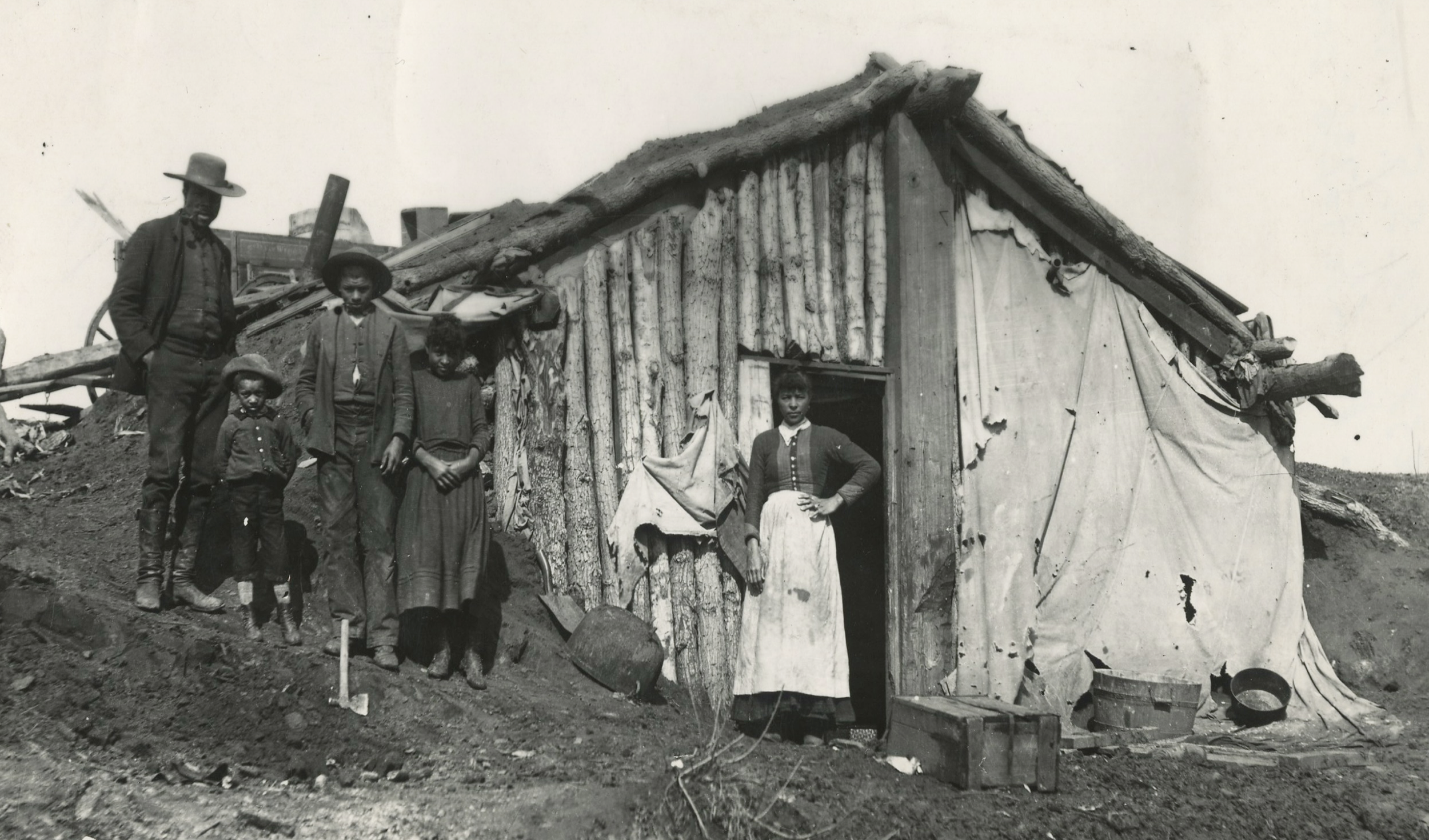
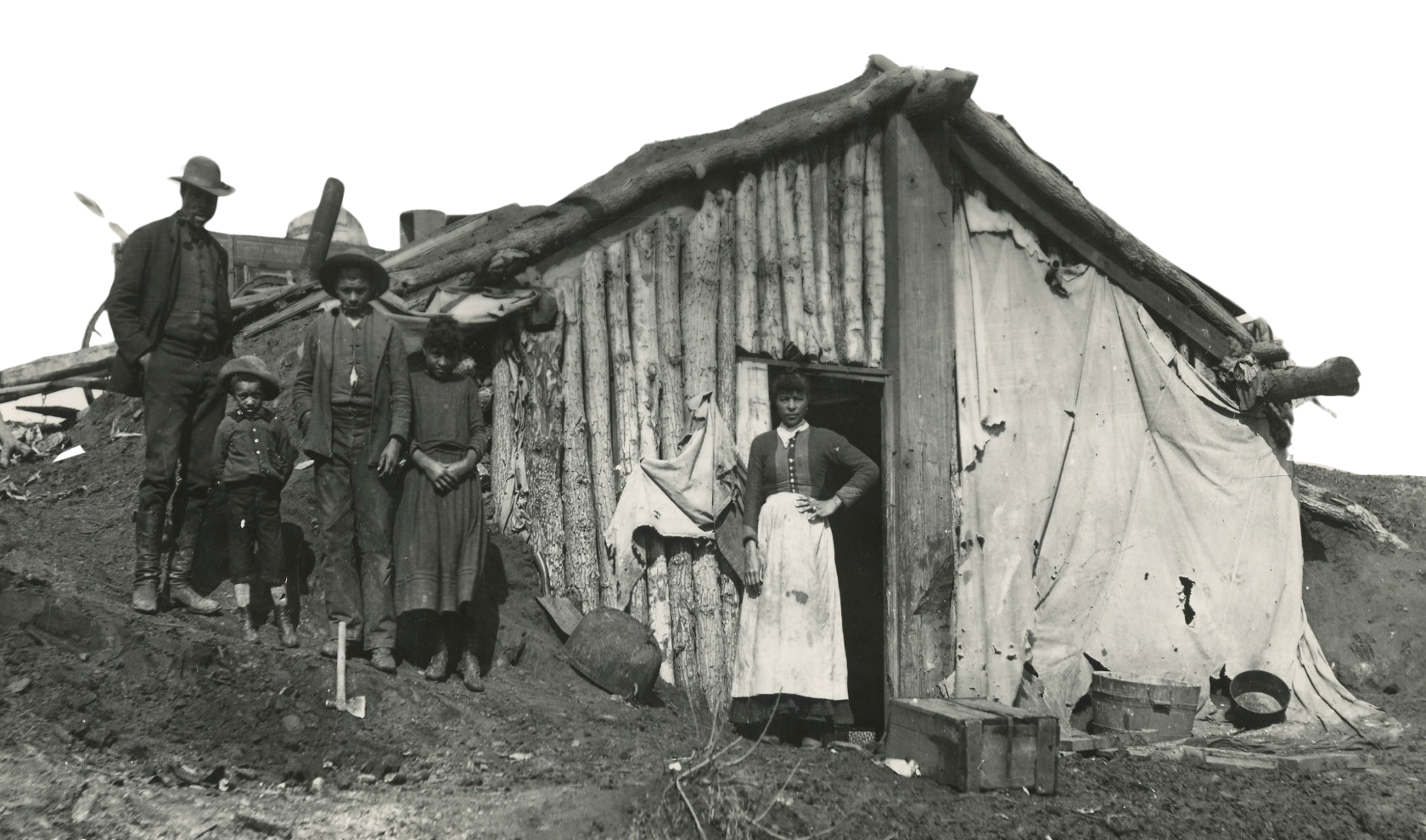
★ c. 1889, Black family stands in front of their dugout home, Oklahoma Territory. Oklahoma Historical Society Photograph Collection, OHS (4574.17), Oklahoma Historical Society. *In Oklahoma, wood supplies were limited, and many pioneering families relied on dugout homes built into the side of a hill for shelter.
★ HOMESTEADERS ★ PIONEERS ★ SETTLERS ★
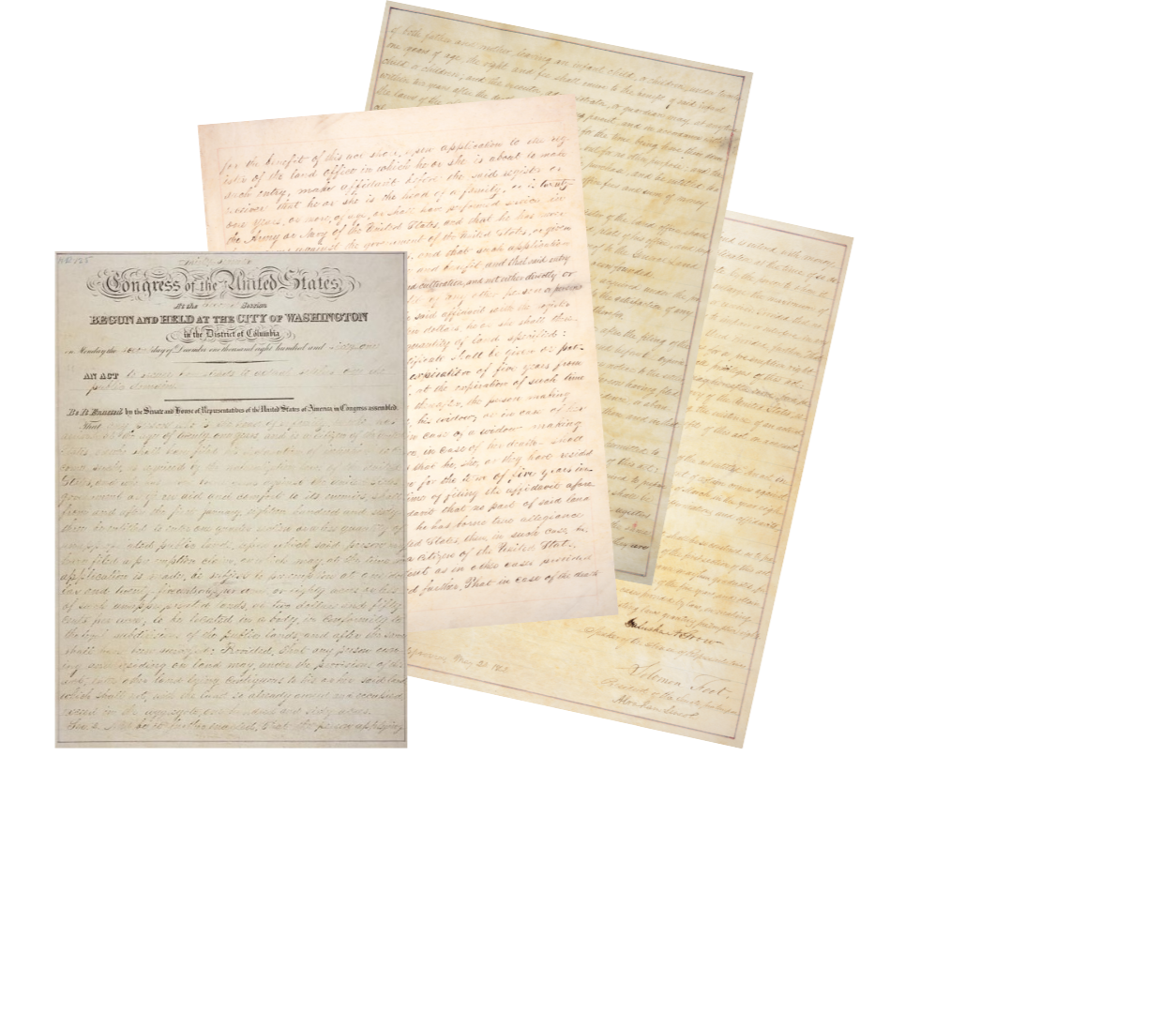
The Homestead Act of 1862 offered an opportunity for any U.S. citizen willing to cultivate and inhabit a 160-acre plot of what was being advertised as “public land” by the U.S. Federal Government, for a minimum of five years as part of America’s westward expansion.
The lands being made available to settlers were inhabited by Indigenous populations long before colonization, resulting in death and an attempt to erase Indigenous life. Many who survived were forced onto reservations in the aftermath of their dispossession.
Many formerly enslaved Black Americans took part in the various ‘land rushes’ of this era, although this was no simple feat. Homesteading families faced relentless environmental challenges and the task of creating and maintaining a livelihood, often from scratch with little to no resources. Additionally, Black pioneer families were forced to navigate evolving racial dynamics in a post-Civil War-era frontier.
With the prospect of freedom and independence, they persisted.

★ c. 1880s, Edna Brown Jackson Standing With a Calf on Maurice Brown's Homestead in Cherry County, Nebraska. Nebraska State Historical Society, Digital Collections. Object ID RG2301.PH000002-000002.

★ c. 1887, Shores family and their pet dog seated in the yard of their homestead near Westerville, Custer County, Nebraska. S.D. Butcher Collection, Nebraska State Historical Society, Digital Collections. (Object ID RG2608.PH0-001231, 10527).
NEBRASKA | The Shores + Speese Families
★ The Shores + Speese families became well-known pioneers in Nebraska during the latter half of the 19th century. They were favorably written about in the local newspapers and noted for their musical talents, as seen in the photographs below.
Refer to the reading list at the end of this section for more details about the lives of Black pioneers throughout the American West ↓
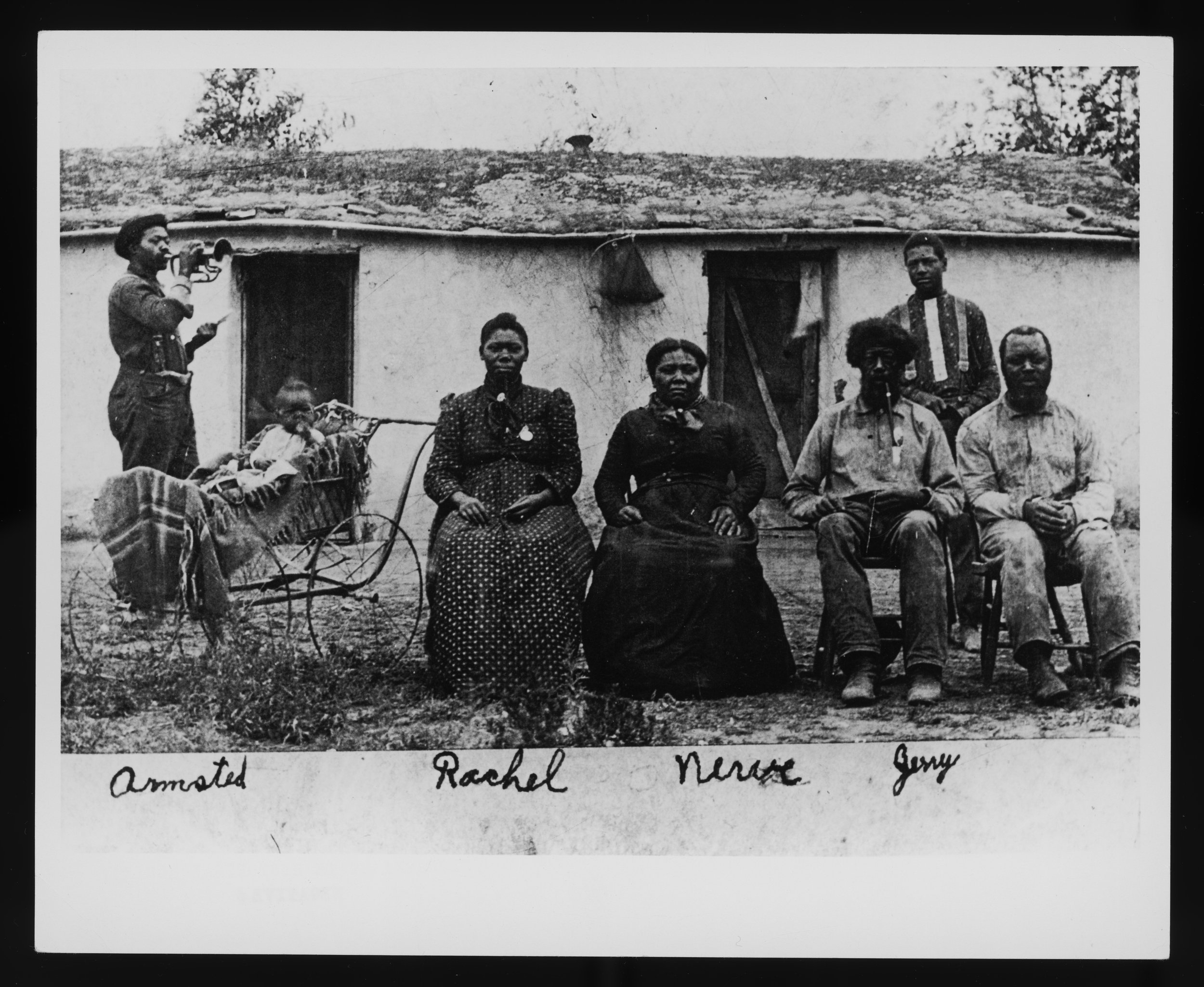
★ c. 1887, Shores Family posed outdoors on their homestead, Custer County, Nebraska. Nebraska State Historical Society, Digital Collections. (Object ID RG2301.PH000003-000011, 22379).
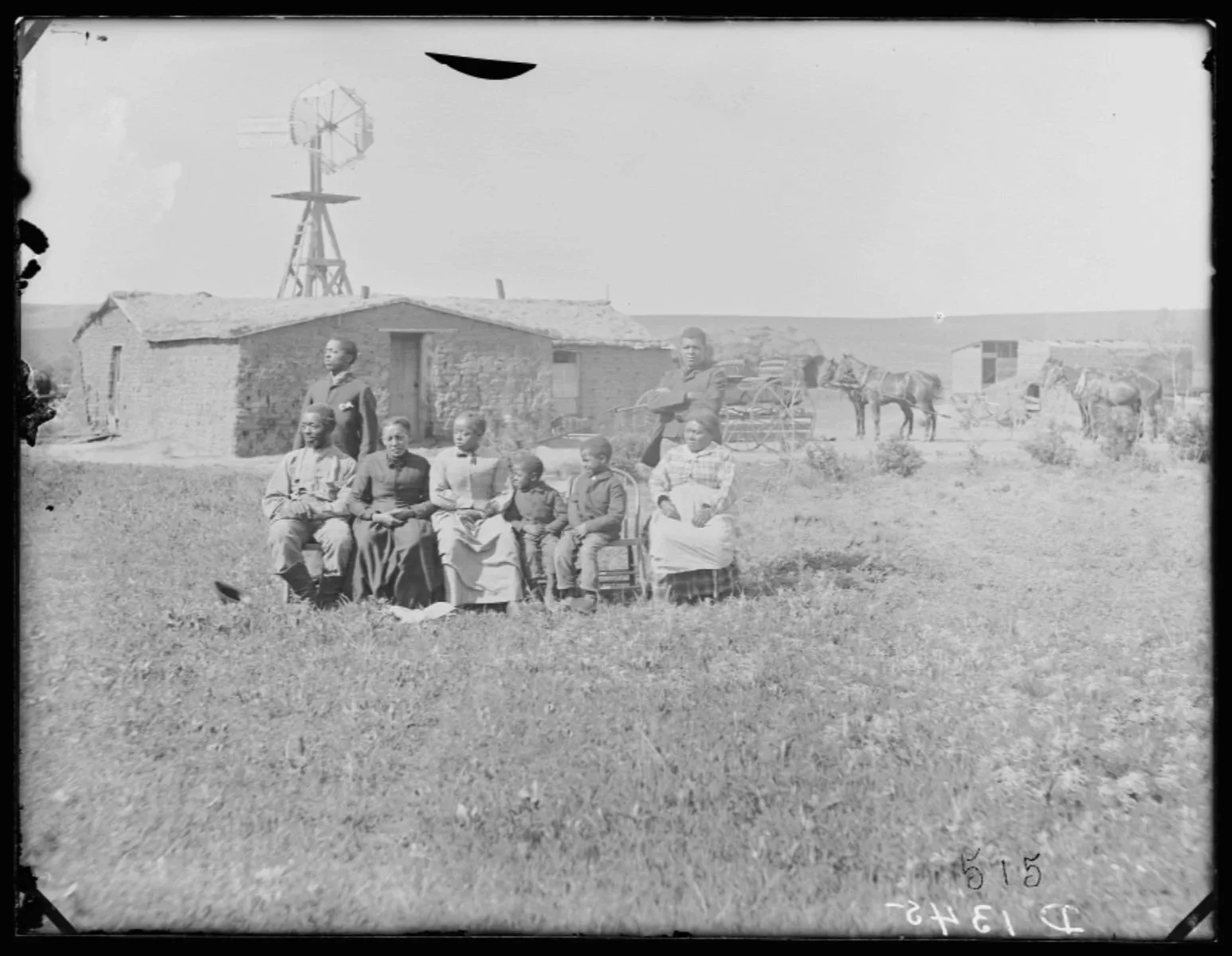
★ c. 1888, The family of Moses Speese poses for a group portrait in the yard of their homestead, near Westerville, Custer County, Nebraska. Nebraska. S.D. Butcher Collection, Nebraska State Historical Society, Digital Collections. (Object ID RG2608.PH0-001345, 10963).
![★ c. 1882, "Negro emigrants on their way to Kansas." Jean Blackwell Hutson Research and Reference Division, Schomburg Center for Research in Black Culture, The New York Public Library. Image ID [1239117].](https://images.squarespace-cdn.com/content/v1/6535b7e96b6e1403bcc579a8/1787245617976-EP6LWVV05XIX59TKIW8W/c%2B1882%252C%2Billustration%2Bof%2Bnegro%2Bemigrant%2Bon%2Btheir%2Bway%2Bto%2BKansas.jpg)
★ c. 1882, "Negro emigrants on their way to Kansas." Jean Blackwell Hutson Research and Reference Division, Schomburg Center for Research in Black Culture, The New York Public Library. Image ID [1239117].

KANSAS | Nicodemus + The Exodusters
★ In 1877, Benjamin “Pap” Singleton (pictured below) led a campaign and organized a mass migration of Black citizens from southern states to the Western frontier. Many were fleeing the very environments of their previous enslavement and the constant threat of racial violence, in search of opportunities for a better life.
They traveled by wagon train, riverboat (along the Mississippi River), or even on foot to stake their claim to freedom.
Singleton, who had previously been enslaved in Tennessee, advertised the opportunity of true freedom in the proposed town of Nicodemus (39.393127,-99.615797), as seen in the digitized broadsides below ↓
*The photographs in this section are preserved by the following institutions: the Schomburg Center for Research in Black Culture, the Kansas State Historical Society, and the Library of Congress. Refer to the credit lines for item details.
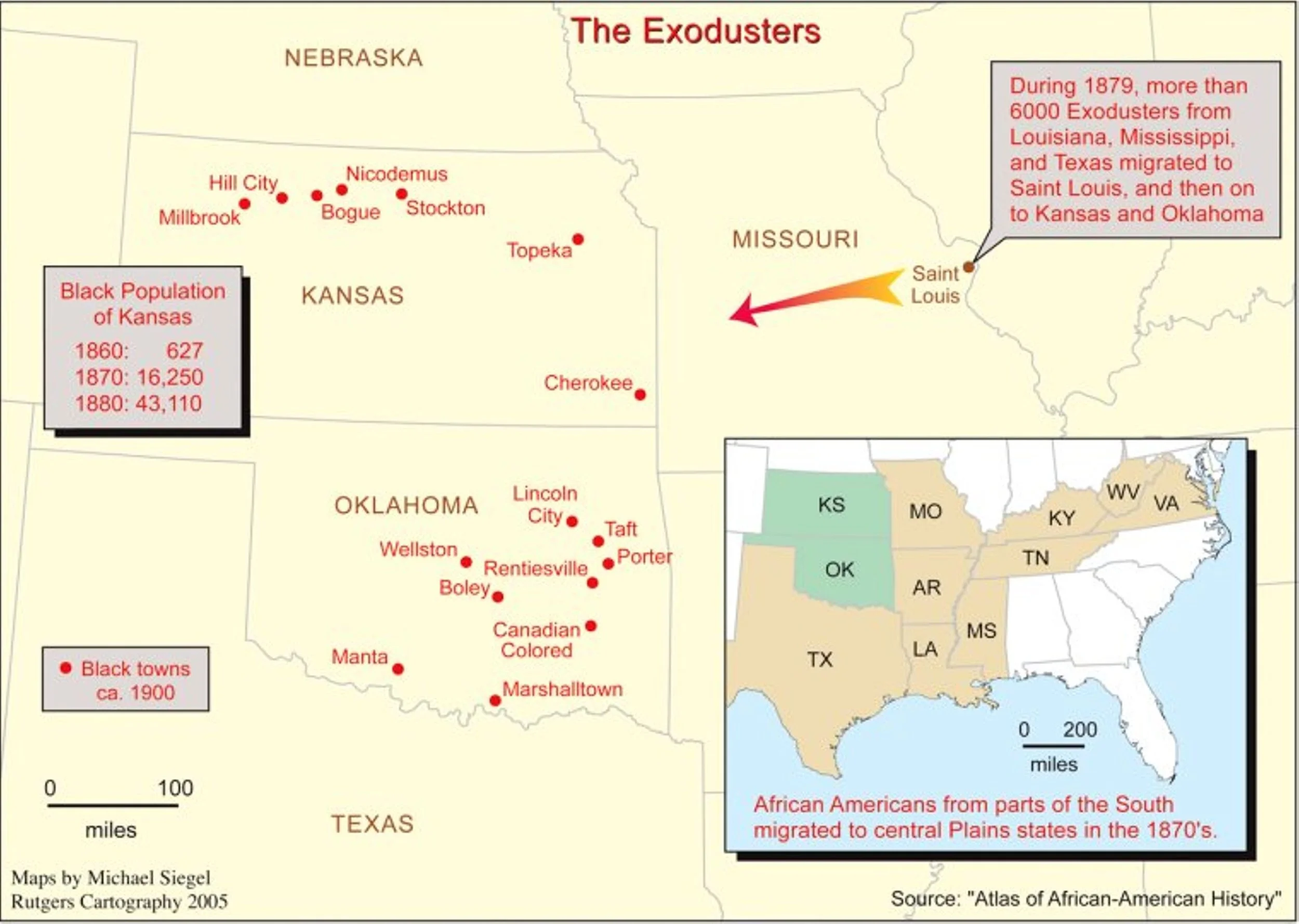
★ 2005, "The Exodusters and Black Towns" by Michael Siegel, Cartographer. Schomburg Center for Research in Black Culture, Jean Blackwell Hutson Research and Reference Division, The New York Public Library. "The Exodusters and Black Towns." The New York Public Library Digital Collections. Image ID [psnypl_scr_050].

★ 1877, Broadside advertises the availability of land in Nicodemus, Graham County, Kansas encouraging African-American immigration to Kansas. Kansas Historical Society, Kansas Memory Digital Collections, Object ID 702.
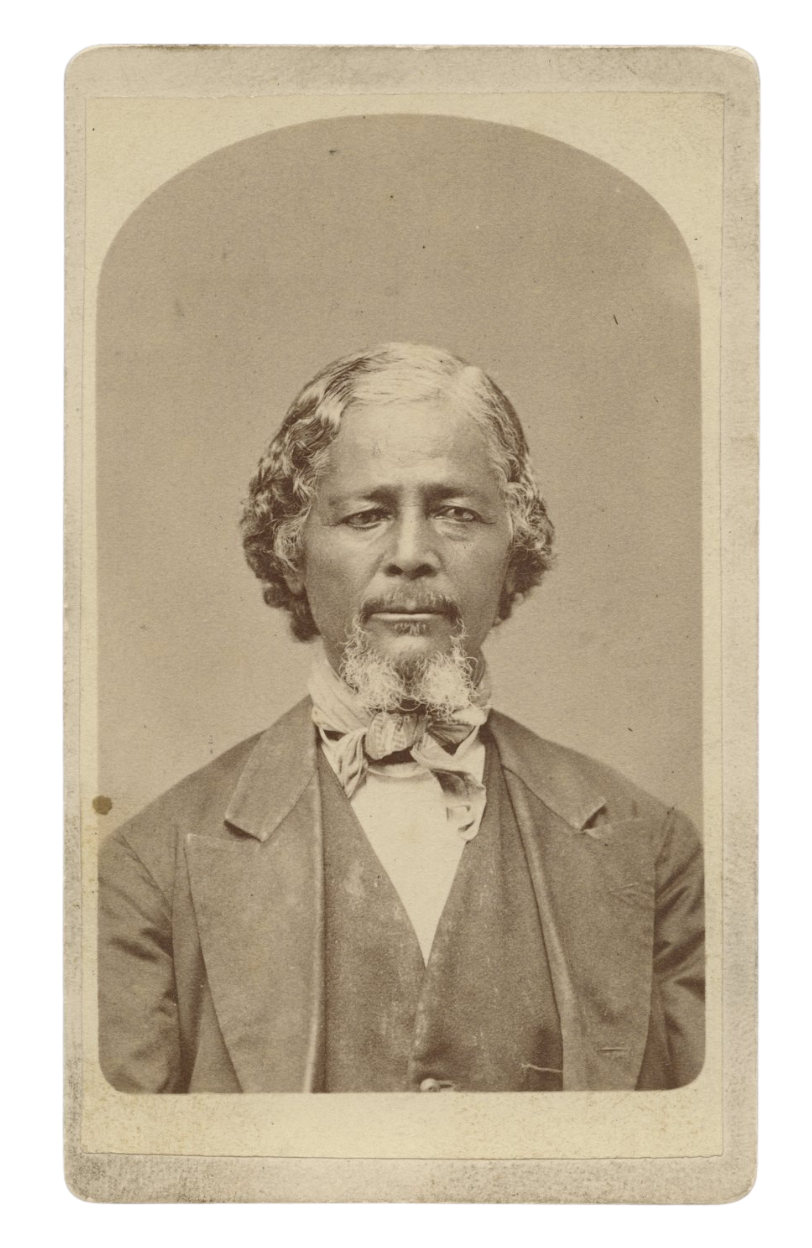
★ c. 1880, Portrait of Benjamin "Pap" Singleton, founder of the Exodusters movement of Black homesteaders to Kansas. Kansas State Historical Society, Kansas Memory Digital Collections, Object ID 333.
![★ c. 1882, "Negro emigrants on their way to Kansas." Jean Blackwell Hutson Research and Reference Division, Schomburg Center for Research in Black Culture, The New York Public Library. Image ID [1239117].](https://images.squarespace-cdn.com/content/v1/6535b7e96b6e1403bcc579a8/1784060545762-91GUY6G2BJJSIY2O0RNK/c%2B1882%252C%2Billustration%2Bof%2Bnegro%2Bemigrant%2Bon%2Btheir%2Bway%2Bto%2BKansas.jpg)
★ c. 1882, "Negro emigrants on their way to Kansas." Jean Blackwell Hutson Research and Reference Division, Schomburg Center for Research in Black Culture, The New York Public Library. Image ID [1239117].
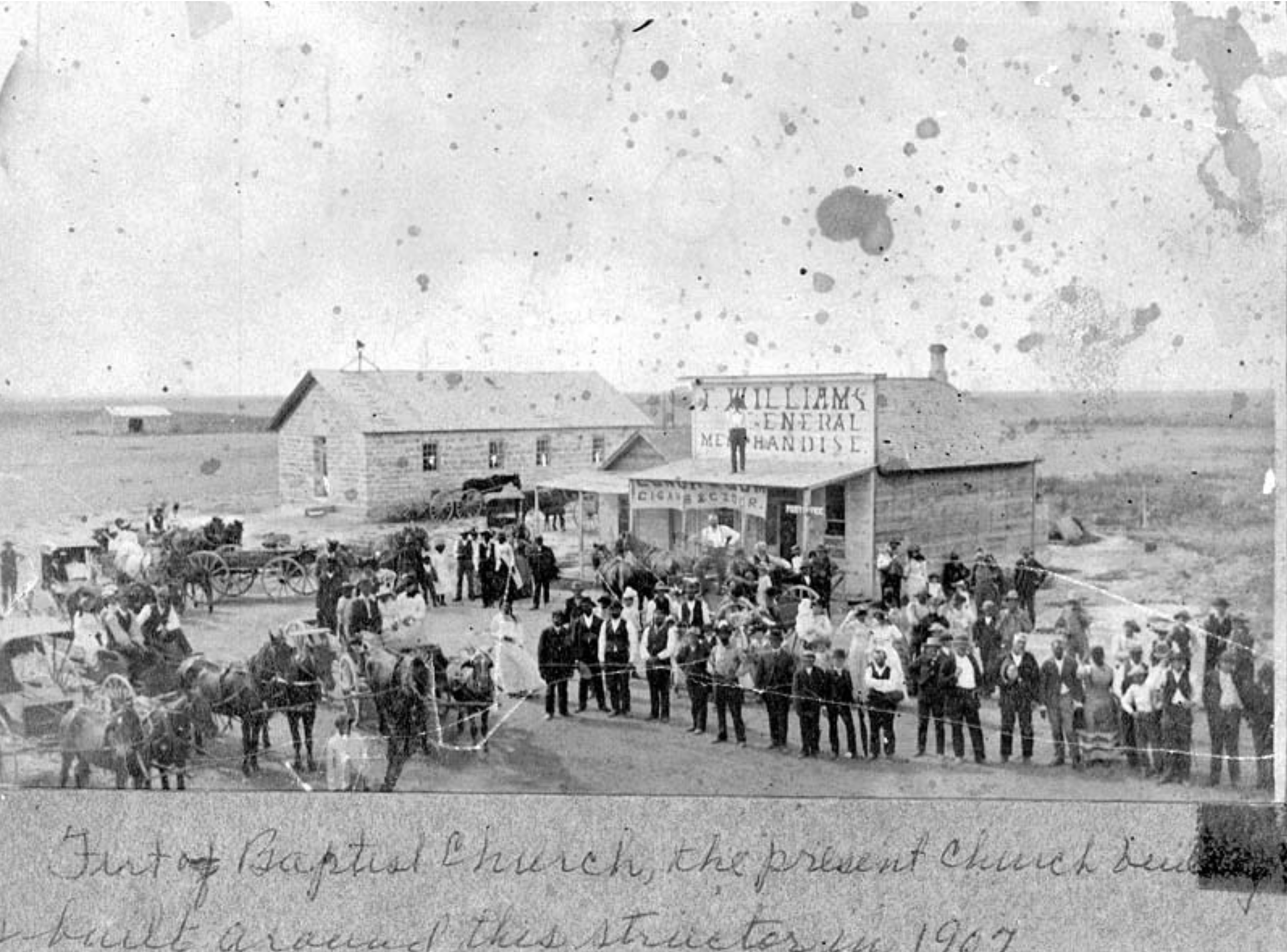
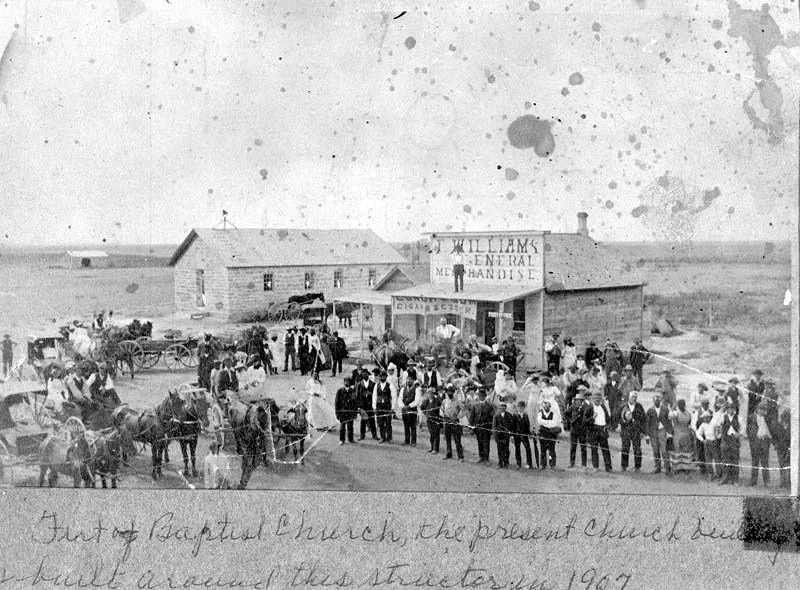
★ c. 1885, photograph of Main St. in Nicodemus, Graham County, Kansas. Kansas State Historical Society, Kansas Memory Digital Collections, Object ID 526.
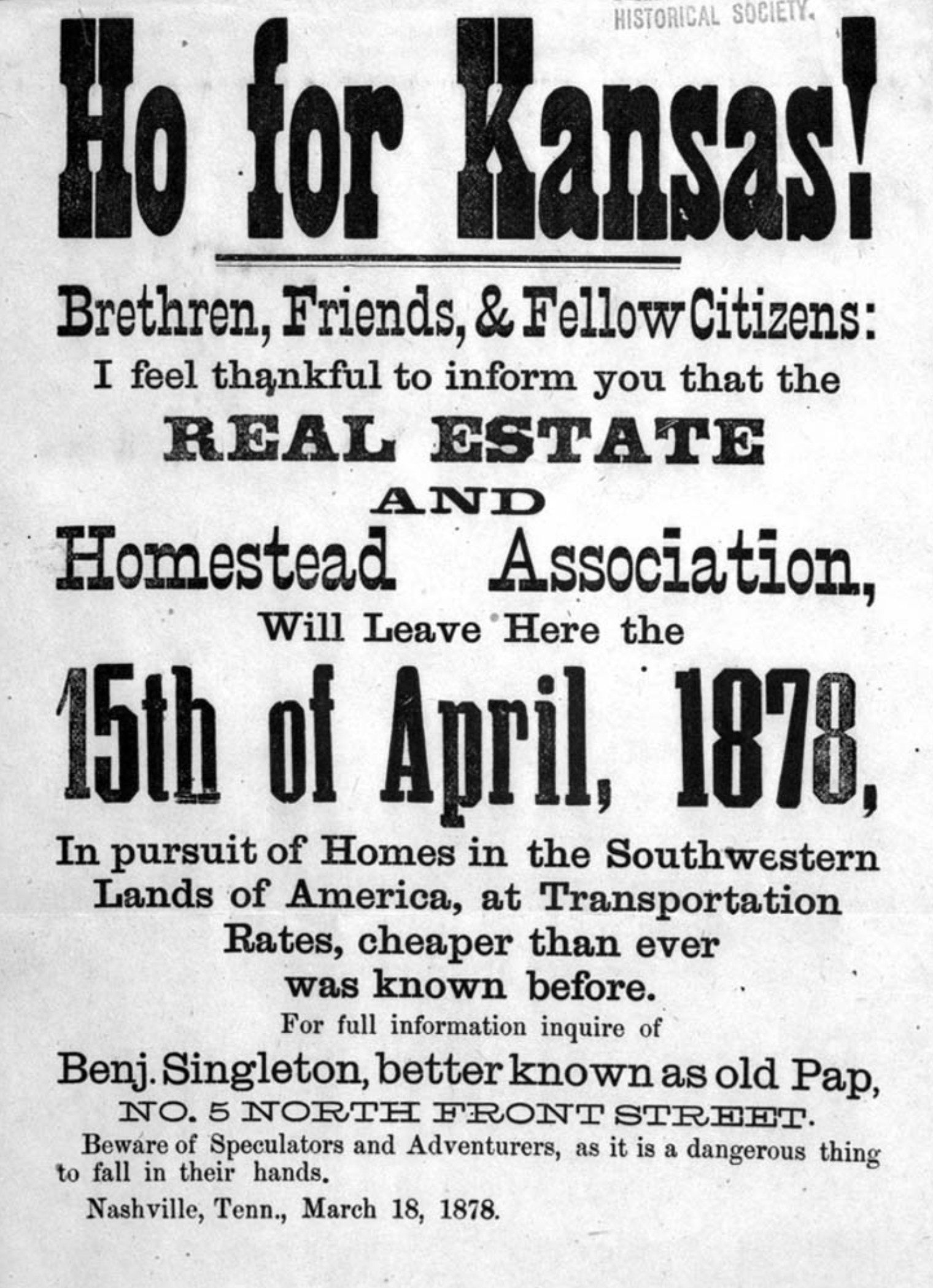
★ c. 1887, “Ho For Kansas” advertisement for Black emigration to Kansas, by Benjamin ‘Pap’ Singleton, Kansas State Historical Society., Kansas Memory Digital Collections, Object ID 209311.
![★ c. 1870s - 1890s, Group portrait of the Bates Family, migrants from Tennessee to Nicodemus, Kansas. Library of Congress, Prints & Photographs Division, [HABS KANS, 33-NICO,1-6].](https://images.squarespace-cdn.com/content/v1/6535b7e96b6e1403bcc579a8/ecc298ad-fa0f-4e26-9ace-545d0d1ac6bd/Exodusters+-+LOC.jpg)
★ c. 1870s - 1890s, Group portrait of the Bates Family, migrants from Tennessee to Nicodemus, Kansas. Library of Congress, Prints & Photographs Division, [HABS KANS, 33-NICO,1-6].
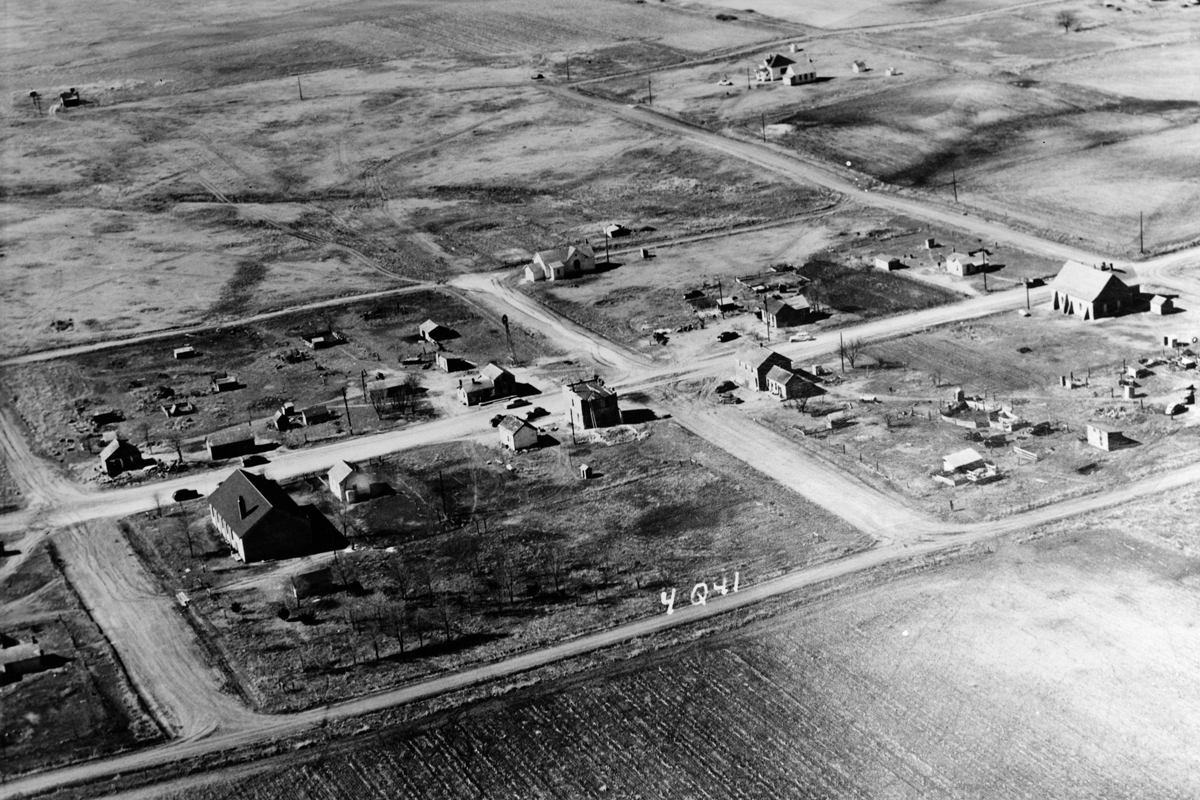
★ NICODEMUS, KANSAS | HOMESTEAD SETTLEMENT SITE AFTER ITS HAYDAY ★ c. 1953, “Aerial view of Nicodemus from the Northeast,” 1953. Photomural from gelatin-silver print. Historic American Building Survey Field Records, Prints and Photographs Division, Library of Congress. Object ID ks0077.
★ PIONEERS, READING + RESOURCE LIST ★

★ JEAN BLACKWELL HUTSON GENERAL RESEARCH + REFERENCE DIVISION
Black Pioneers: An Untold Story / by William Loren Katz (1999) / Call# Sc E 99-787
Black Towns, Black Futures: The Enduring Allure of a Black Place in the American West / by Karla Slocum (2019) / Call No. Sc E 20-83.
Black Pioneers: Images of the Black Experience on the North American Frontier / by John W. Ravage; foreword by Quintard Taylor (2008) / Call No. Sc F 09-217
California's Black Pioneers: A Brief Historical Survey / by Kenneth G. Goode (1974) / Call No. Sc D 84-443
The Bone and Sinew of the Land: America's Forgotten Black Pioneers & the Struggle for Equality / by Anna-Lisa Cox (2018) / Call No. Sc E 18-1079
Black Directory of New Mexico: Black Pioneers of New Mexico, a Documentary and Pictorial History / Compiled by Barbara J. Richardson (1976) / Call No. Sc Ser.-L .R543
African American lives in St. Louis, 1763-1865: Slavery, Freedom and the West / by Dale Edwyna Smith (2017) / Call No. Sc E 17-694
★ MOVING IMAGES + RECORDED SOUND DIVISION
The Black West / 23min, WCVB-TV, Boston; produced by Karl Nurse; directed by Larry Jordon / Call No. Sc Visual VRA-101 Service copy
Black Pioneers: True Faces of The West / 41min, University of Wyoming Television (1996) / Call No. Sc Visual VRA-1085
North Star: Minnesota’s Black Pioneers / Directed by Daniel Pierce Bergin / 150min, University of Wyoming Television (1996) / Call No. Sc Visual DVD-366.

★ c. 1897, "Gateway (Garden of the Gods), Colorado, U.S.A." The Miriam and Ira D. Wallach Division of Art, Prints and Photographs: Photography Collection, The New York Public Library. The New York Public Library Digital Collections. Image ID [G90F040_020F].
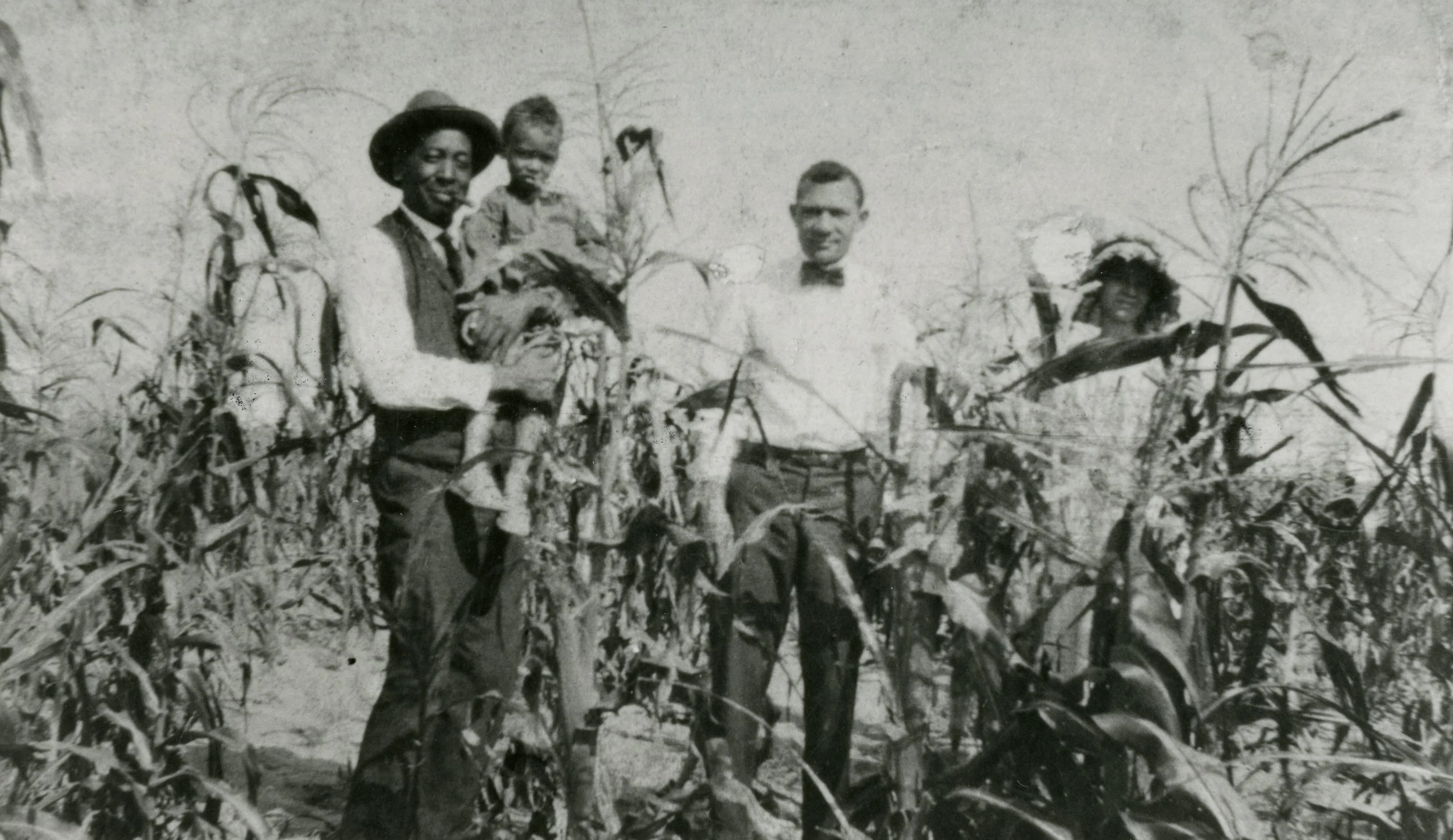
★ c. 1910-1929, Oliver T. Jackson (holding child), stands with community members in field, Dearfield, CO. Item ID C1_3015.0001.1B, City of Greeley Museums, Permanent Collection.
★ COLORADO | Oliver Toussaint Jackson + Dearfield, Co.
★ Prominent businessman and serial entrepreneur, Oliver Toussaint Jackson (above left and in the images below), founded Dearfield, Colorado, in 1911. In its brief heyday, Dearfield was a Black enclave of Weld County, Colorado, modeled after “Booker T. Washington’s self-help philosophy and an urge to get back to the land” (Katz). By the end of the Great Depression, many residents relocated elsewhere for job opportunities, and the town’s population greatly declined, leaving very few residents in its wake.
In 1995, Dearfield was added to the National Register of Historic Places.
*The photographs in this section are preserved by the City of Greeley Museums.
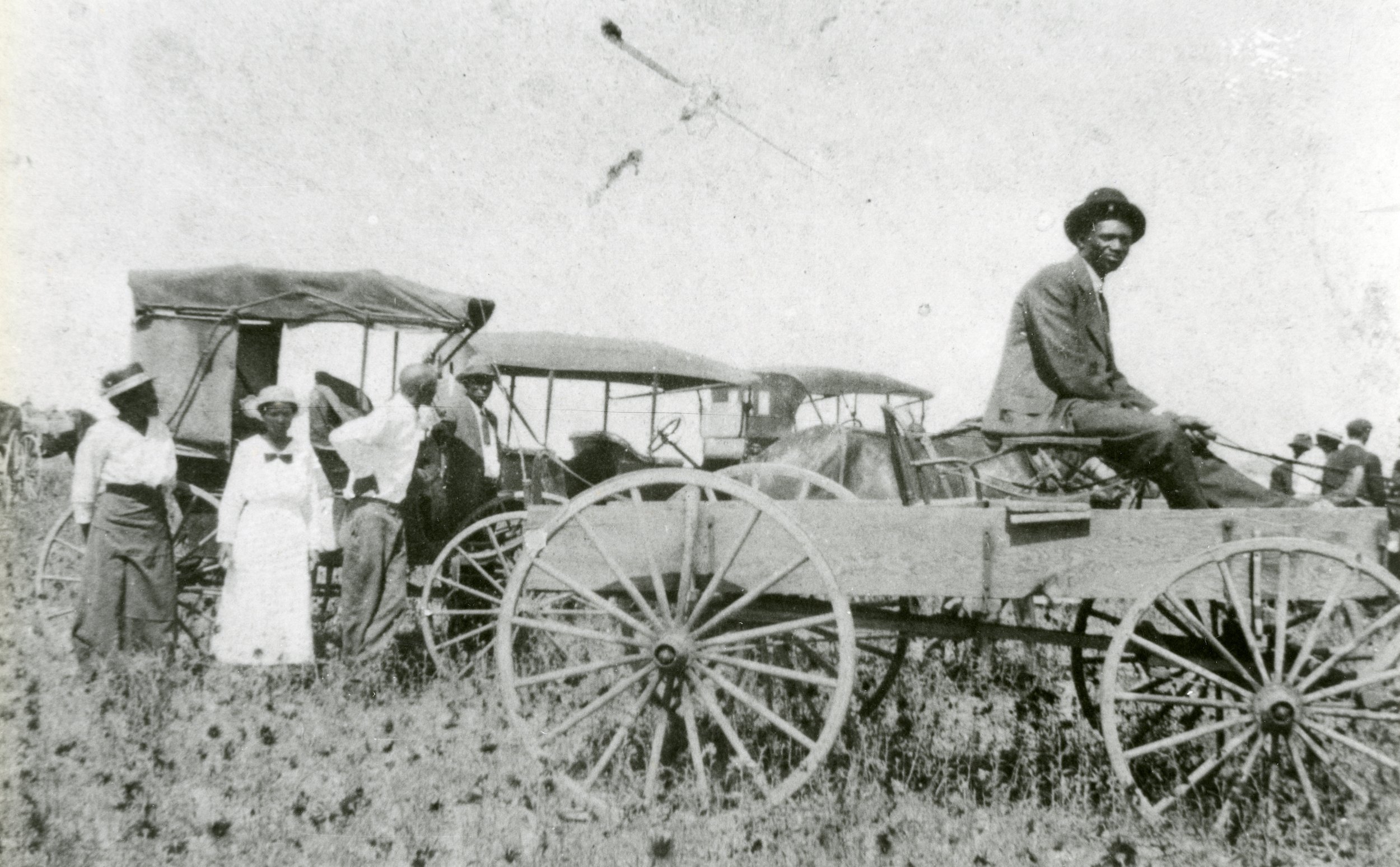
★ c. 1910-1929, Founder of Dearlield, Oliver T. Jackson seated in wagon with community members in background, Dearfield, CO. Object ID C2_3015.0001.1C, City of Greeley Museums, Permanent Collection.
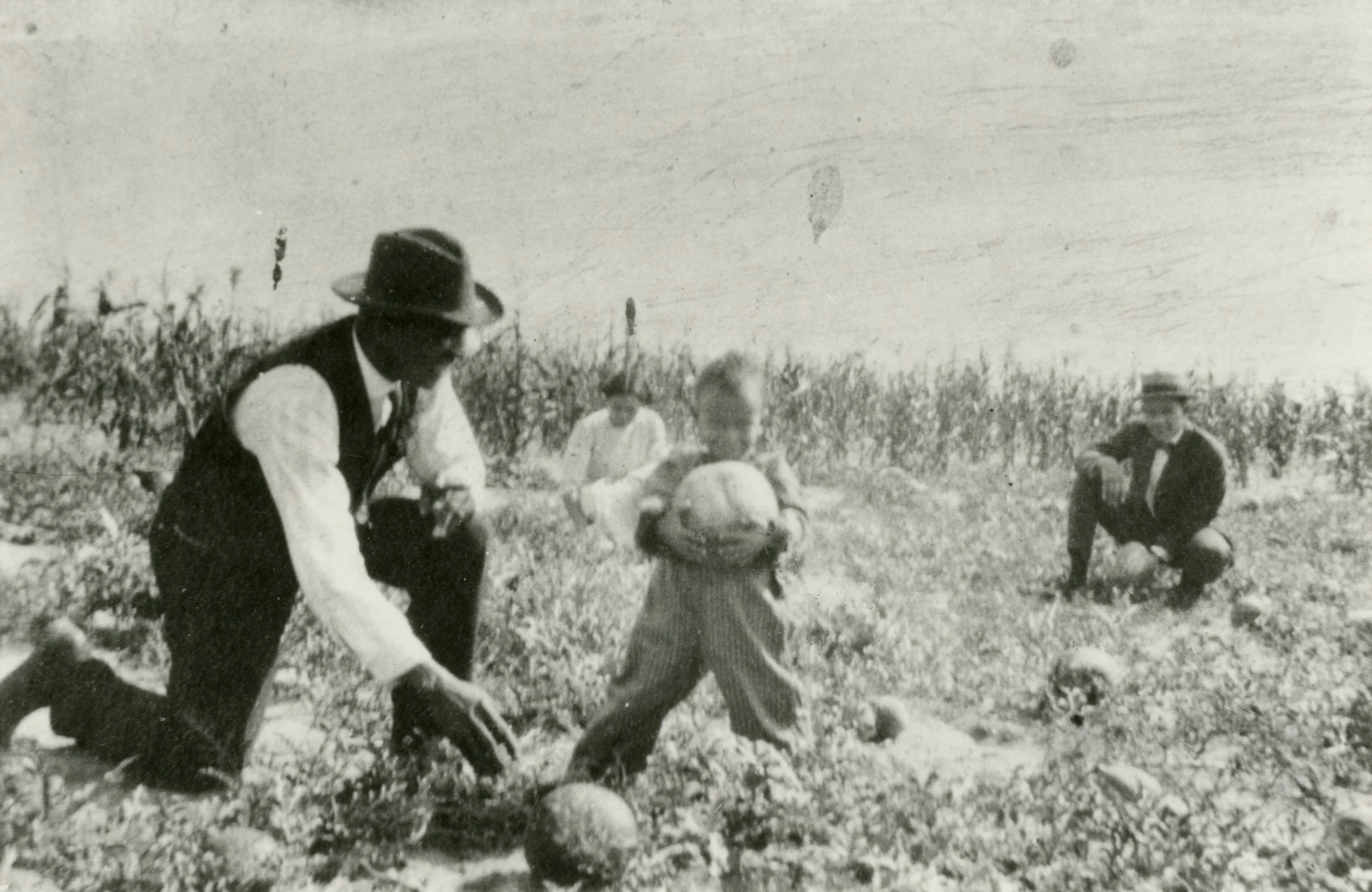
★ c. 1910 - 1929, Oliver T. Jackson, founder of town, kneeling in melon field next to child, Dearfield, Object ID CO. C1_3015.0001.2D, City of Greeley Museums, Permanent Collection.
*CLICK ANY IMAGE BELOW ⇩ to continue exploring related photographs + resources.