★ PATHFINDERS ★
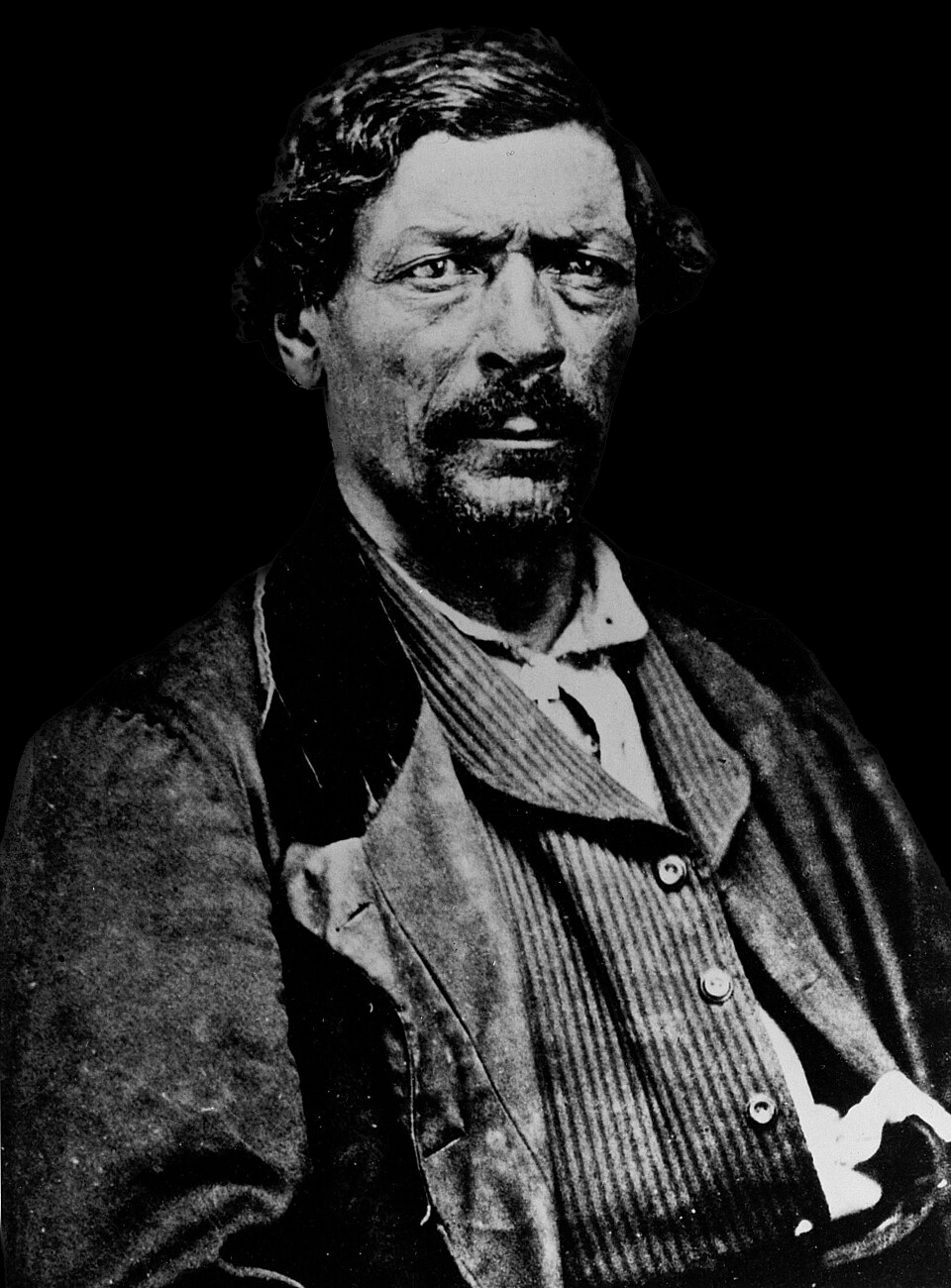
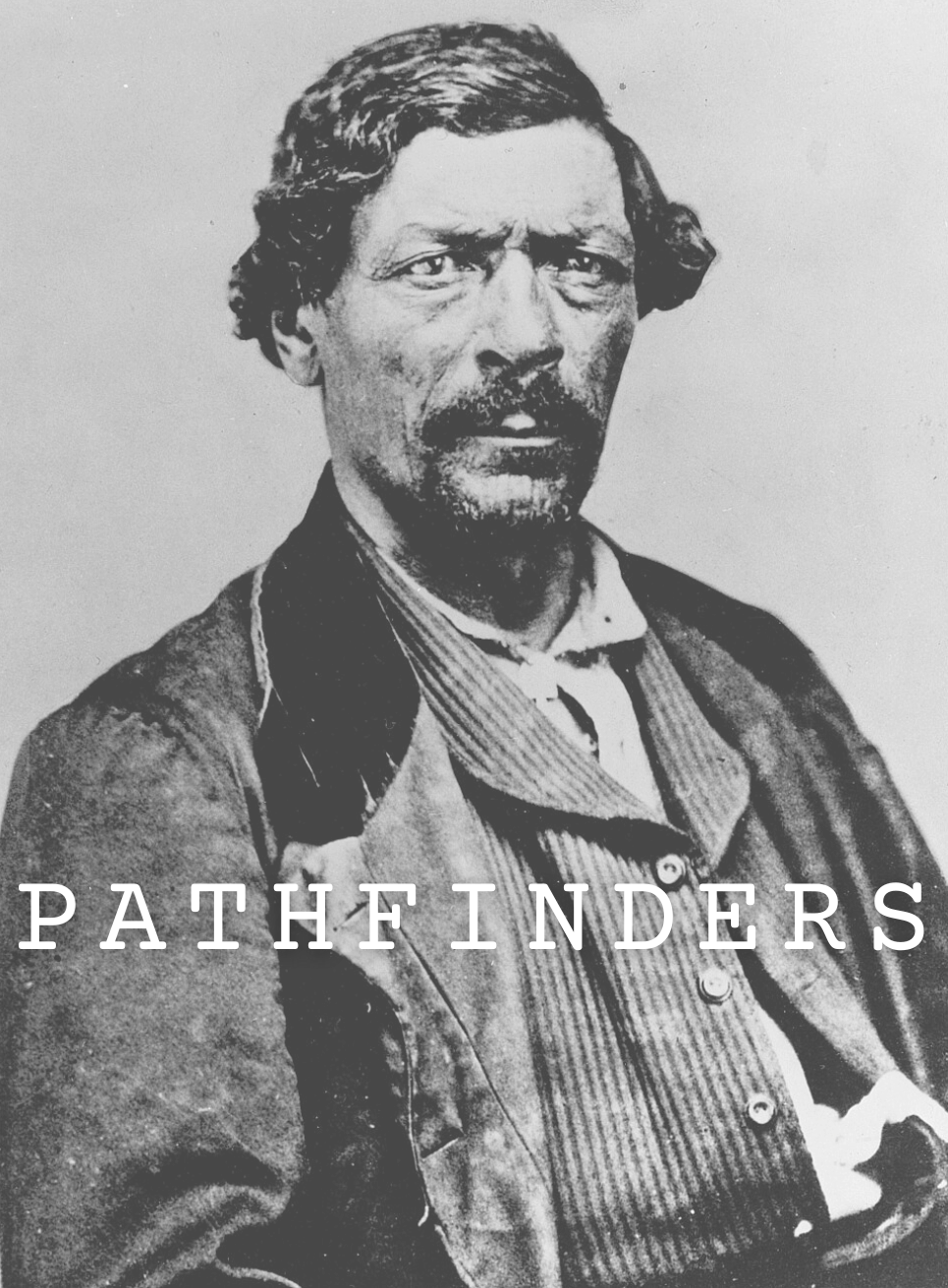
★ JAMES “JIM” PIERSON BECKWOURTH ★
1800 - 1866
James Beckwourth was born to an enslaved Black mother and a white father in Fredericksburg, VA, around the turn of the century (between 1798 and 1800). Mystery surrounds his personal lore, but as a young man, Beckwourth was manumitted from enslavement by his father and later apprenticed with a Blacksmith in St. Louis, Missouri. When the Blacksmith tried to control Beckwourth’s freedom, he famously threw a punch and fled to the frontier.
For much of his life, he traversed the western United States, including the Rockies and other mountain ranges, as a fur trapper and frontiersman. His expertise in navigating the frontier led to his discovery of a key trail pass across the Sierra Nevada, which is still known as Beckwourth Pass. The trail he forged opened up a clear route into California, making it easier for many to follow.
Beckwourth served in the U.S. Army during periods in his life and built close relationships within the Crow Nation as well, even joining their tribal society for years at a time.
Beckwourth detailed these experiences in his biography, Mountain Man, Indian Chief; the Life and Adventures of Jim Beckwourth, written from his own dictation by T. D. Bonner.
★ PICTURED HERE ★
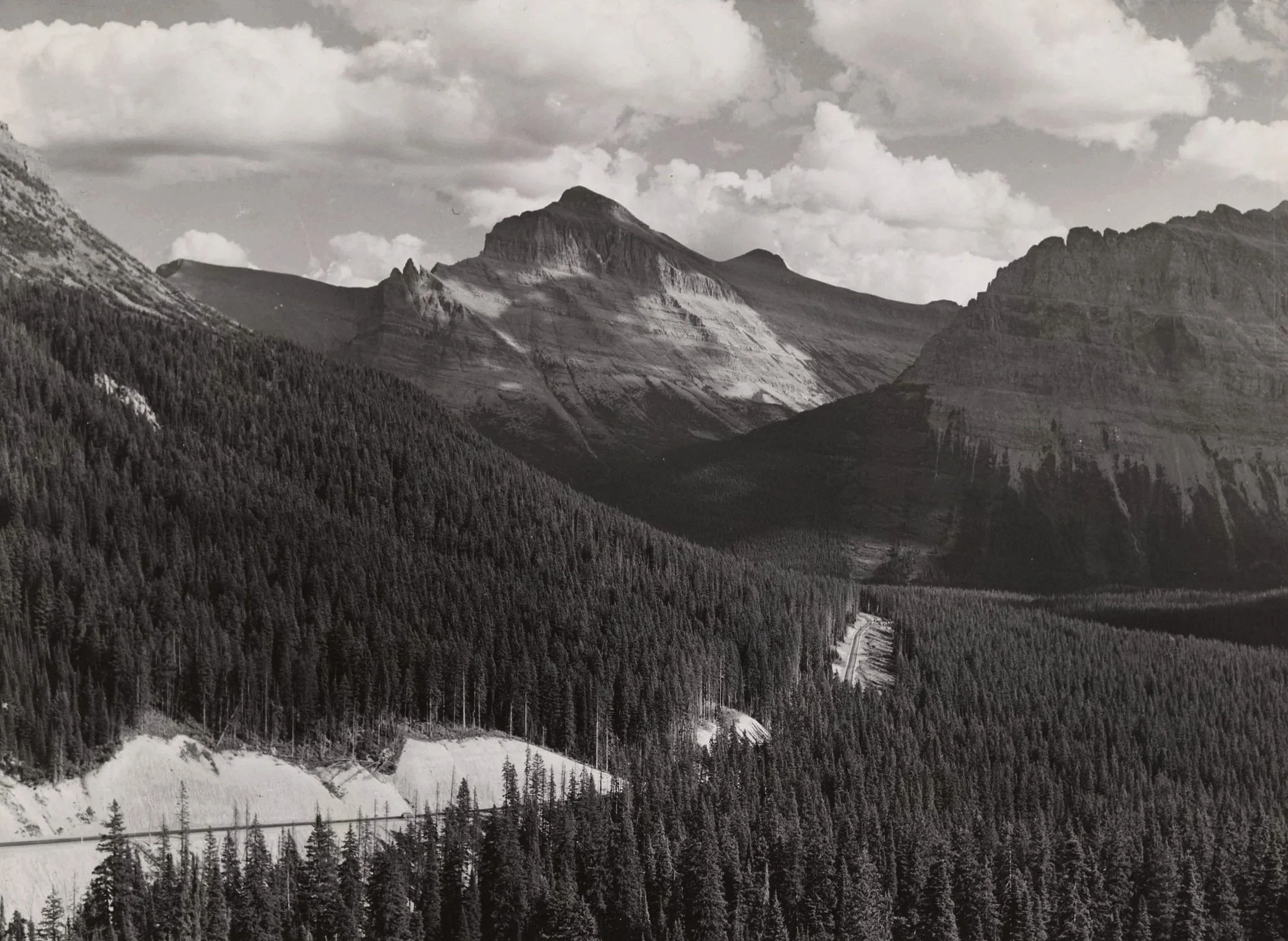
ABOVE: 1941, photograph of Glacier National Park, Montana. Farm Security Administration Photographs. The Miriam and Ira D. Wallach Division of Art, Prints and Photographs: Photography Collection, The New York Public Library, Digital Collections. Image ID [58974452].
c. 1856, portrait of James “Jim” Pierson Beckwourth, UCLA Library Digital Collections, Miriam Matthews Photograph Collection, Early California, 1781 - 1920.
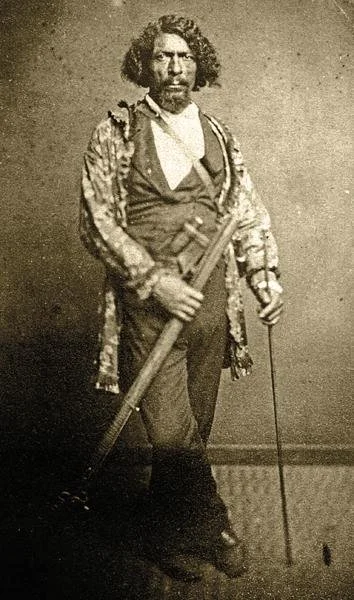
c. 1860, daguerreotype studio portrait of Jim P. Beckwourth. WikiCommons.
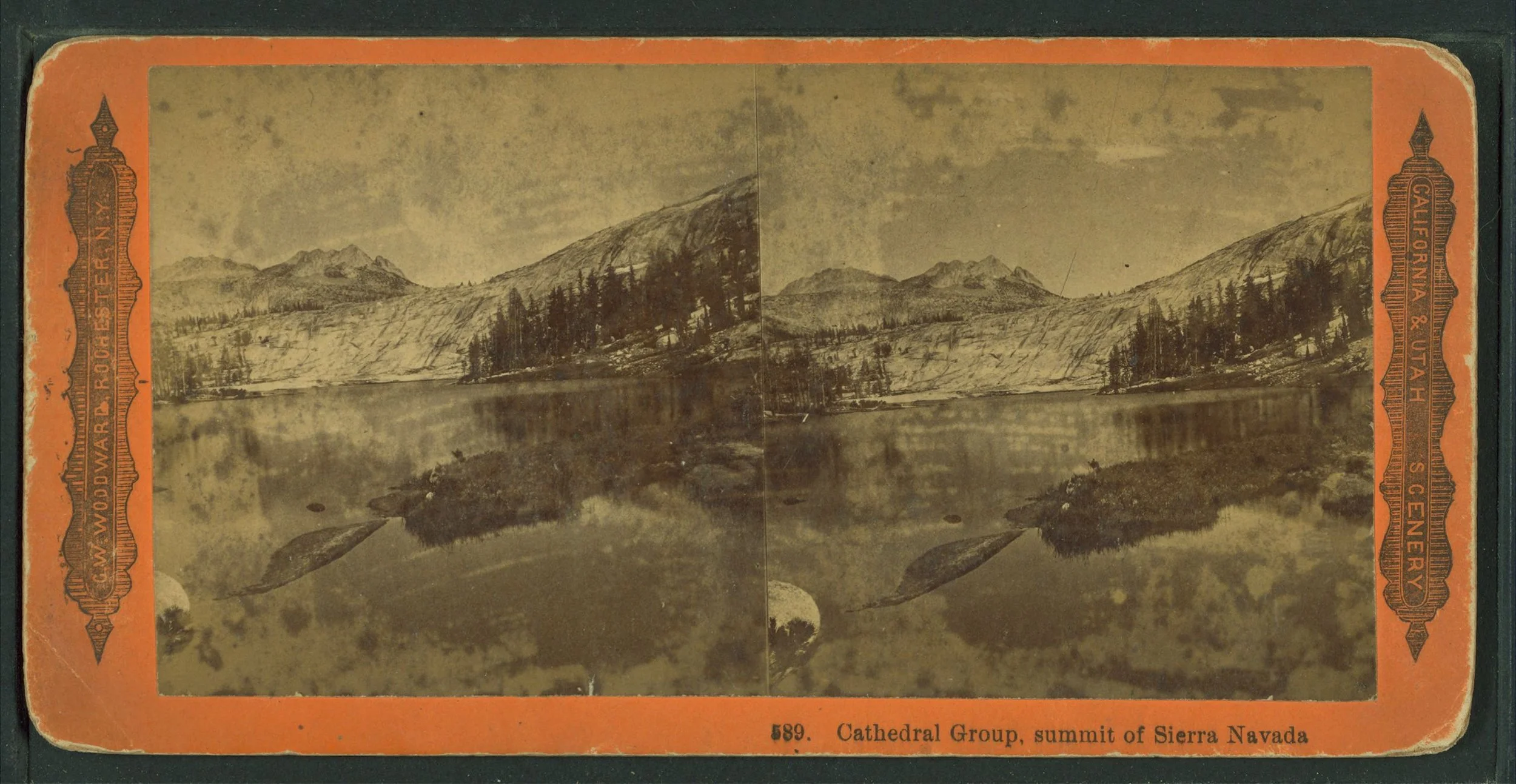
★ c. 1875 - 1885, Cathedral Group, Summit of Sierra Nevada, The Miriam and Ira D. Wallach Division of Art, Prints and Photographs: Photography Collection, The New York Public Library. (Image ID G89F376_033F).

★ York |1770s - 1815 ★
Black explorer, frontiersman, and servant-guide of William Clark, York was an expert hunter and a pathfinding guide for the Lewis and Clark Expedition of 1804. His knowledge of the land was paramount to their success.
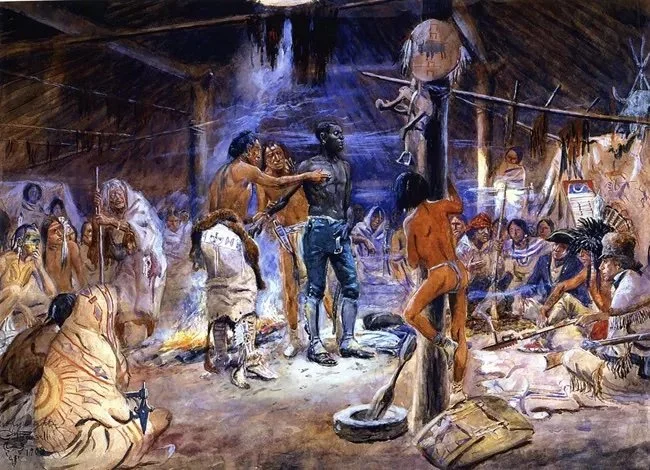
In this accompanying 1908 painting by C.M. Russell, York is depicted half-clothed and standing amongst members of the Mandan, Hidatsa, and Arikara (MHA) Nation (of the Great Plains, present-day North Dakota) within a traditional wigwam or wikiup structure. They appear to be rubbing his skin to see if his melanated color would come off; “an incident reported in Lewis and Clark’s notes of the historic expedition to the Pacific Ocean and back” (Katz, 1986).
★ PICTURED HERE ★
c. 1908, 22 × 16in watercolor painting by Charles M. Russell. Public Domain Image, Wikimedia Commons.
c. 1814, Great Falls of Columbia River, History of the expedition under the command of Captains Lewis and Clark. Rare Book Division, The New York Public Library. "Great Falls of Columbia River." The New York Public Library Digital Collections. Image ID [ps_rbk_cd18_269].
According to the biography, “George Washington of Centralia” by Brian Mittge and Kerry Macgregor Serl (2023), the courts noted that because Washington was “of good moral character and free-born of a white woman,” a law was passed declaring “An act of benefit of George Washington, a free man of color, of Macon county, Missouri” (Mittge and Serl, 2023).
Despite having legal immunity from the harshest racial legislation in Missouri, with the start of the Civil War, Washington still felt the pressure of racist practices throughout the region and soon headed further west in search of true freedom on the frontier.
March 15, 1850, marked the start of Washington’s official journey along the Oregon Trail, and his travel group set out for the unknown. After much peril, Washington’s wagon train made it to Oregon, where he faced even more racist laws preventing his success as a homesteader in the Oregon Territory.
He persisted north, arriving in Washington in 1852, where he was finally able to stake a claim on a new life. By 1870, Washington was the fourth richest man in the area and was building his community by offering $10 plots of land to all interested parties. As an early pioneer, his swath of land became the foundation upon which schools, churches, hotels, and other businesses were established.
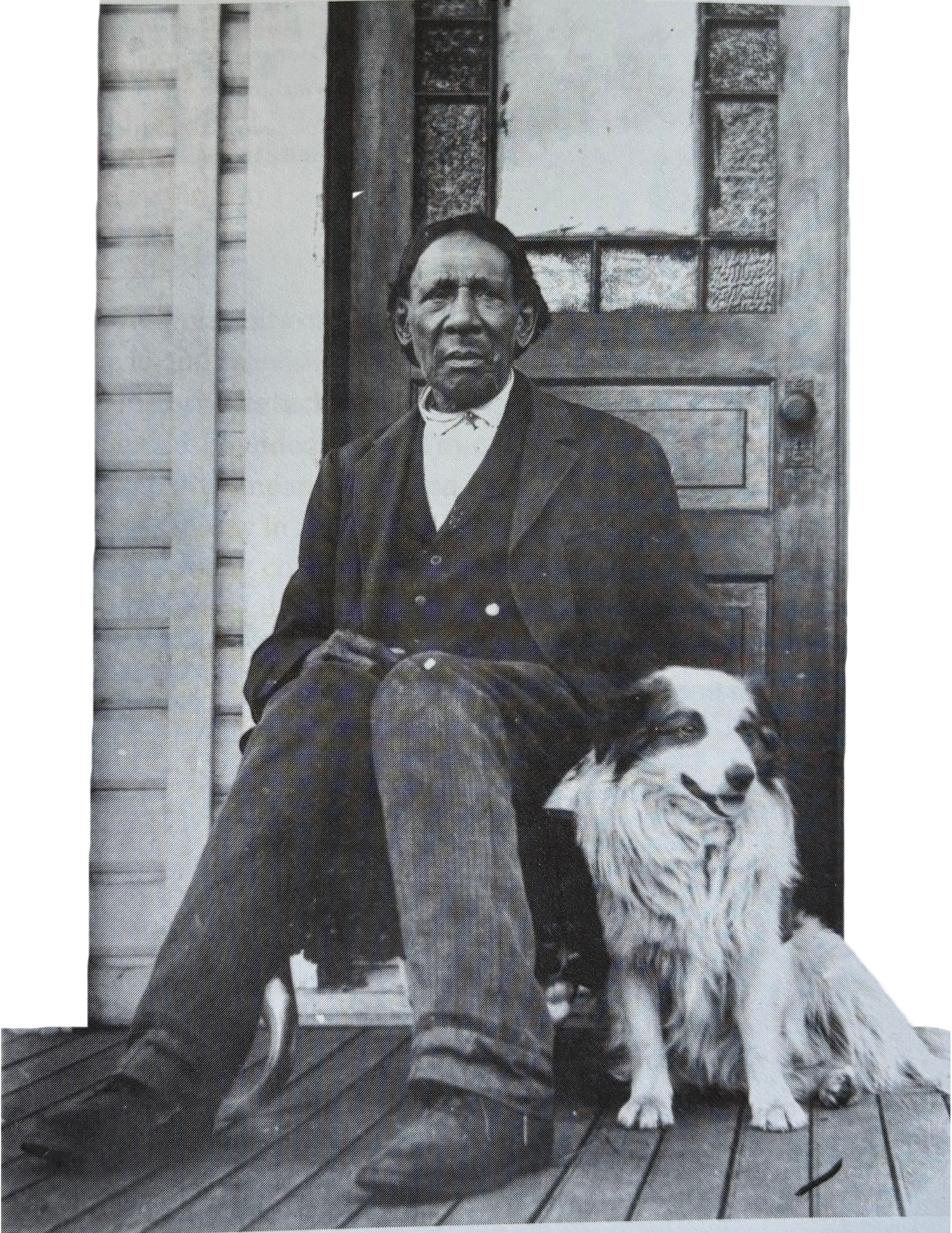
Today, George Washington is remembered for his generosity and steadfast determination as the founder of the town of Centralia. During Washington’s bicentennial year, the town of Centralia dedicated a statue of him and his wife, which now sits in George Washington Park in downtown Centralia.
★ PICTURED BELOW ★
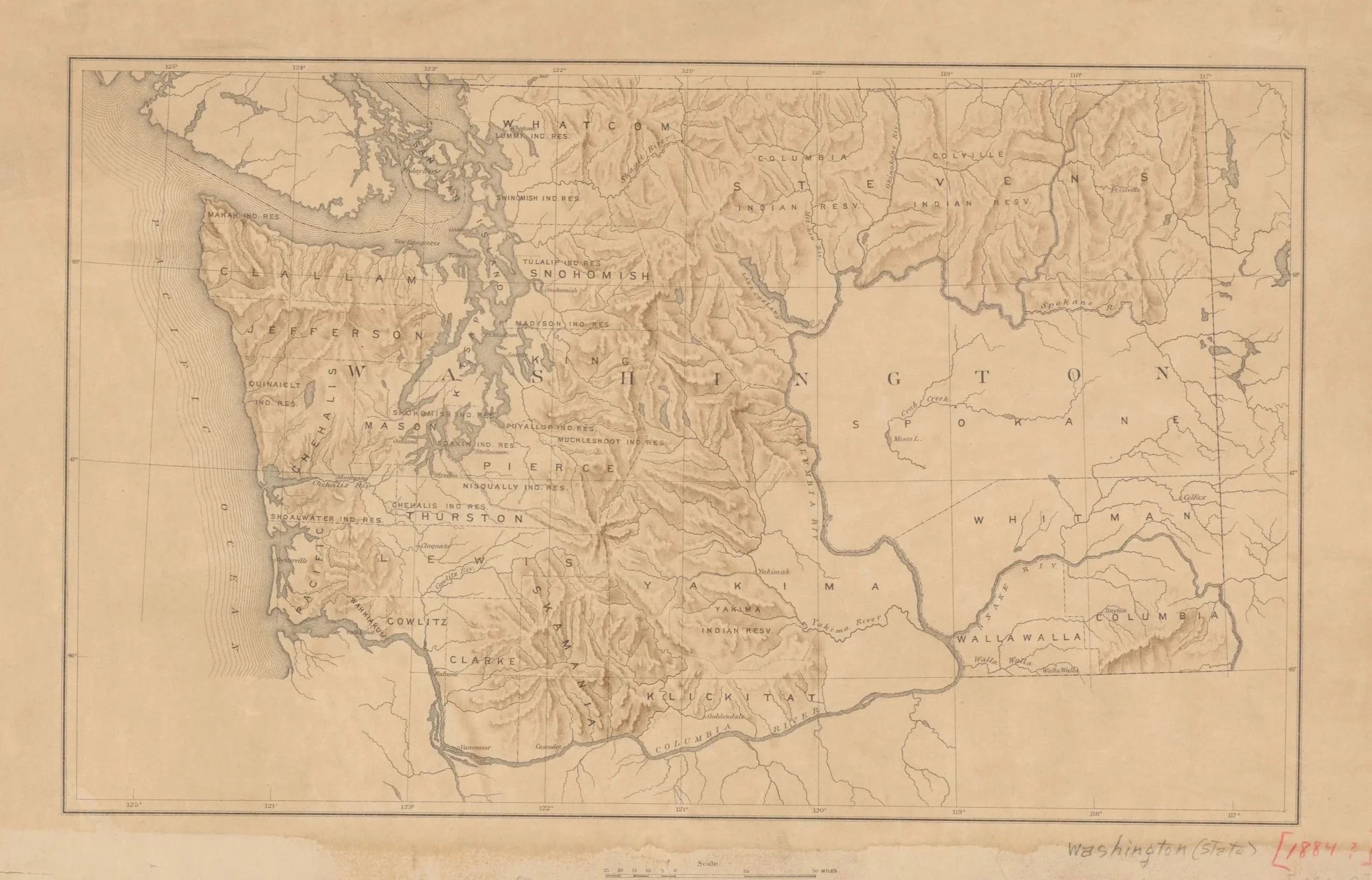
Motion graphic illustrating George Washington’s migration from Missouri to Washington State. It features the following background image: 1884, Map of the United States exhibiting the present status of knowledge relating to the areal distribution of geologic groups. Lionel Pincus and Princess Firyal Map Division, The New York Public Library, Digital Collections. Image ID [5851494].
⇩ Below is a motion graphic depicting George Washington’s pioneering route.
★ GEORGE WASHINGTON OF CENTRALIA, WA ★
1817 – 1905
George Washington founded Centralia, Washington, in 1875. Washington was born to an enslaved Black father and a white English mother, who gave him to adoptive white parents at birth and sold his enslaved father to a different plantation. Fearing racial implications, his adopted family moved westward, pioneering in Ohio and later Missouri.
As a young man in Missouri, Washington’s enterprising spirit caused somewhat of a stir when a business incident concerning his racial identity made its way to the Missouri Legislature. New laws requiring free Blacks to obtain a freedom license were enacted, and after a man refused to pay Washington for lumber sold from the sawmill Washington owned—on account of his being a free man of color—the incident was contested by Washington and his adoptive white father in court.
★ PICTURED HERE ★
c. 1890, Cropped portrait of George Washington seated on his porch with his dog. Oregon Historical Society, Org. Lot 679, OrHi96210.
“If there is a decent place in this world, I will find it.”
—George Washington of Centralia
★ PATHFINDERS, READING + RESOURCE LIST ★
Jean Blackwell Hutson General Research + Reference Division
Mountain Man, Indian Chief; The Life and Adventures of Jim Beckwourth / written from his own dictation by T. D. Bonner, edited with an introduction and epilogue by Betty Shepard (1972) / Call No. Sc D 83-25.
Jim Beckwourth, Negro Mountain Man / by Harold Felton ( / Call No. Sc B-Beckwourth (Felton, H. Jim Beckwourth).
Black pioneers: Images of the Black Experience on the North American Frontier / by John W. Ravage; foreword by Quintard Taylor. (2008) / Call No. Sc F 09-217.
Moving Images + Recorded Sound Division
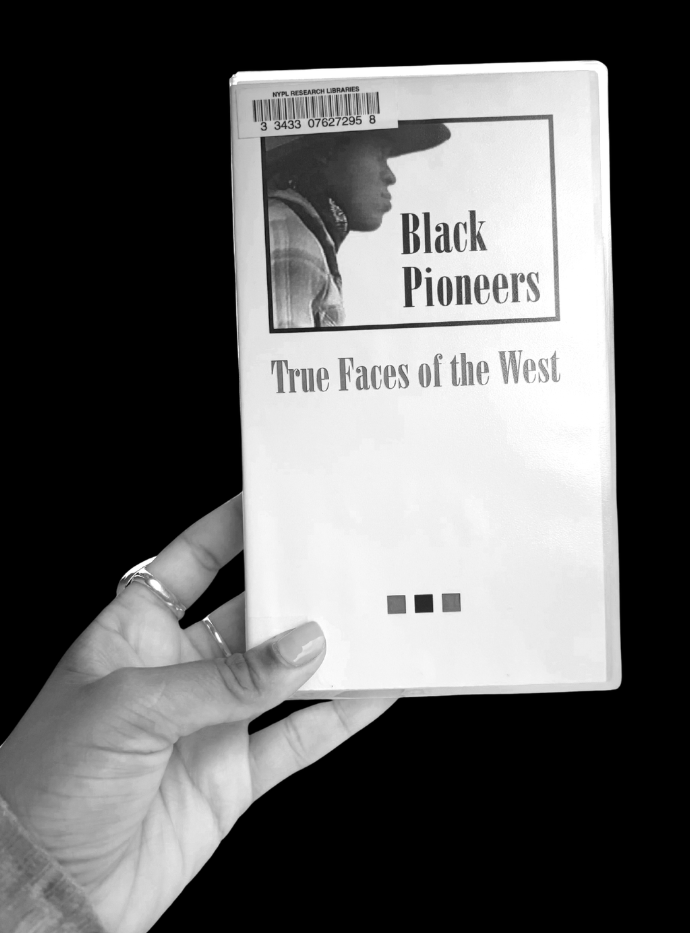
Black Pioneers: True Faces of the West / 41 min documentary that combines historic photographs and drawings with modern landscape shots to tell the stories of African American pioneers whose presence in the West is often ignored by history books. Hosted by Jack Ravage and Melinda Bobo, WUTV Laramie, WY. / Call No. Sc Visual VRA-1085.
The Black West / 23 min. television program that describes the role African-Americans played in the settlement of the American West as pioneers, cowboys, and soldiers, using archival photographs and interviews with historians. Narrated by Ruby Dee and Ossie Davis, WCVB-TV, Boston. / Call No. Sc Visual VRA-101.
*CLICK ANY IMAGE BELOW ⇩ to continue exploring related photographs + resources.