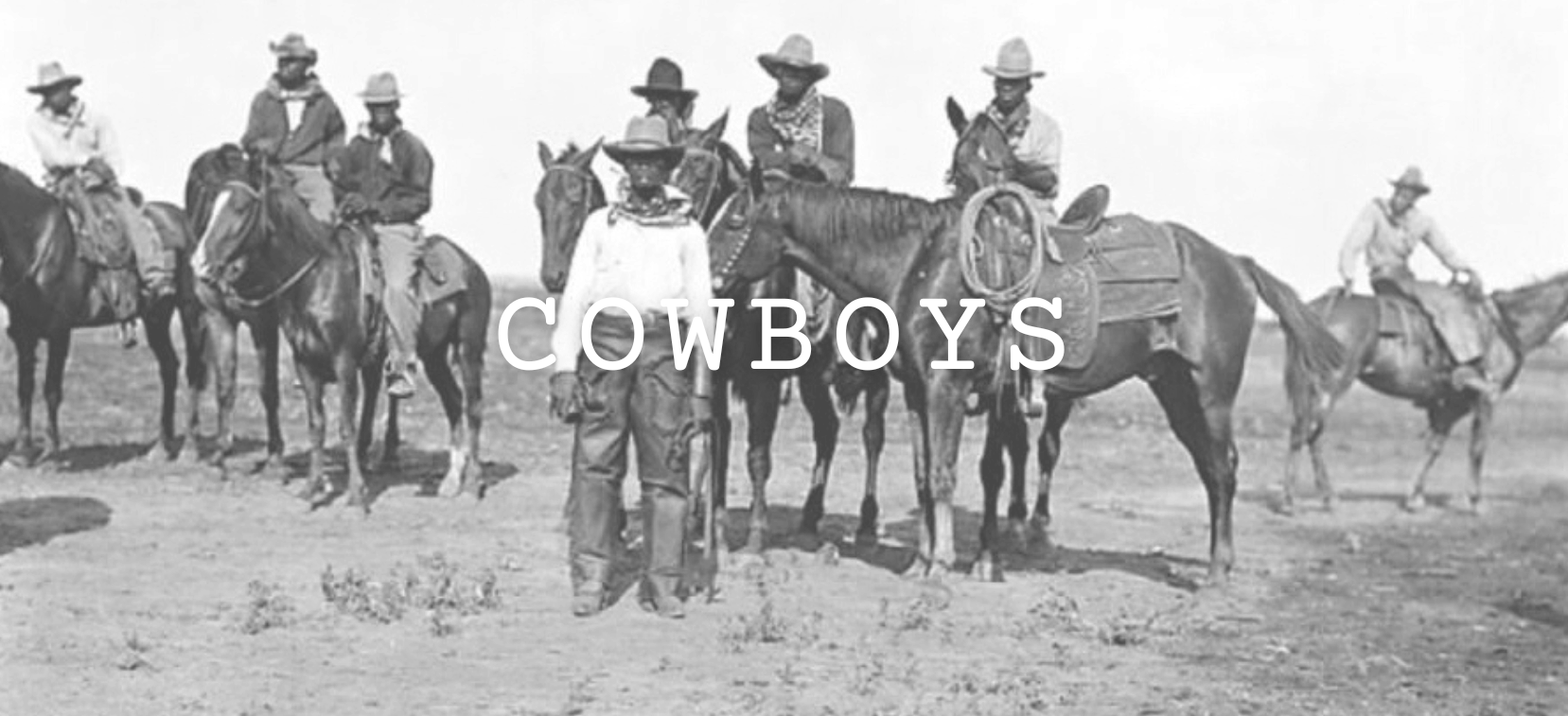
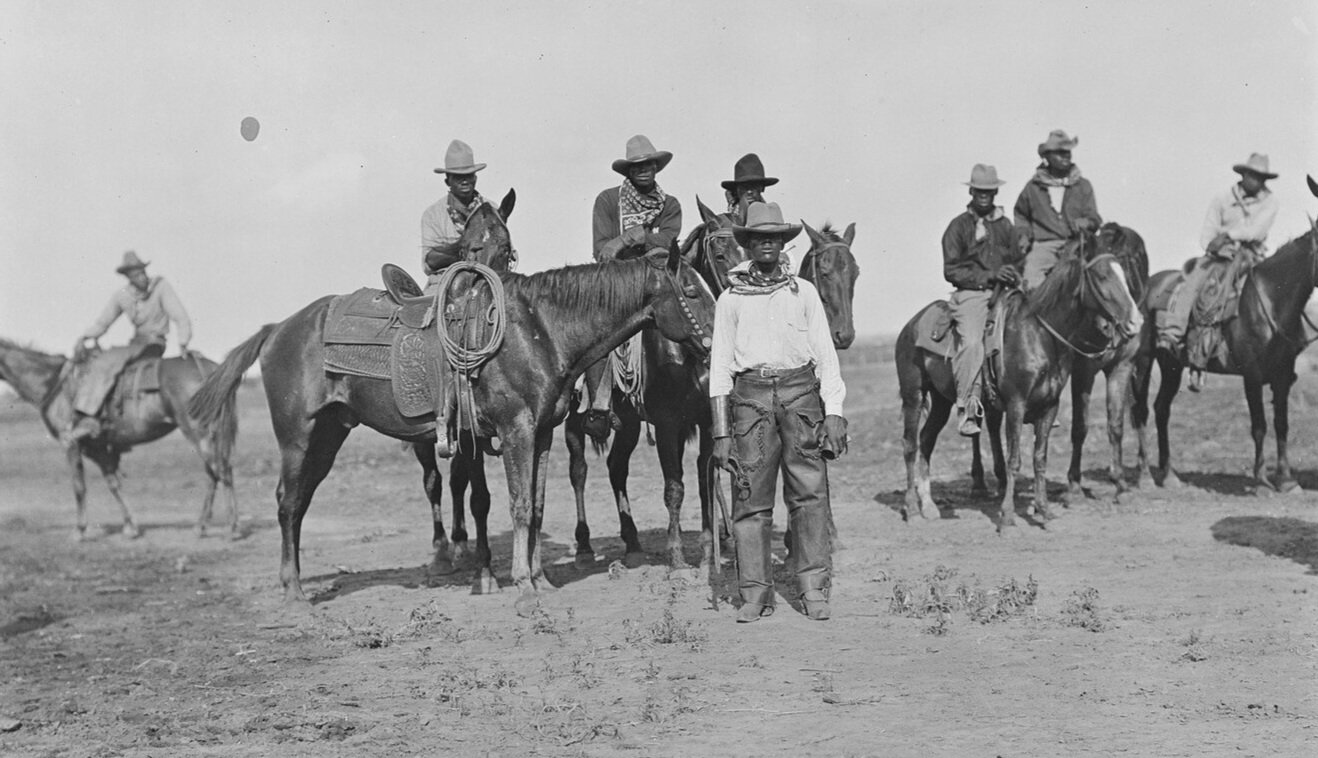
★ c. 1911, Black cowboys at the Negro State Fair in Bonham, Texas. Erwin E. Smith Collection of the Library of Congress on Deposit at the Amon Carter Museum of American Art, Fort Worth, Texas.
★COWHANDS, COWPUNCHERS, COWBOYS★
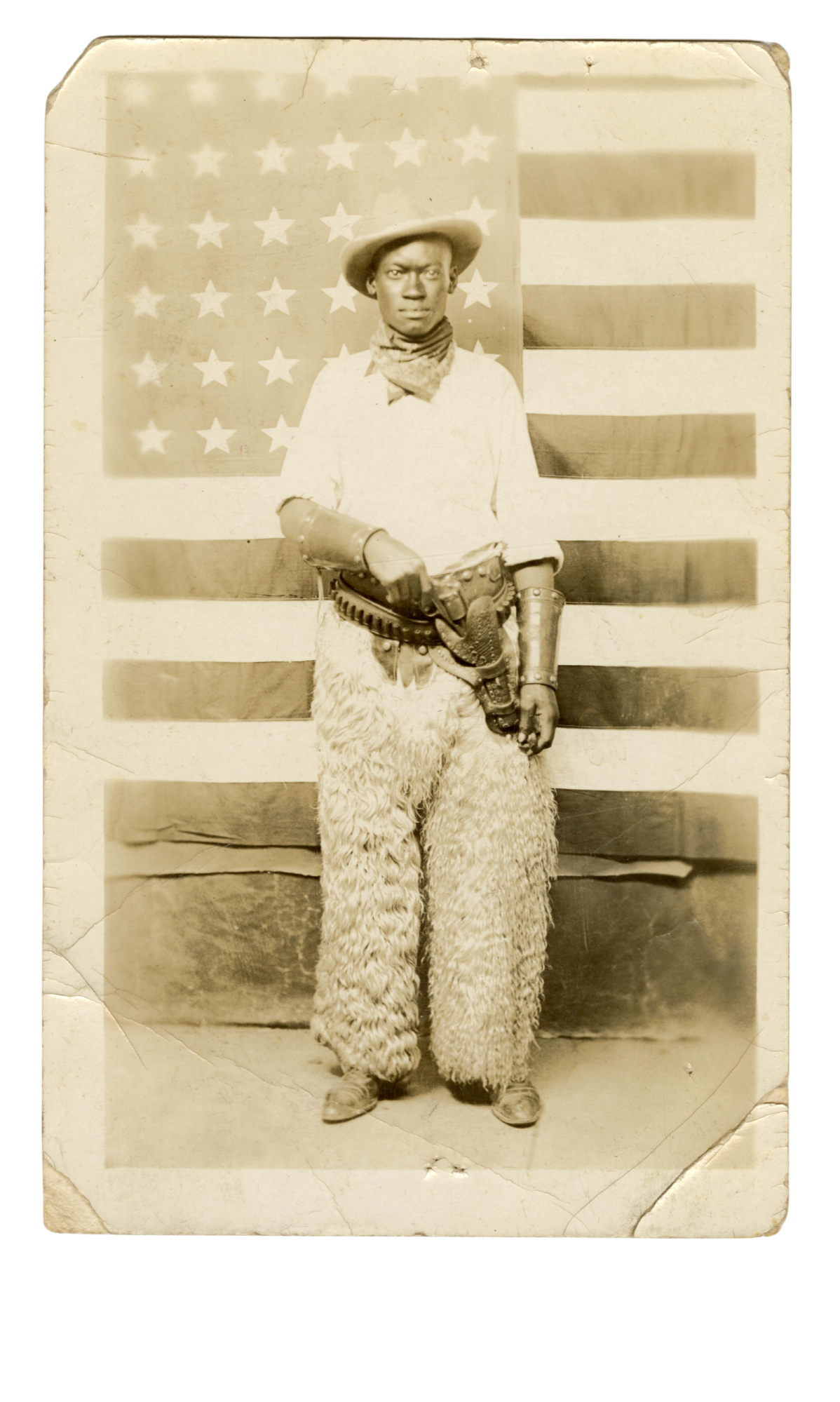
“Imagine, my dear reader, riding your horse at the top of his speed through torrents of rain and hail, and darkness so black that we could not see our horses’ heads, chasing an immense herd of maddened cattle which we could hear but could not see, except during the vivid flashes of lightning which furnished our only light.”
—Nat Love, on his time herding 2,500 head of cattle along a rigorous trail, from The Life and Adventures of Nat Love, Better Known in Cattle Country as Dead Wood Dick (1907).
★ Shortly after the Civil War, the American cattle industry saw a boom in business. As the demand for beef increased, so too did the labor force of cattle workers. The terms “cowpuncher” or “cowpoke” are directly related to the act of branding and processing cattle, one of many duties for those commonly referred to as cowboys. The indelible style of dress, impossible rodeo performance innovations, and sheer grit of Black cowboys have withstood the test of time and Hollywood’s omission of their legacy from the glamorized cinematic representations of the Wild West.
↓ Continue scrolling for a reading list and visual histories that represent the role of the Black cowboy throughout the history of the American West.
⇧⇧⇧ Film clip: The Bronze Buckaroo (1939), Lucious Brooks plays “Dusty.” Preserved by the Moving Images + Recorded Sound Division at the Schomburg Center.
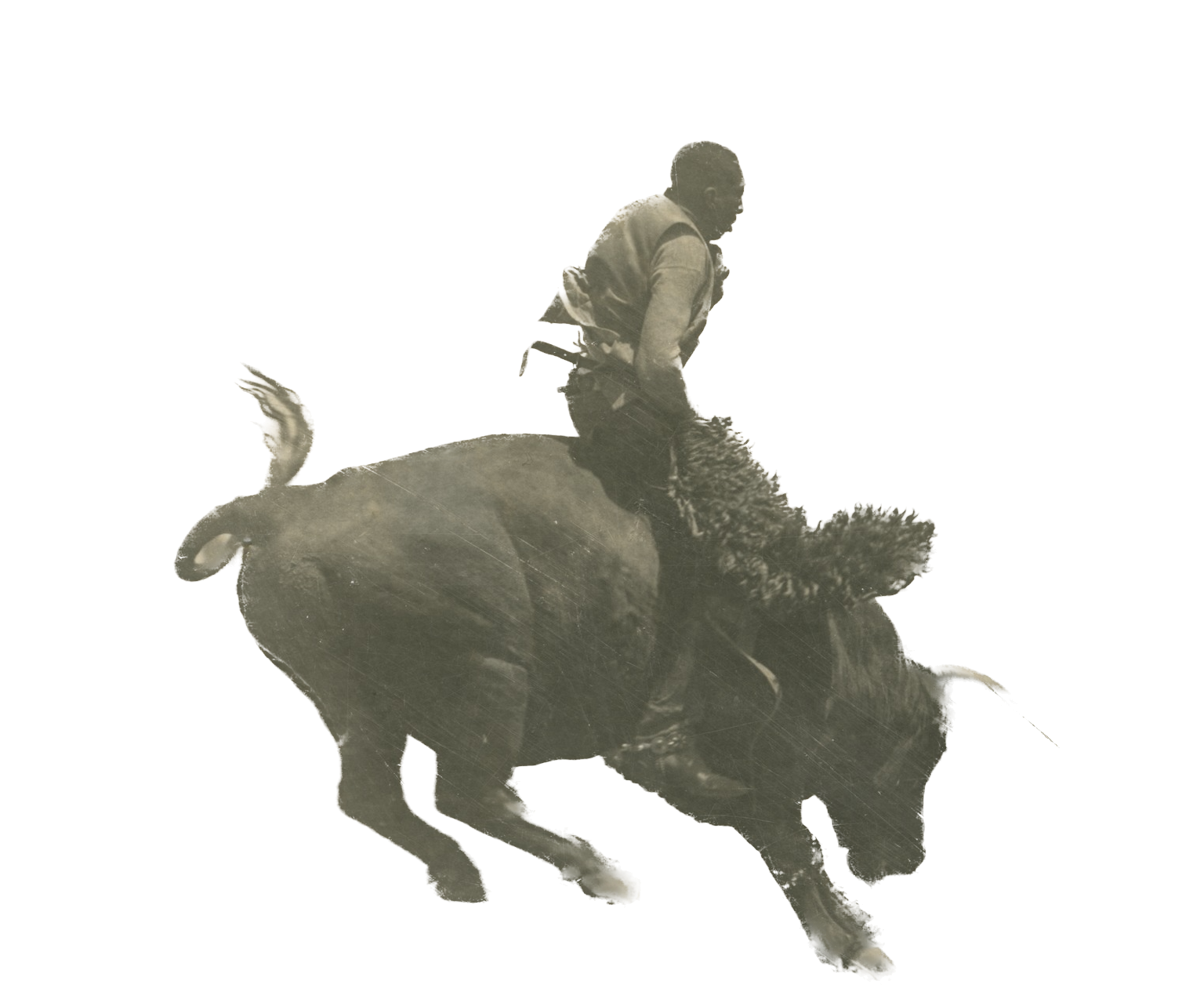
⇩⇩⇩ Motion graphic: 1912, Cowboy Jesse Stahl, riding a horse named Glass Eye at a rodeo in Salinas, California. National Cowboy & Western Heritage Museum, Dickinson Research Center, Oklahoma, OK, 2005.047.8.
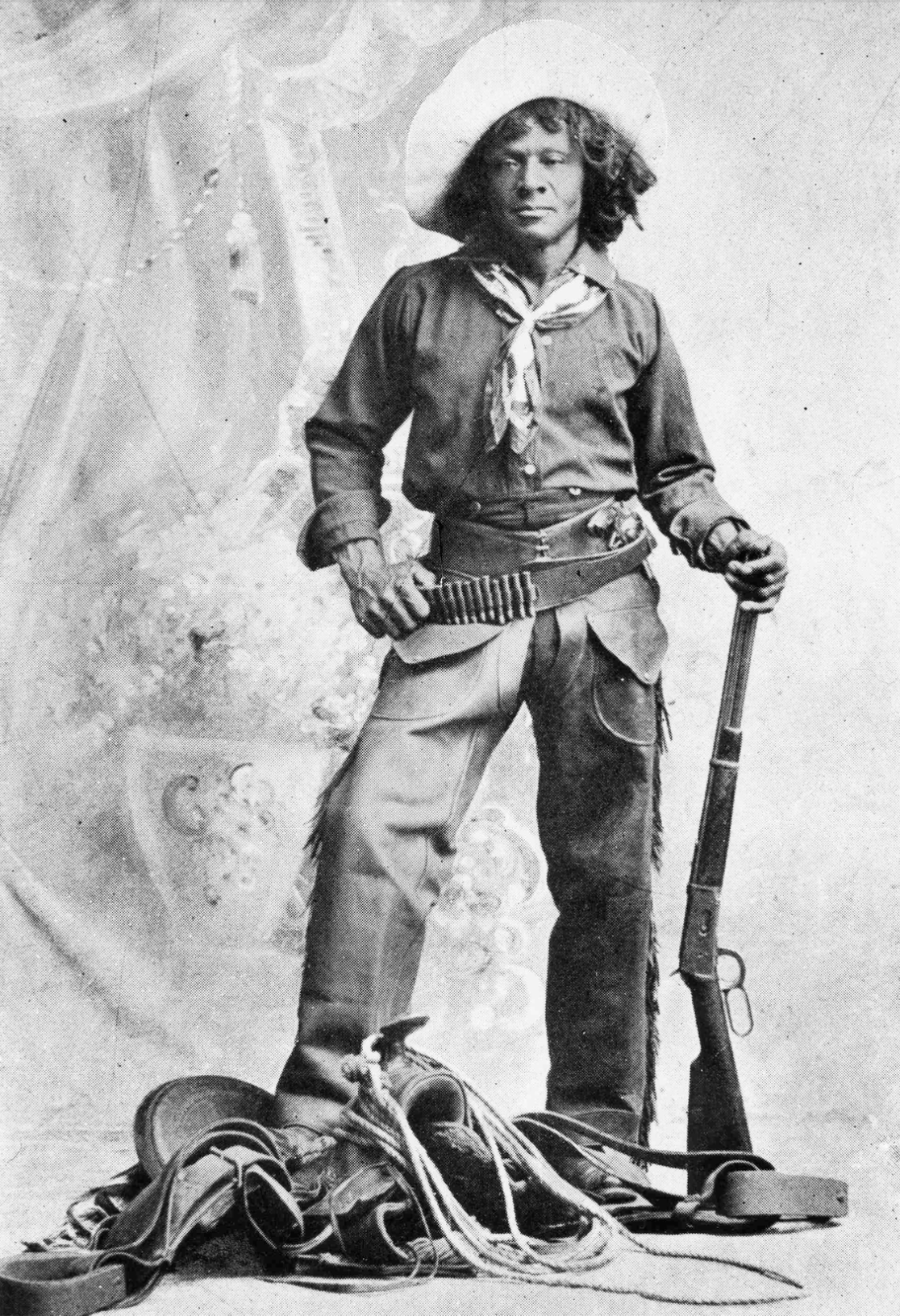
★ Nat Love | June 1854 - February 11, 1921
Cowboy and author, commonly known as “Deadwood Dick,” Nat Love is one of the most famous cowboys of the Old West. His life is detailed in the 1907 autobiography, The Life and Adventures of Nat Love, Better Known in Cattle Country as Dead Wood Dick. In it, he writes of his boyhood and life on a plantation in Tennessee, before he decided to go out west in search of opportunity. This led him down an adventurous path of cattle ranching as a quintessential cowboy on the frontier.
As time and industry changed, so too did his profession; he phased out of herding cattle and riding trails to become a career porter, servicing passenger trains and seeing America through life on the rails. The rich histories preserved in his life narrative reflect the importance of self-archiving and provide an avenue for exploring the history of the Black cowboy.
★ PICTURED ★
c. 1870 - 1880s. Studio portrait of Nat Love, pg. 113 of the “Life and Adventures of Nat Love, Better Known in the Cattle Country as Deadwood Dick,” By Nat Love, 1907.
BELOW: Illustration from pg.102 of the “Life and Adventures of Nat Love, Better Known in the Cattle Country as Deadwood Dick,” By Nat Love, 1907.
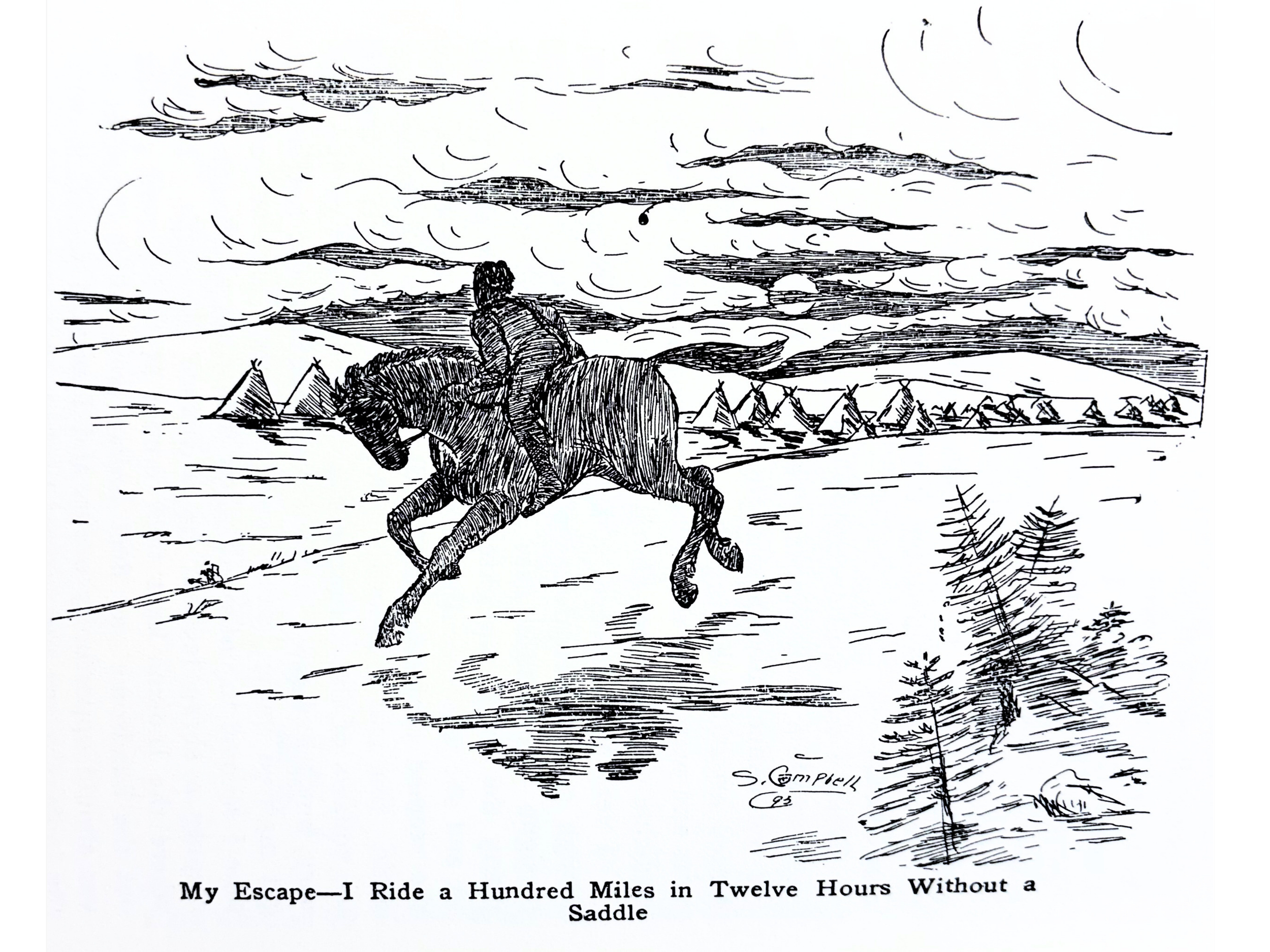
“It seems to me that the horse chosen for me was the most vicious of the lot. Everything being in readiness, the “45” cracked and we all sprang forward together, each of us making for our particular mustang.
I roped, threw, tied, bridled, saddled, and mounted my mustang in exactly nine minutes from the crack of the gun. The time of the next nearest competitor was twelve minutes and thirty seconds. This gave me the record and championship of the West, which I held up to the time I quit the business in 1890, and my record has never been beaten. It is worthy of passing remark that I never had a horse pitch with me so much as that mustang, but I never stopped sticking my spurs in him and using my quirt on his flanks until I proved his master. Right there, the assembled crowd named me Deadwood Dick and proclaimed me champion roper of the western cattle country.”
—Nat Love, in his own words, on winning the title, “Deadwood Dick” during a mustang roping contest, from The Life and Adventures of Nat Love, Better Known in Cattle Country as Dead Wood Dick (1907).
★ The following four photographs were originally featured in Nat Love’s 1907 autobiography and visually illustrate his transition from a cowboy of the Wild West to a Pullman Porter as he aged ⇩ ⇩ ⇩
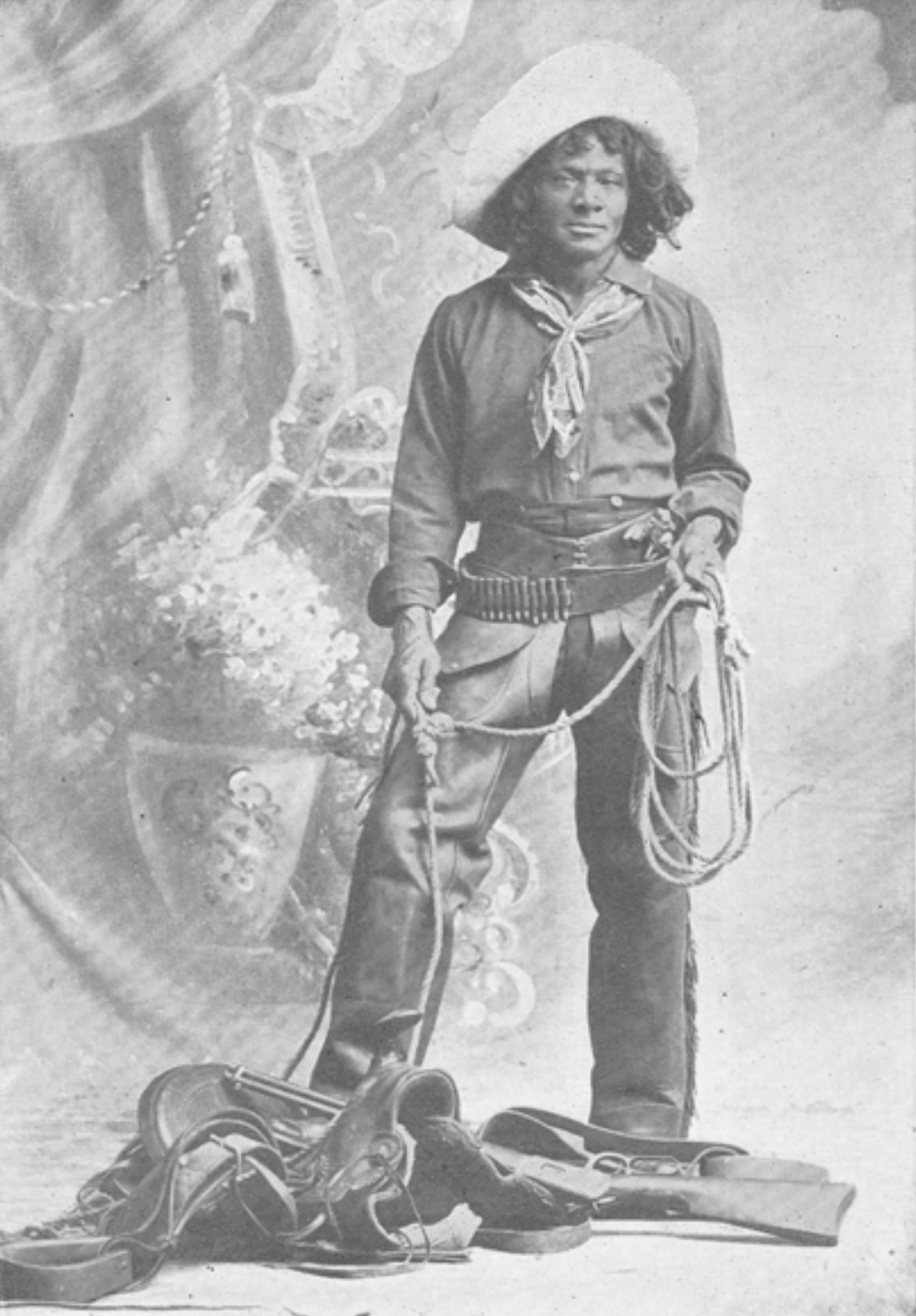
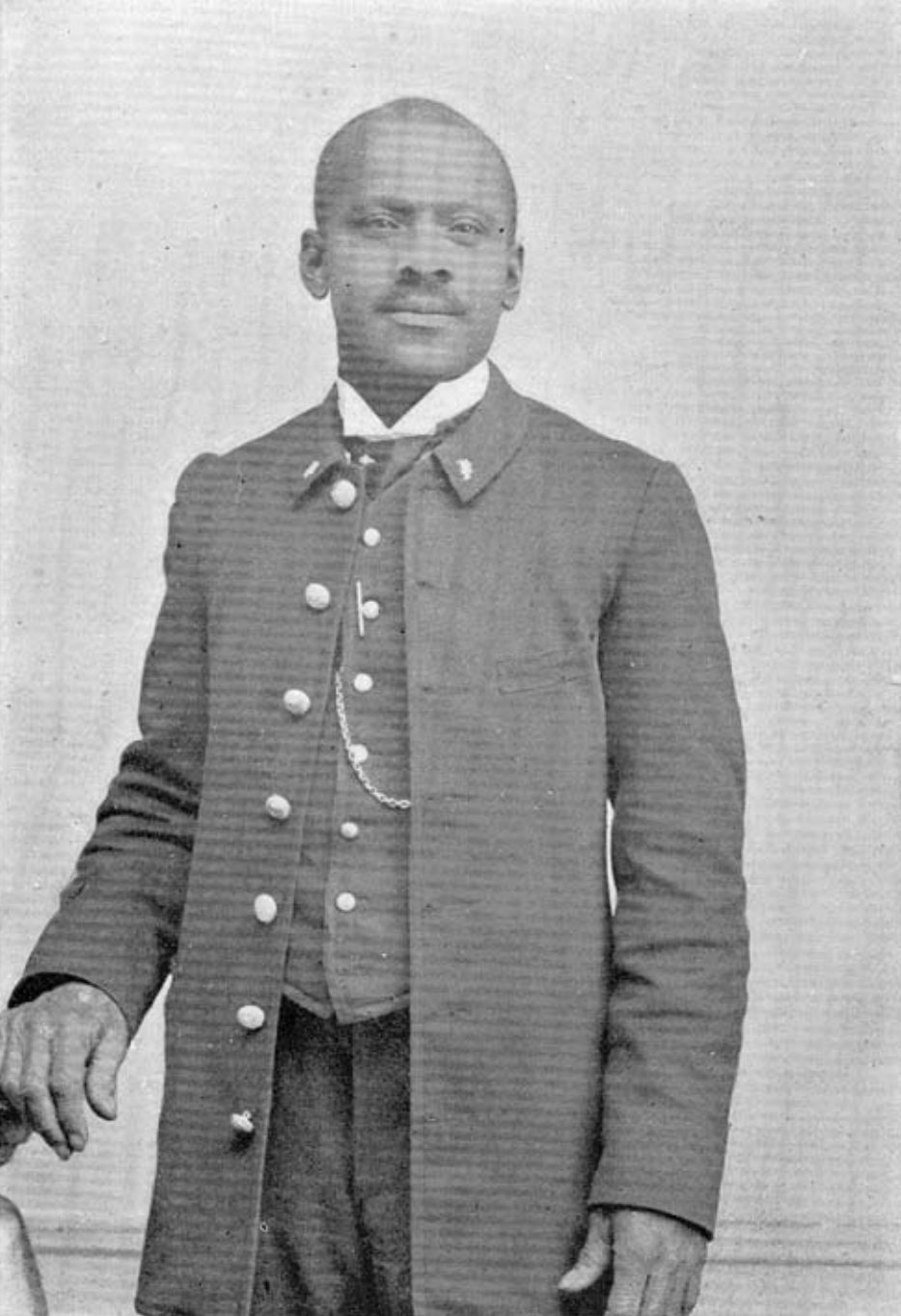
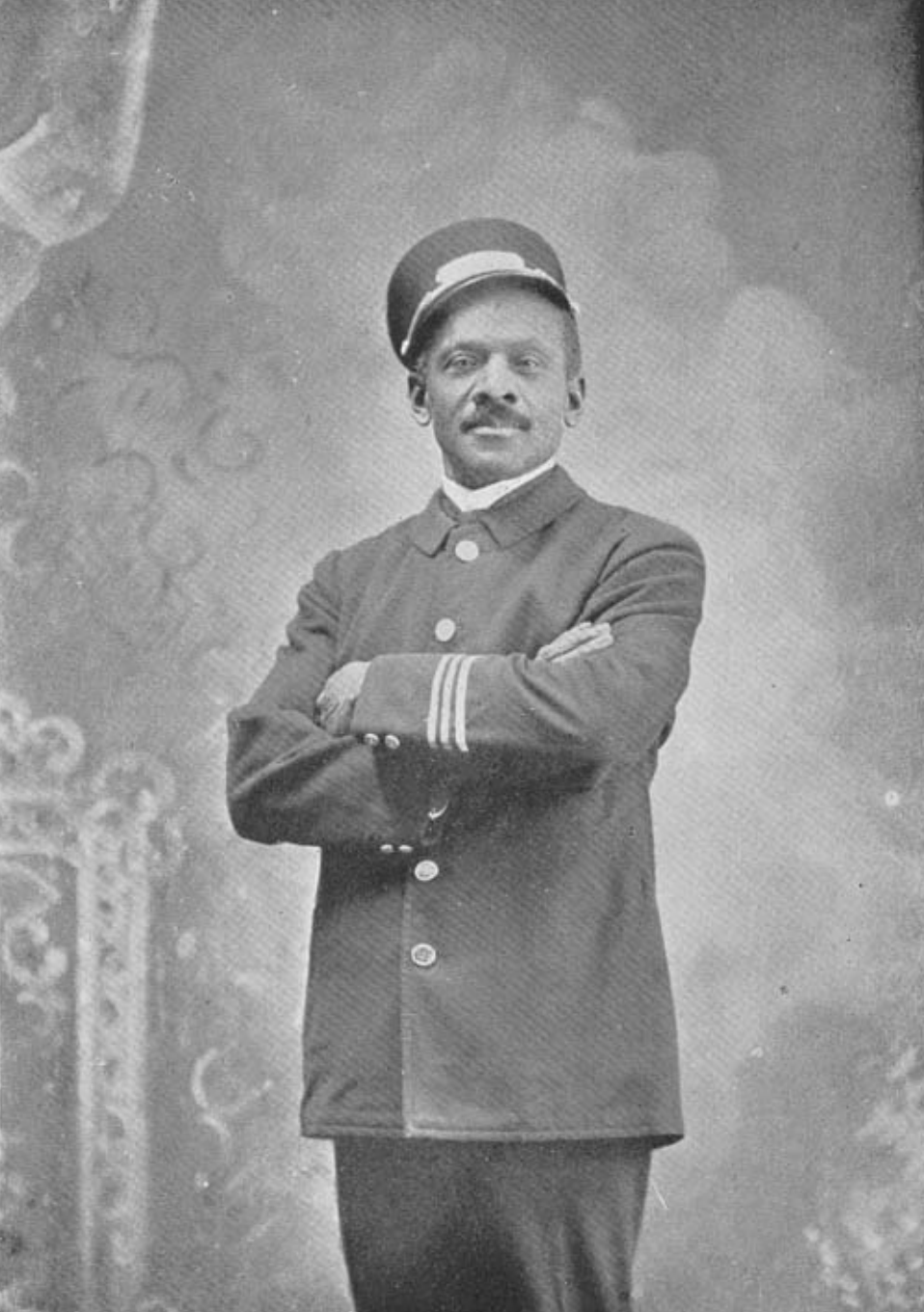
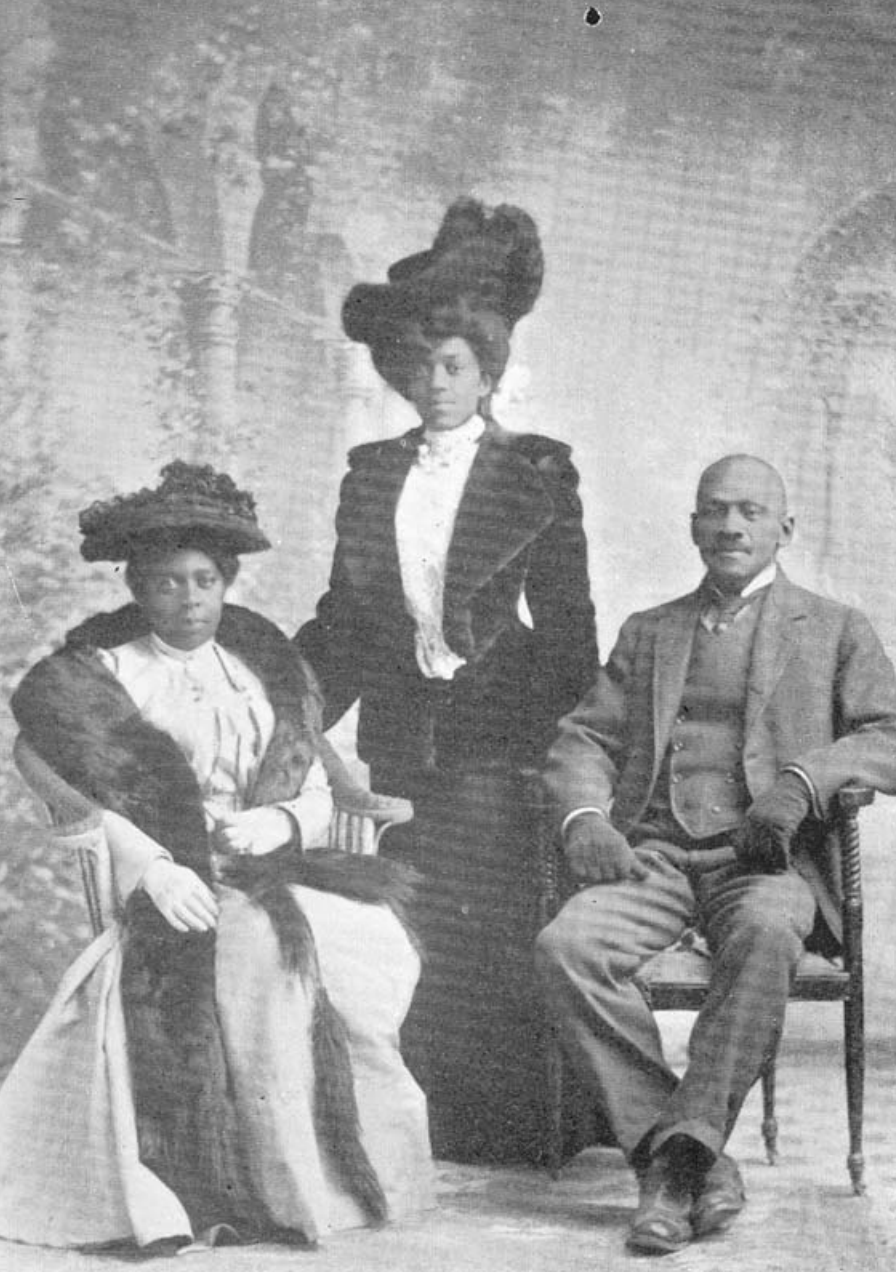
“It was with genuine regret that I left the longhorn Texas cattle and the wild mustangs of the range, but the life had in a great measure lost its attractions, and so I decided to quit it and try something else for a while.”
–Nat Love, on his transition from being a Cowboy to a Pullman Porter, from The Life and Adventures of Nat Love, Better Known in Cattle Country as Dead Wood Dick (1907).
“I have visited all the principal cities and towns where the sound of the bell and the whistle is heard, and I have in a great measure satisfied my desire to see the country. Among the great lines of railway over which I have traveled are the Union Pacific, whose overland limited, the Atlantic Express, and the Portland-Chicago Special are the acme of quick, safe, and comfortable travel.”
–Nat Love, on his time as a Pullman Porter for the Union Pacific Railroad, from The Life and Adventures of Nat Love, Better Known in Cattle Country as Deadwood Dick.
★ Similar to the uniform worn by cowboy Nat Love, the motion graphic featured here depicts a 1952 Pullman Porter Uniform, preserved by the Art & Artifacts Division at the Schomburg Center for Research in Black Culture. New York Public Library.
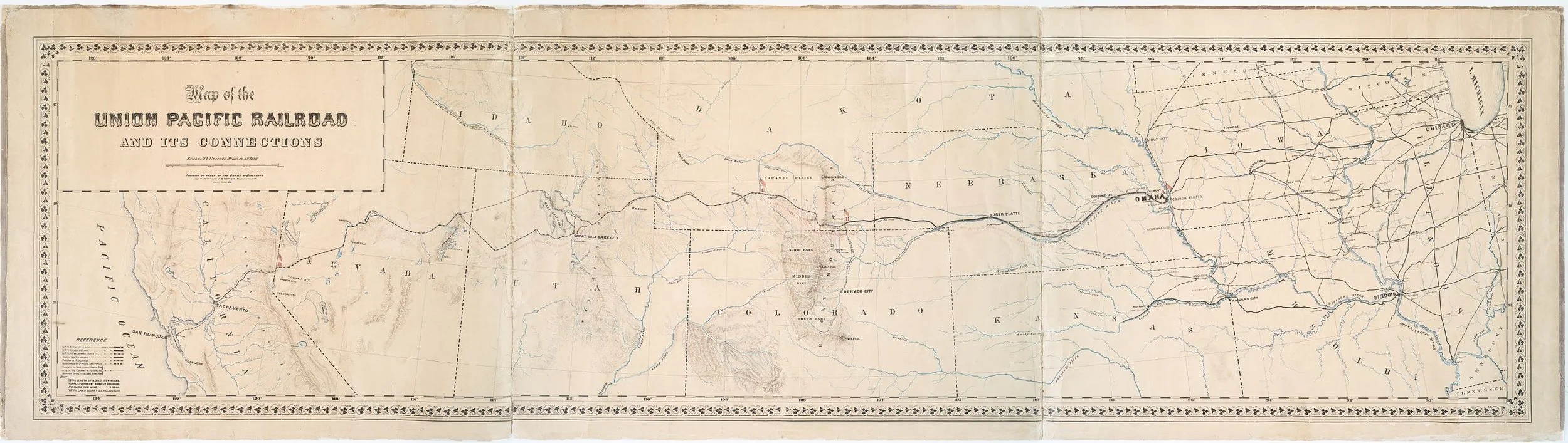
★ c. 1865, Map of the Union Pacific Railroad and Its Connections." Lionel Pincus and Princess Firyal Map Division, New York Public Library. IMAGE ID 1267451.
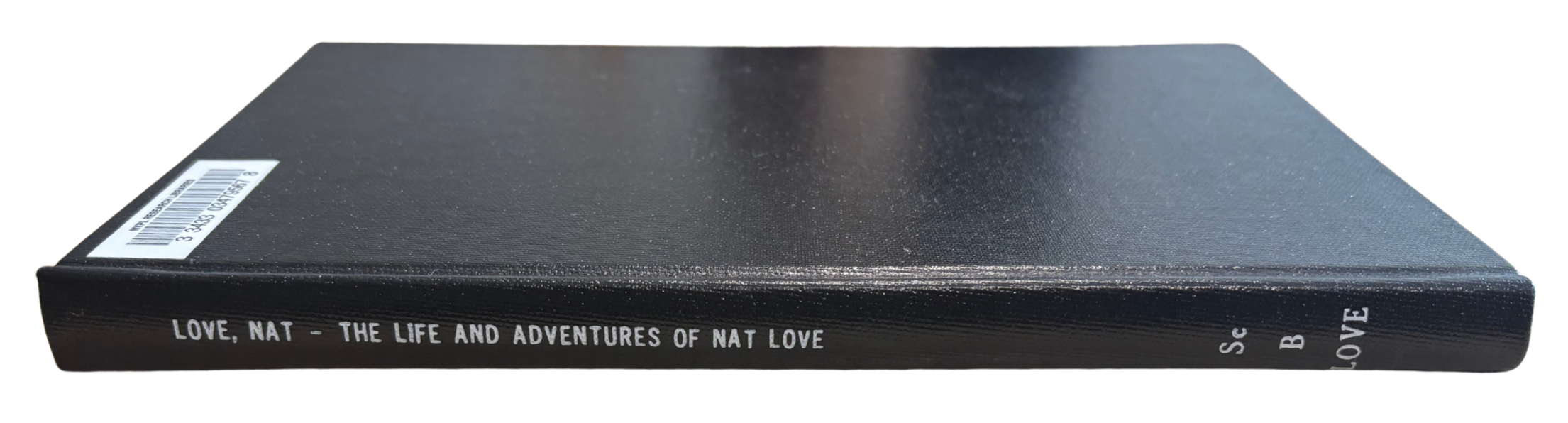
★ One of the Schomburg Center's copies of The Life and Adventures of Nat Love, Jean Blackwell Hutson General Research + Reference Division, Call No. Sc B-Love (Love, N. Life and adventures of Nat Love).
⇧⇧⇧ Motion graphic: 1912, Cowboy Jesse Stahl riding a horse named Grave Digger at the Pendleton Round-Up Rodeo in Oregon. Oregon Historical Society.
⇩ The following digitized comic book is preserved by the Schomburg Center’s Jean Blackwell Hutson General Research + Reference Division. Click the side arrows to explore this 1983 publication.
★ COWBOYS, READING + RESOURCE LIST ★
Selections from our Jean Blackwell Hutson Research + Reference Division
The Life and Adventures of Nat Love, Better Known as Deadwood Dick in Cattle Country, by Nat Love. Originally published in 1907, Call No. Sc E 94-163 (1968 version).
Bill Pickett, Bulldogger: The Biography of a Black Cowboy, by Bailey C. Hanes; with a foreword by Bill Burchardt (1977). Call No. Sc D 78-55.
Guts: Legendary Black Rodeo Cowboy Bill Pickett, by Cecil Johnson (1994). Call No. Sc E 95-198.
Black cowboys, by Paul W. Stewart and Wallace Yvonne Ponce (1986). Call No. Sc F 87-80.
Black Cowboys, by Andrea Robbins & Max Becher (2016). Call No. Sc+ F 18-244.
The Black Cowboys, by John Wukovits (1997). Call No. Sc E 02-267.
Black Cowboys of Texas, edited by Sara R. Massey, with introduction by Alwyn Barr (2000). Call No. Sc E 00-987.
The Long Ride Home: Black Cowboys in America, by Ron Tarver, with an essay by Art T. Burton (2024). Call No. Sc+ E 25-865.
Black Cowboys in the American West: On the Range, On the Stage, Behind the Badge, edited by Bruce A. Glasrud and Michael N. Searles; foreword by Albert S. Broussard (2016). Call No. Sc D 16-1608.
The New Black West: Photographs from America's Only Touring Black Rodeo, by Gabriela Hasbun ; foreword by Jeff Douvel (2022). Call No. Sc F 22-259.
Eight Seconds: Black Rodeo Culture, photographs by Ivan McClellan (2024). Call No. Sc+ E 25-69.

Selections from Our Moving Image + Recorded Sound Division
Between the Lines, Bill Pickett Invitational Rodeo: Television News Program, Hosted By David Michaels (1990). 5min, “A television news program about the Bill Pickett Invitational Rodeo in honor of the memory of the legendary African American cowboy and rodeo performer.” Call No. Sc Visual DVD-1317.
Insights: Bill Pickett Rodeo, KDFW-TV (1986). 10min, “episode features a segment about a rodeo to commemorate Bill Pickett, the only African American cowboy inducted into the National Rodeo Cowboy Hall of Fame.” Call No. Sc Visual DVD-1314.
The Bronze Buckaroo, 1939 motion picture starring Herbert Jeffries as Bob Blake. 56min, “Cowboy Bob Blake receives a letter from his friend Joe Jackson, asking for help. Blake discovers that Jackson is being held by a local rancher, Buck Thorne, who (with his partner Pete) has discovered gold on Jackson's ranch.” Call No. Sc Visual VRA-1128.
Harlem Rides the Range, 1939 motion picture starring Herbert Jeffries as Bob Blake. 52min, “featuring an all-black cast, Cowboy Bob Blake, and his sidekick, Rusty, try to save a homesteader from being cheated out of his property.” Call No. Sc Visual VRA-1106.
Buck and the Preacher, 1972 motion picture starring Harry Belafonte and Sydney Poitier. 102min, “the story of the perils faced by a wagon train of courageous black settlers. It's the 1860s and Abraham Lincoln's Emancipation Proclamation has just freed the country's slaves, but a group of vigilante nightraiders are resentful of the black men's newly-gained freedom.” Call No. Sc Visual DVD-1920.
★ Below is a series of photographs preserved by peer institutions to help tell the visual story of Black Cowboy history.
Refer to the credit lines for details ⇩
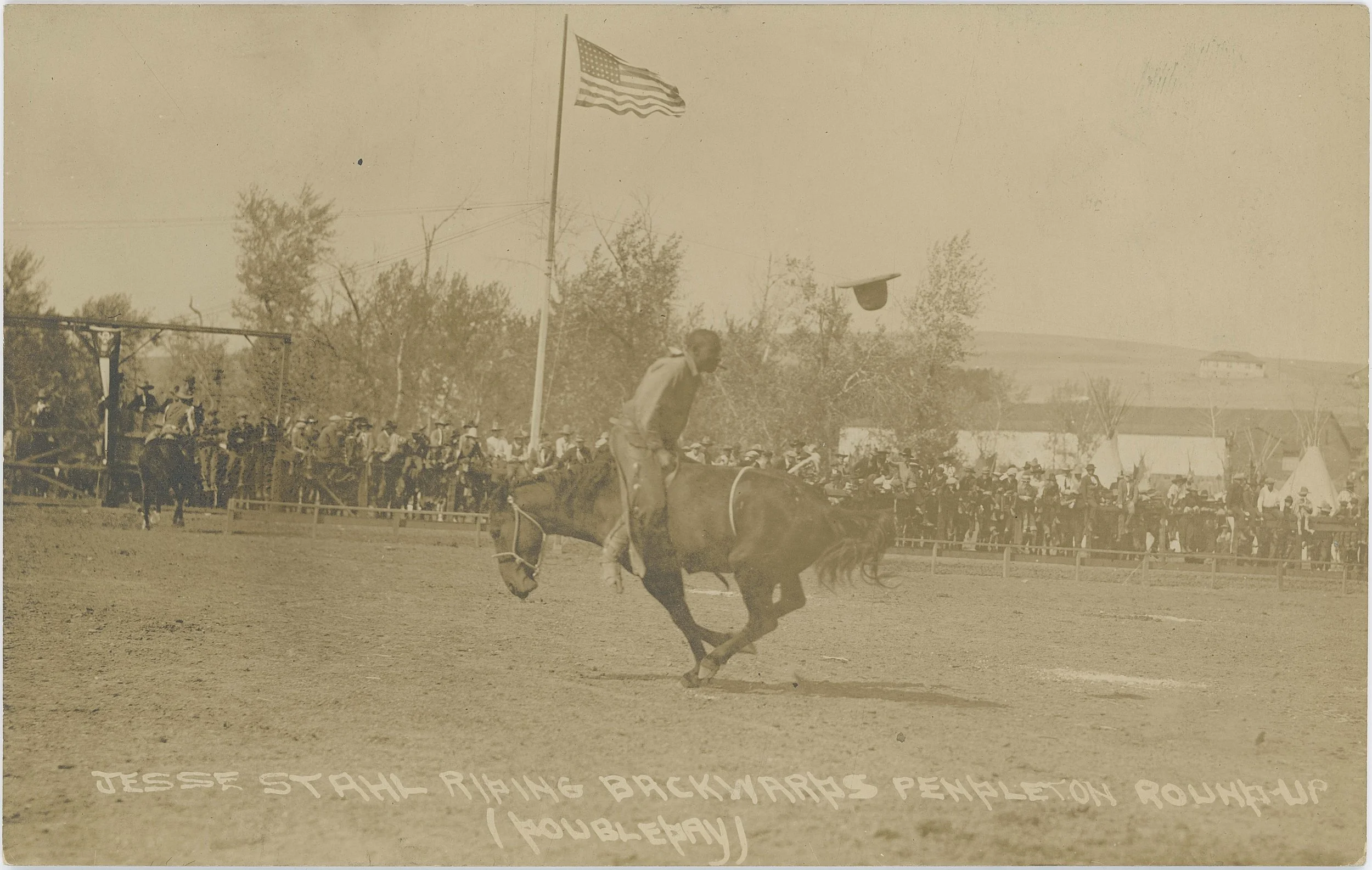
★ c. 1922, Jesse Stahl riding backwards at the "Pendleton Round-Up," Pendleton, Oregon. National Cowboy & Western Heritage Museum, Dickinson Research Center, Oklahoma City, OK, RC2006.116.
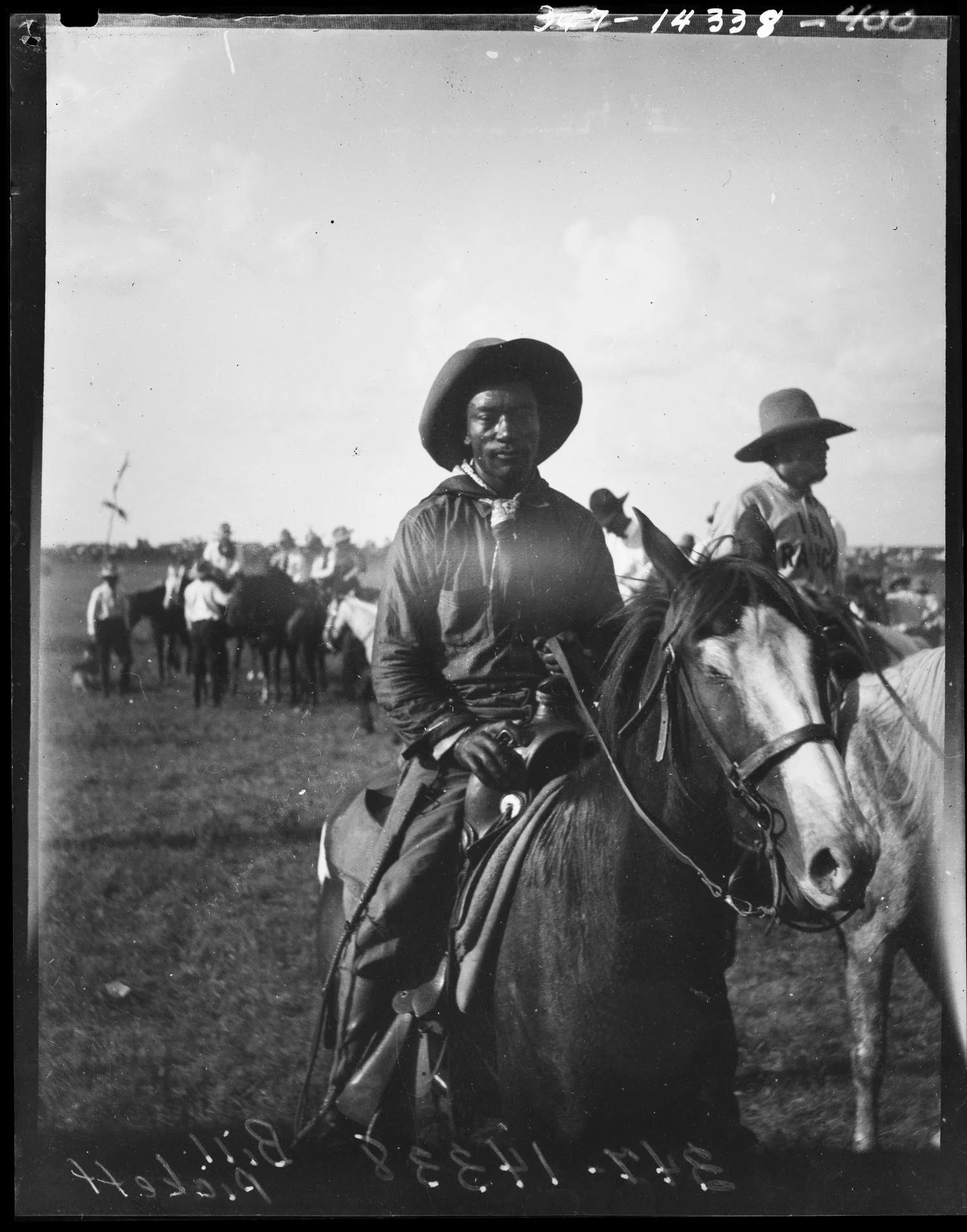
★ c. 1910, Photograph of Bill Pickett on a horse. Bill Pickett, one of the most notable Black cowboys of the American West, famously created the technique called "Bull Dogging," which refers to the act of wrestling a steer in a rodeo setting. ★ The Gateway to Oklahoma History, https://gateway.okhistory.org; crediting Oklahoma Historical Society. 347-14338.
![★ c. 1923, Motion picture poster for "The bull-dogger," featuring an illustration of Bill Pickett. Library of Congress Prints and Photographs Division. POS - MOT. PIC. - Black Film - 1923 .B86, no. 1 (C size) [P&P].](https://images.squarespace-cdn.com/content/v1/6535b7e96b6e1403bcc579a8/3ec9ff3a-6e80-4c27-9759-2f1a5ffd1212/c+1923%2C+Motion+picture+poster+for+%2522The+bull-dogger%2522+LOC+-+lithogaph+public.jpg)
★ c. 1923, Motion picture poster for "The bull-dogger," featuring an illustration of Bill Pickett. Library of Congress Prints and Photographs Division. POS - MOT. PIC. - Black Film - 1923 .B86, no. 1 (C size) [P&P].
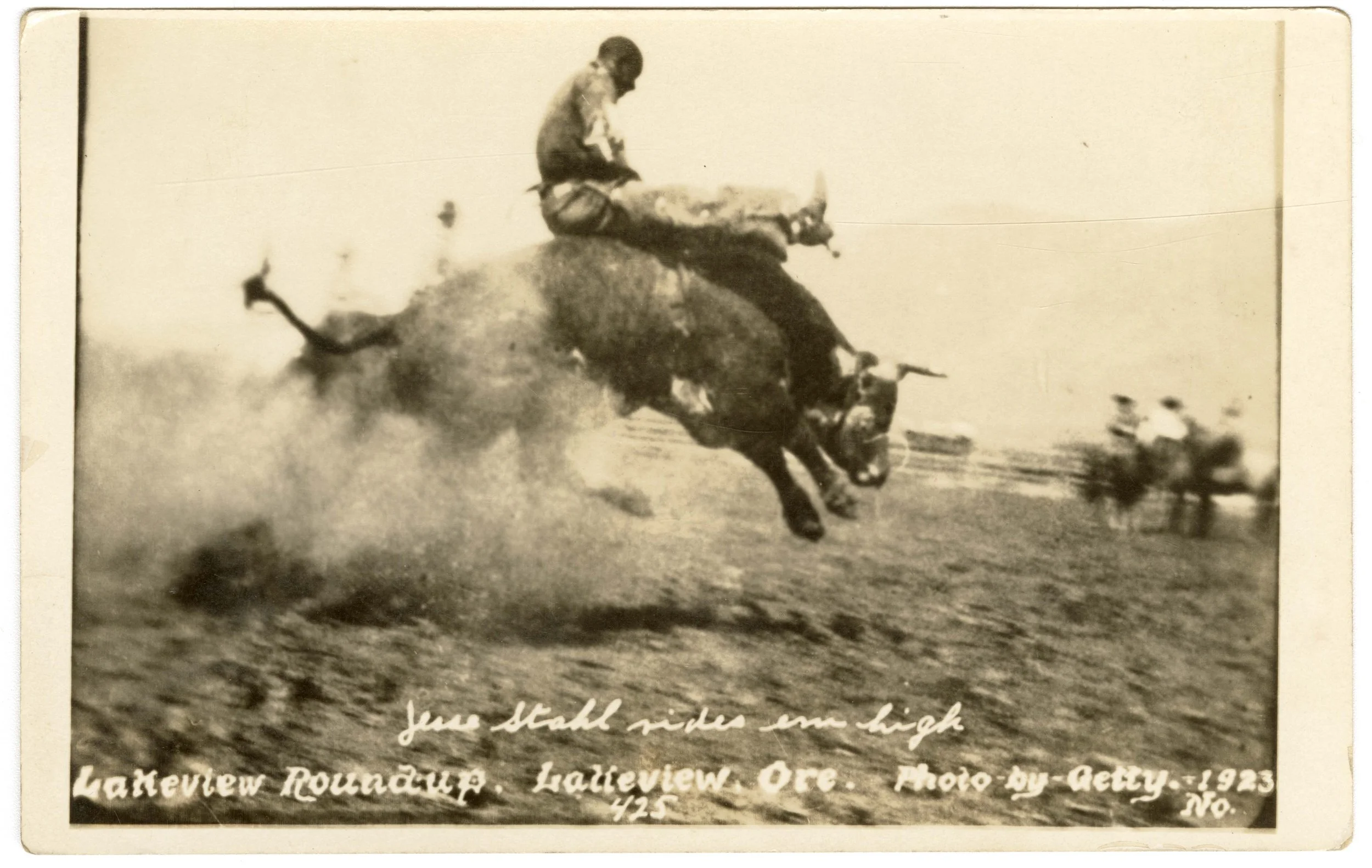
★ 1923, Jesse Stahl riding a bull at the "Lakeview Roundup" Rodeo in Lakeview, Oregon, by Mark Getty. National Cowboy & Western Heritage Museum, Dickinson Research Center, Oklahoma City, OK, RC2008.018.3.
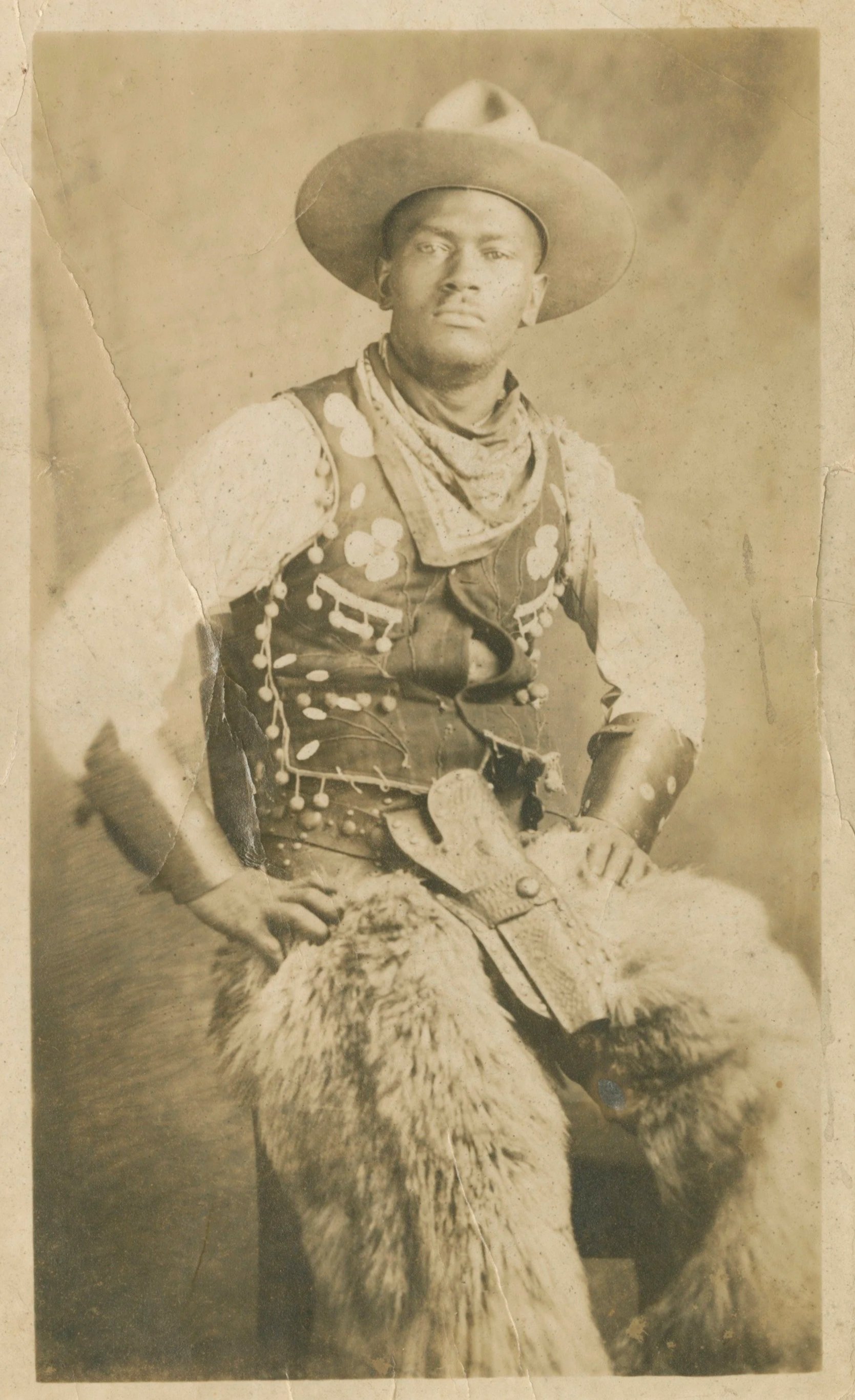
★ c. early 1900s, studio portrait of a cowboy. Collection of the Smithsonian National Museum of African American History and Culture. Object ID 2014.37.35.16.
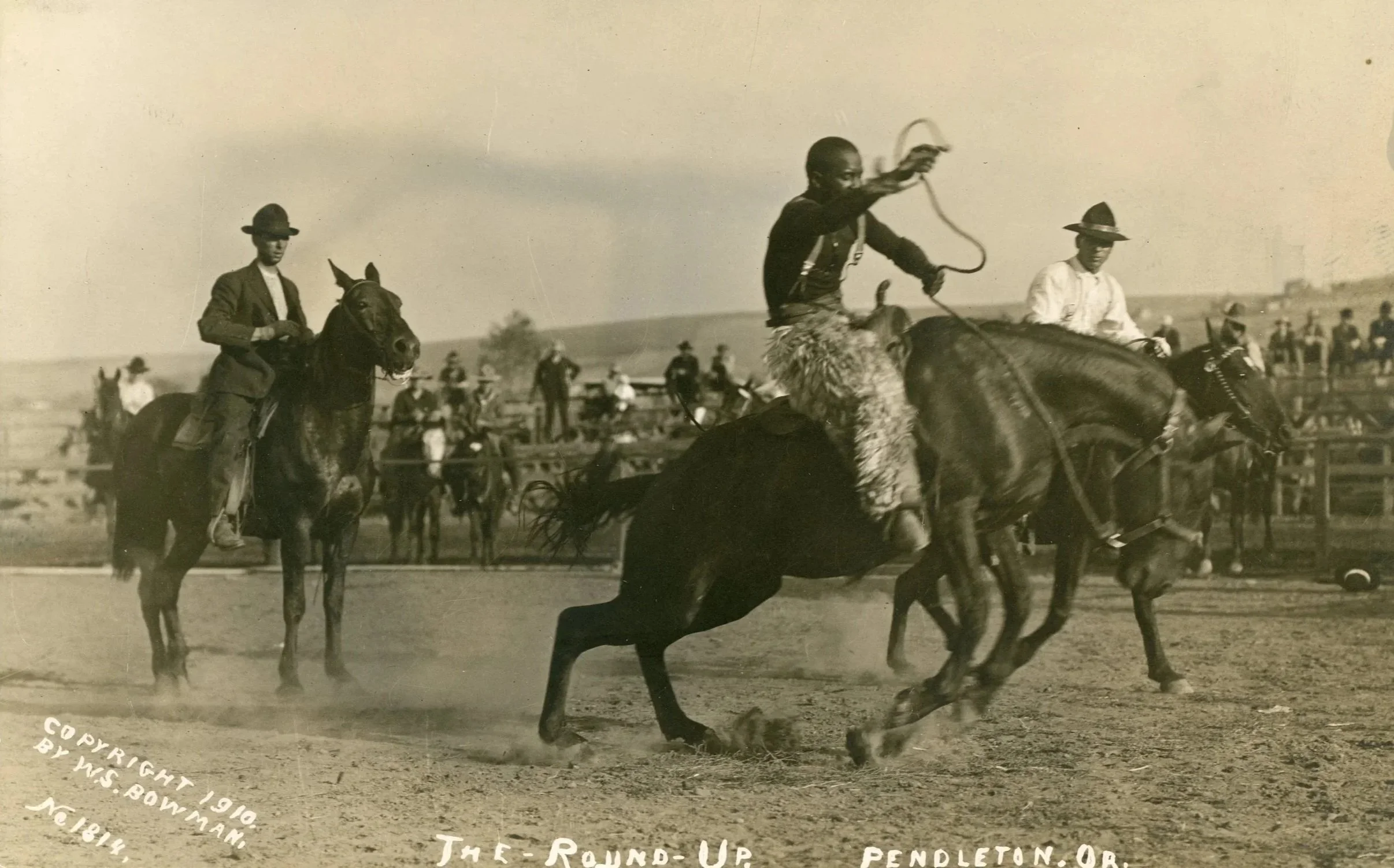
★ c. 1910, Jesse Stahl (center) performing in the first annual "Pendleton Round-Up," Pendleton, Oregon. African American real photo postcard collection, Johns Hopkins Libraries, Digital Collections. Image ID MS.0583.
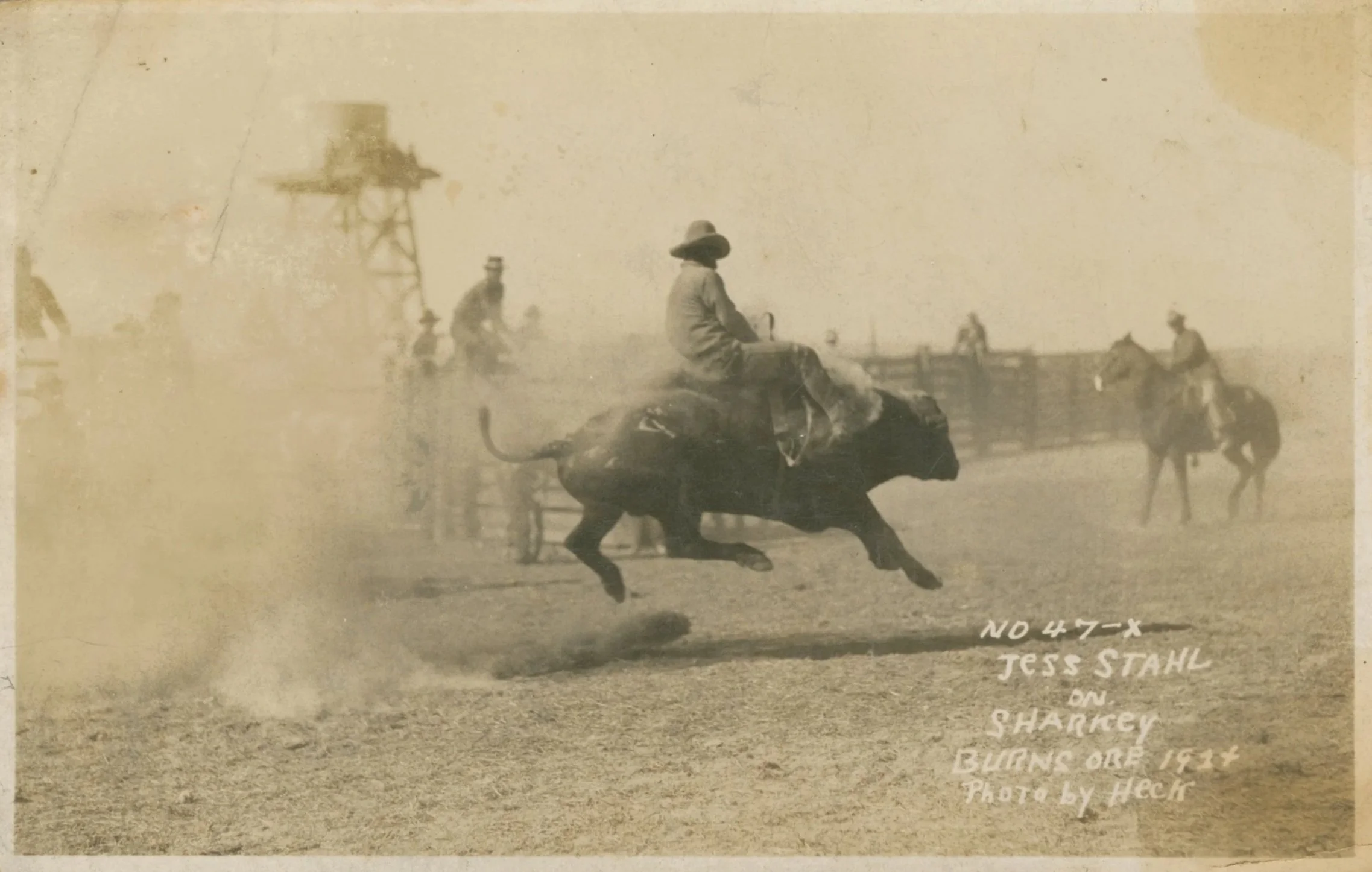
★ c. 1924, Jesse Stahl riding a bull, with the enscription, "NO 47-X JESS STAHL ON SHARKEY BURNS ORE 1924." Collection of the Smithsonian National Museum of African American History and Culture. Object ID 2014.37.36.14.
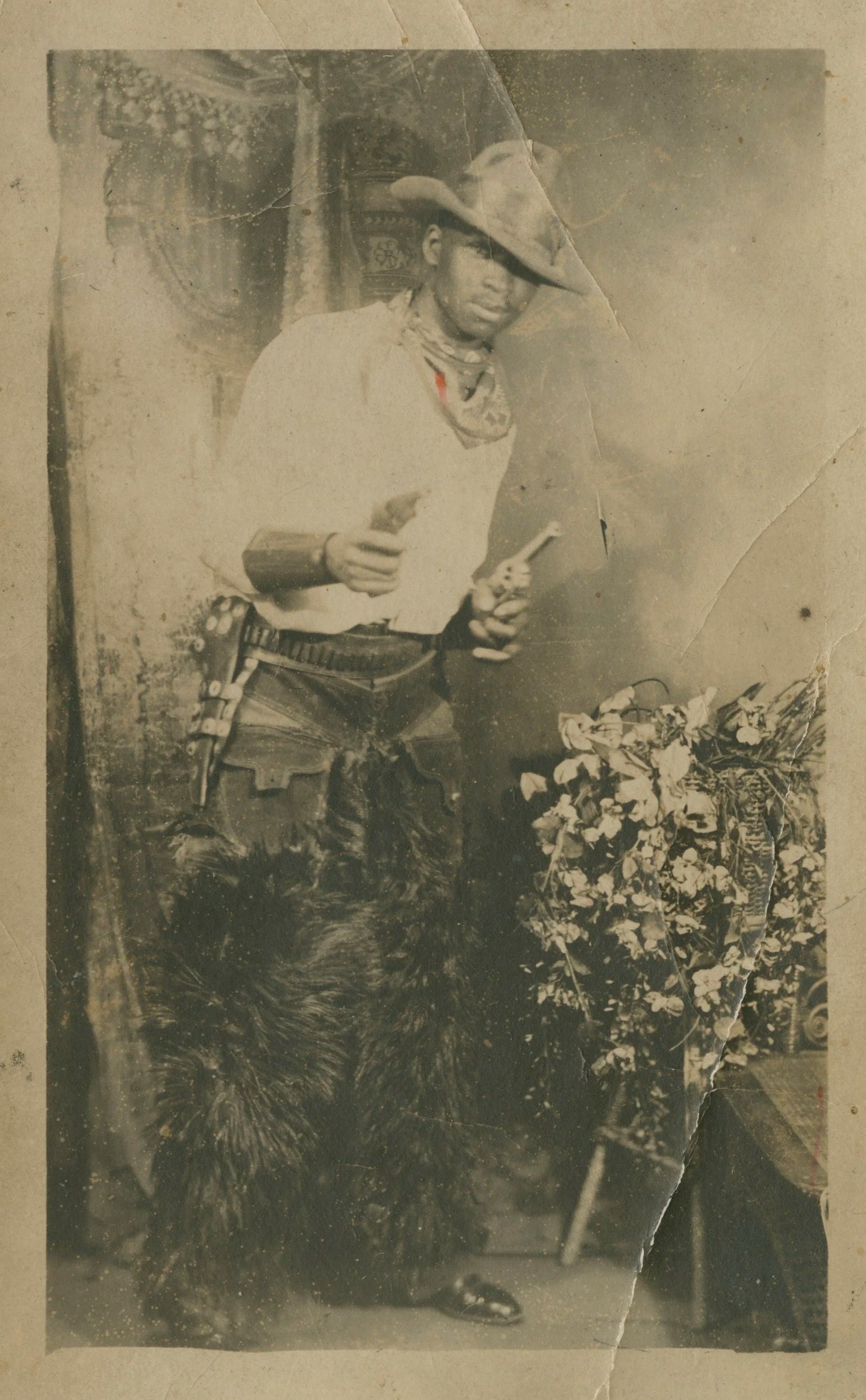
★ c. early 1900s, Studio portrait of a cowboy. Collection of the Smithsonian National Museum of African American History and Culture. Object ID 2014.37.35.19.
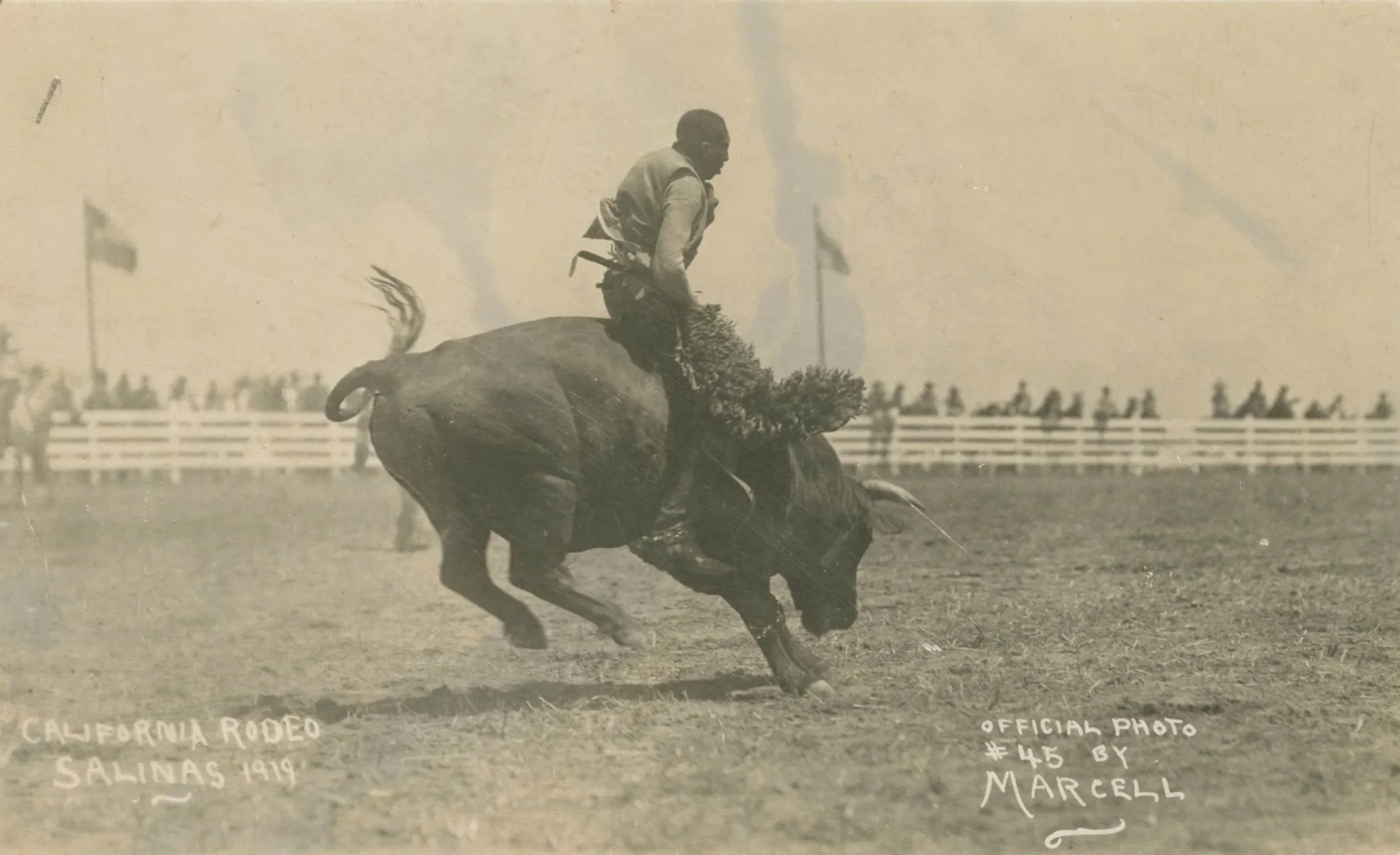
★ c. 1919, California Rodeo, Salinas. Collection of the Smithsonian National Museum of African American History and Culture. Object ID 2014.37.35.8.
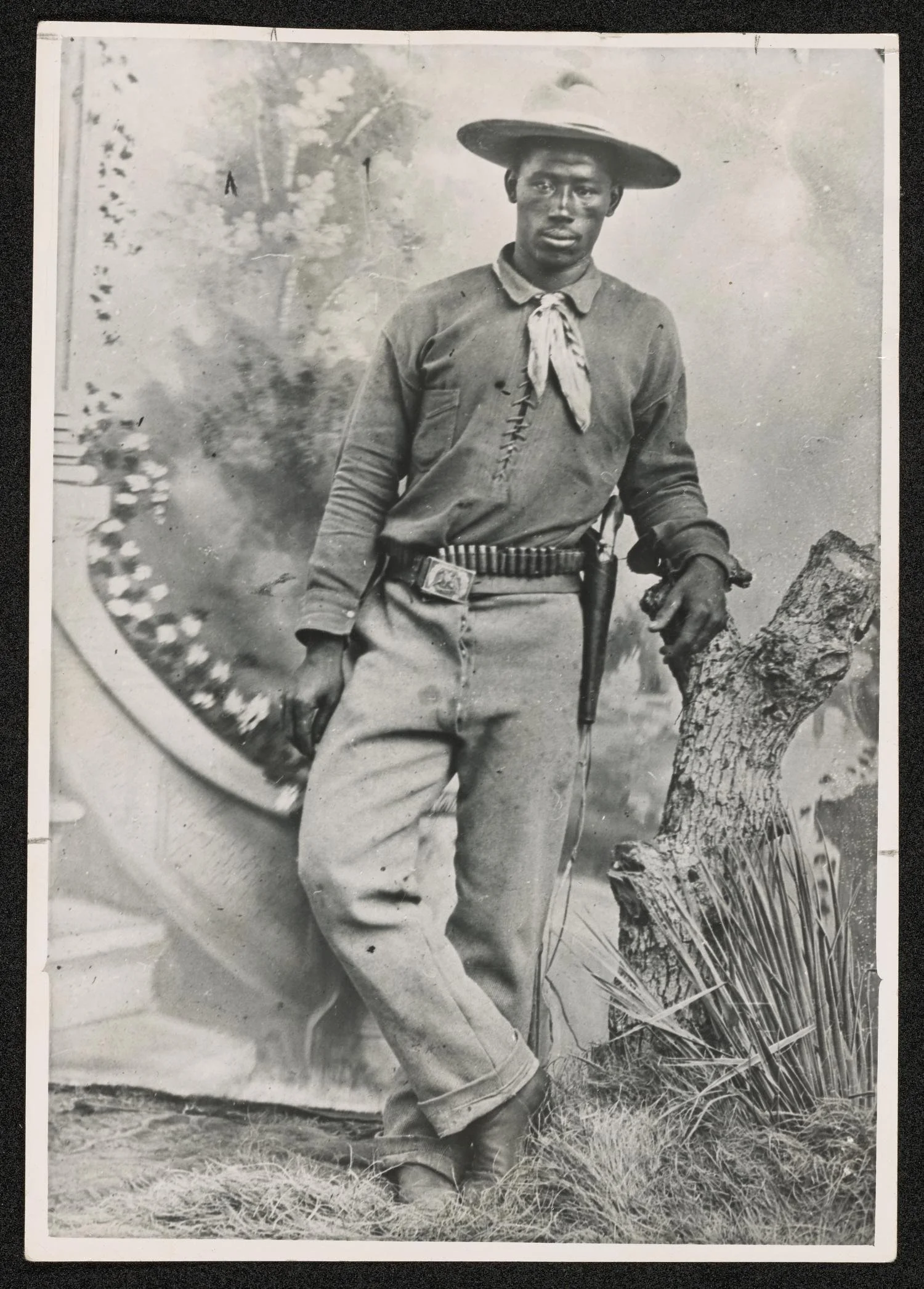
★ c. 1870 - 1900, Decorated studio portrait of 'Coaly the Cowhand.' The inscription on the back of the photograph reads, "Coaly, the boy who could ride and rope 'anything that has four feet and wore hair'". University of North Texas Libraries, The Portal to Texas History, Cattle Raisers Museum.
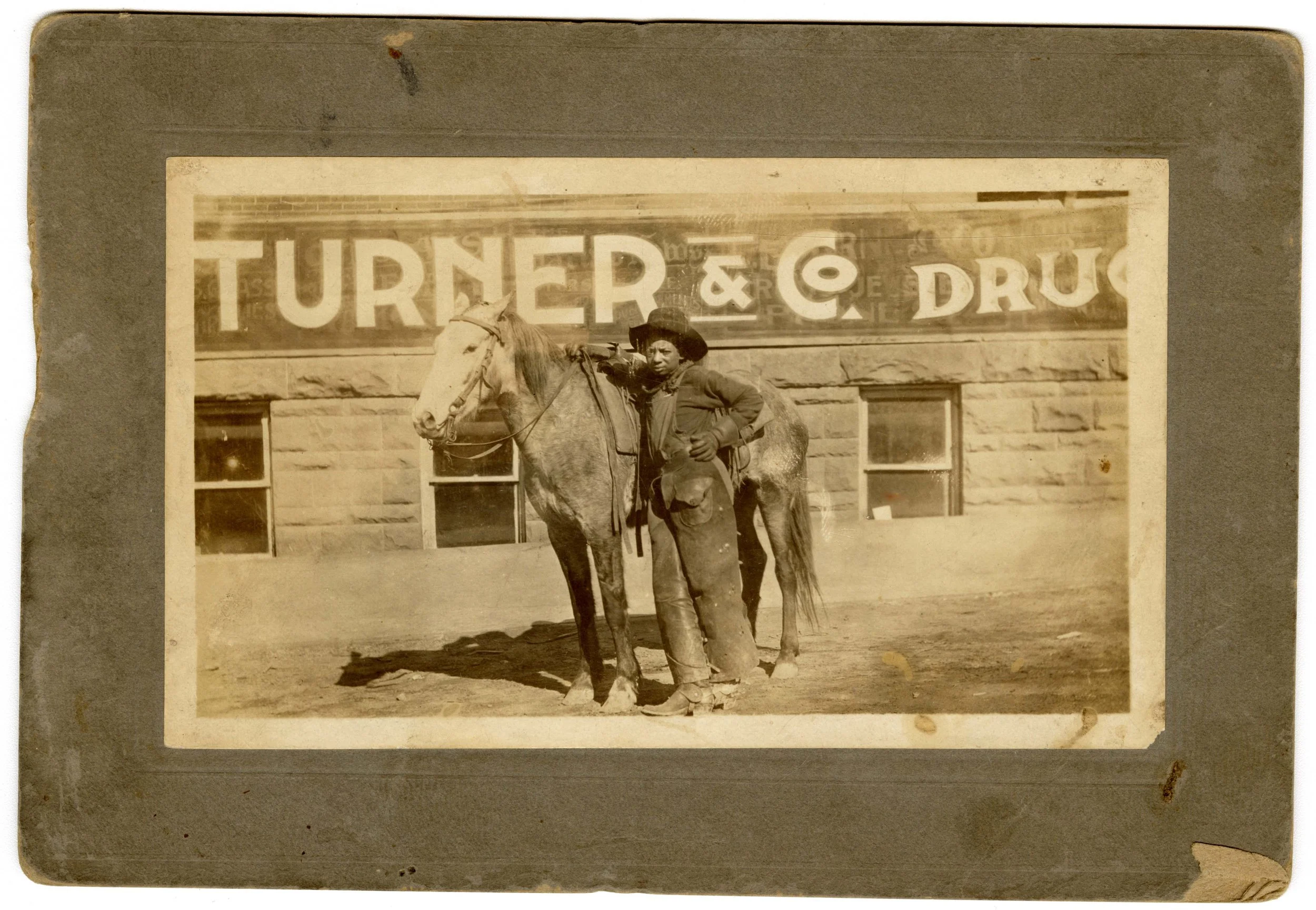
★ c. 1890, Black Cowboy poses in front of a store with his horse. National Cowboy & Western Heritage Museum, Dickinson Research Center, Oklahoma City, OK, 2003.105.
★ 1939, motion picture film, Bronze Buckaroo superimposed onto the stage of a photograph of the National Theatre.
*CLICK ANY IMAGE BELOW ⇩ to continue exploring related photographs + resources.