★ ENTERPRISE ★
In his Winter 1996 essay for Montana The Magazine of Western History, “From Esteban to: Five Centuries of African American History in the West,” Dr. Quintard Taylor notes, “As early as 1862, the San Francisco Pacific Appeal called on its readers to create political, religious, and moral organizations wherever there are half a dozen Colored people.’”
As evidenced in the following photographs, organizing and community-building were vital to socio-political advancement and the success of maintaining a livelihood amid the uncertainties of the frontier for Black pioneers in the West.
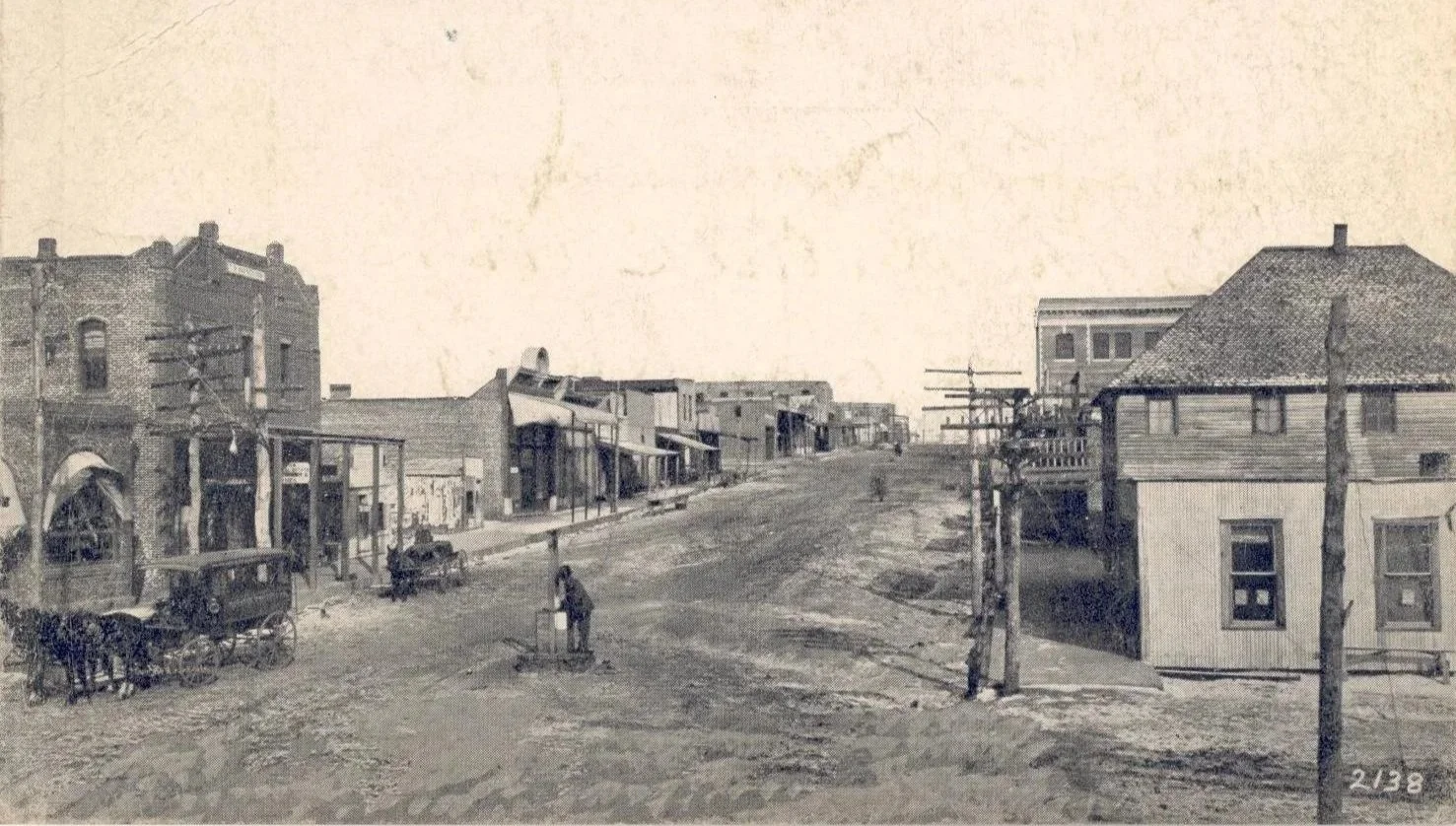
★ PICTURED ABOVE ★ c. early 1900s, Photograph of Main Street in Boley, Oklahoma; an all Black township. The Gateway to Oklahoma History, Oklahoma Historical Society (https://gateway.okhistory.org/ark:/67531/metadc1476838/). (Image identifier, 2007.148.6.8).
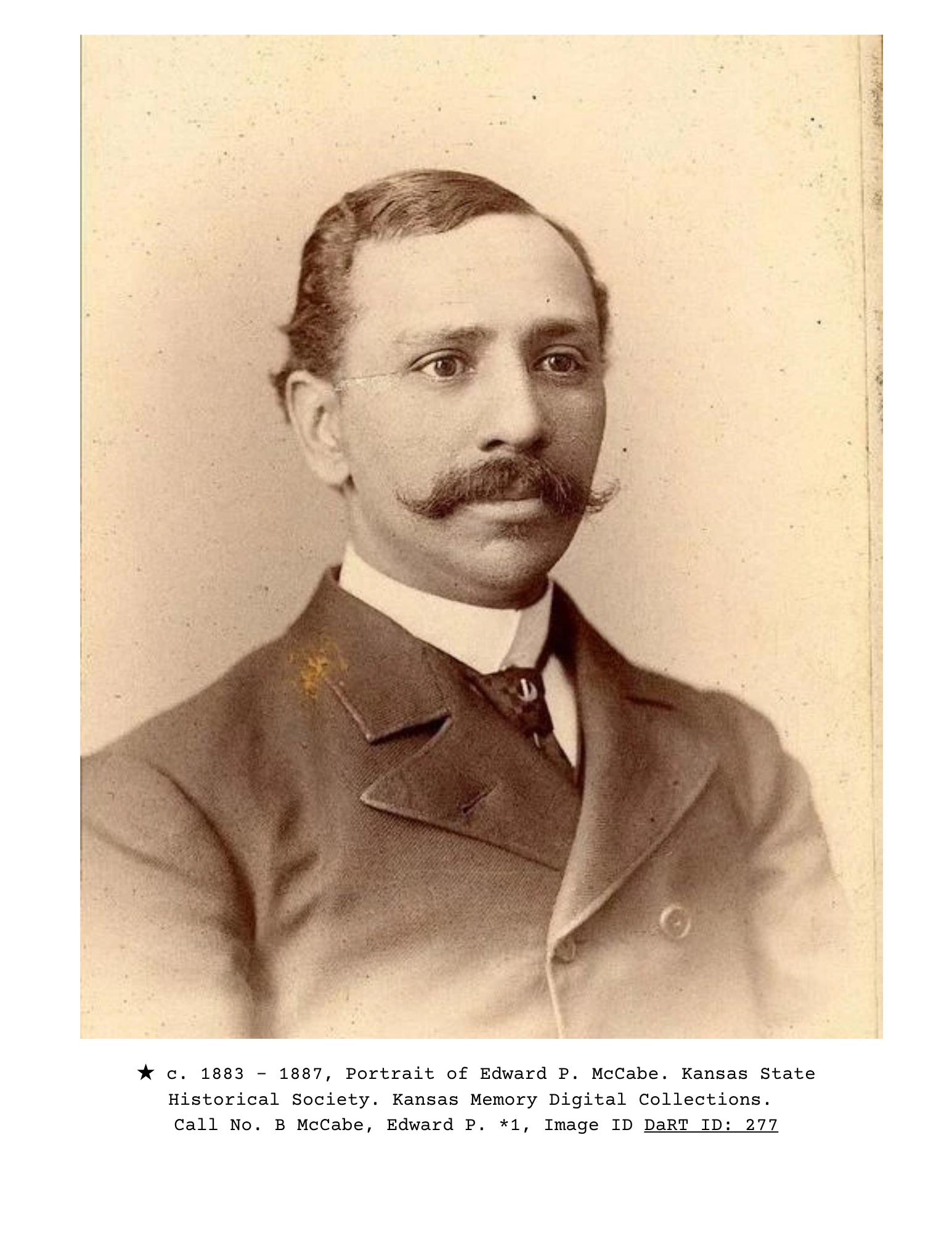
★ Edward P. McCabe + His Vision of an All-Black State ★
Perhaps no one understood the importance of (political) organizing on the frontier better than Edward Preston McCabe. Born in 1850 in Troy, New York, McCabe was the first Black statewide elected official in Kansas, who later dreamed of transforming the Oklahoma Territory into an all-Black state. Born in 1850, McCabe was never enslaved, and his political aspirations were rooted in the ideals of “a new party, that of negro supremacy in at least one State, with negro State and county officers, and negro Senators and Representatives in Congress,” as reported by the Chicago Tribune on October 2, 1891. Although his efforts never materialized in the way of his dreams, the following group portrait of Boley, Oklahoma’s Town Council (featured below) is a testament to his vision.
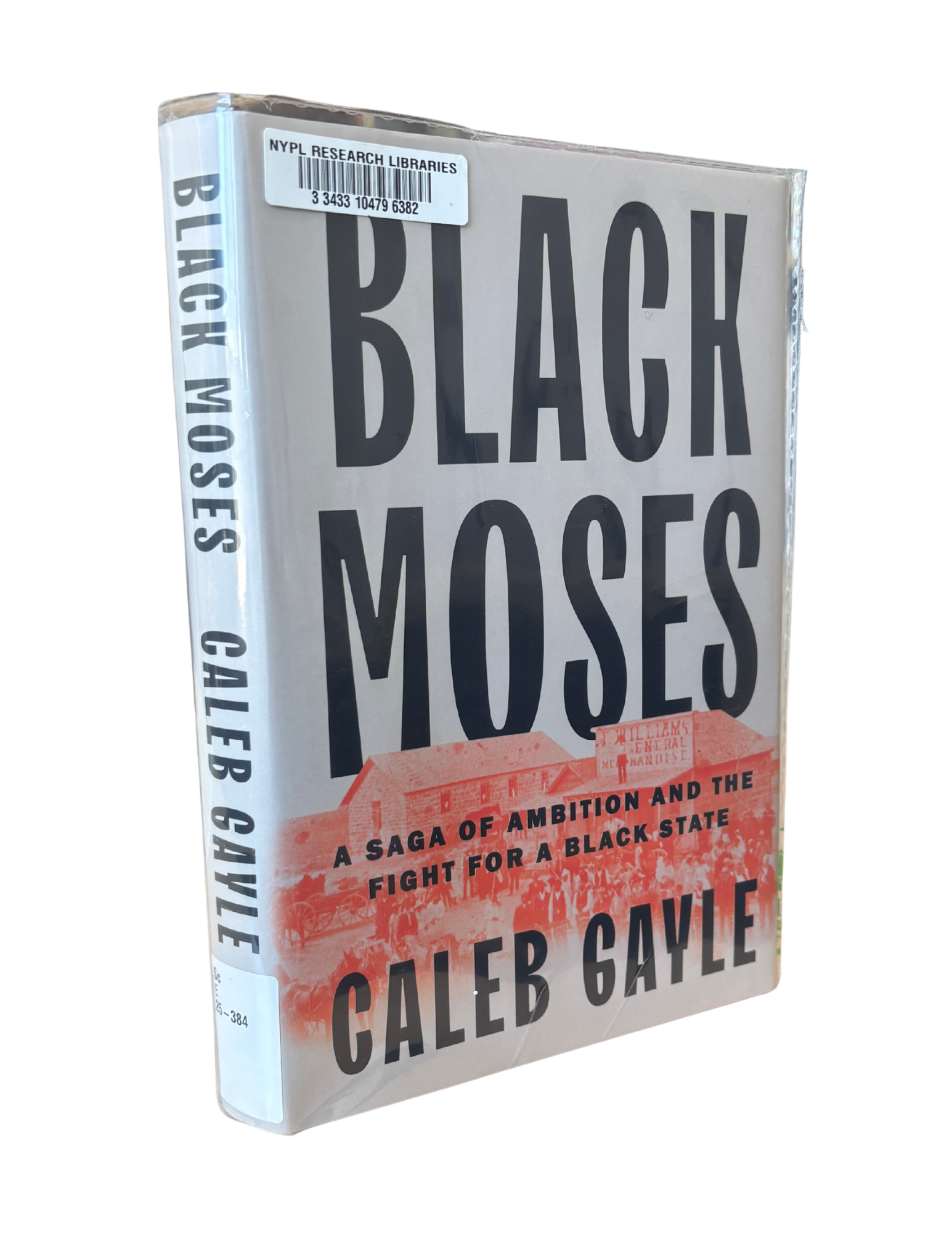
★ The recently published book, Black Moses: A Saga of Ambition and the Fight for a Black State, (pictured above), details McCabe’s crusade to establish Oklahoma as a promised land and the insurmountable resistance to that effort.
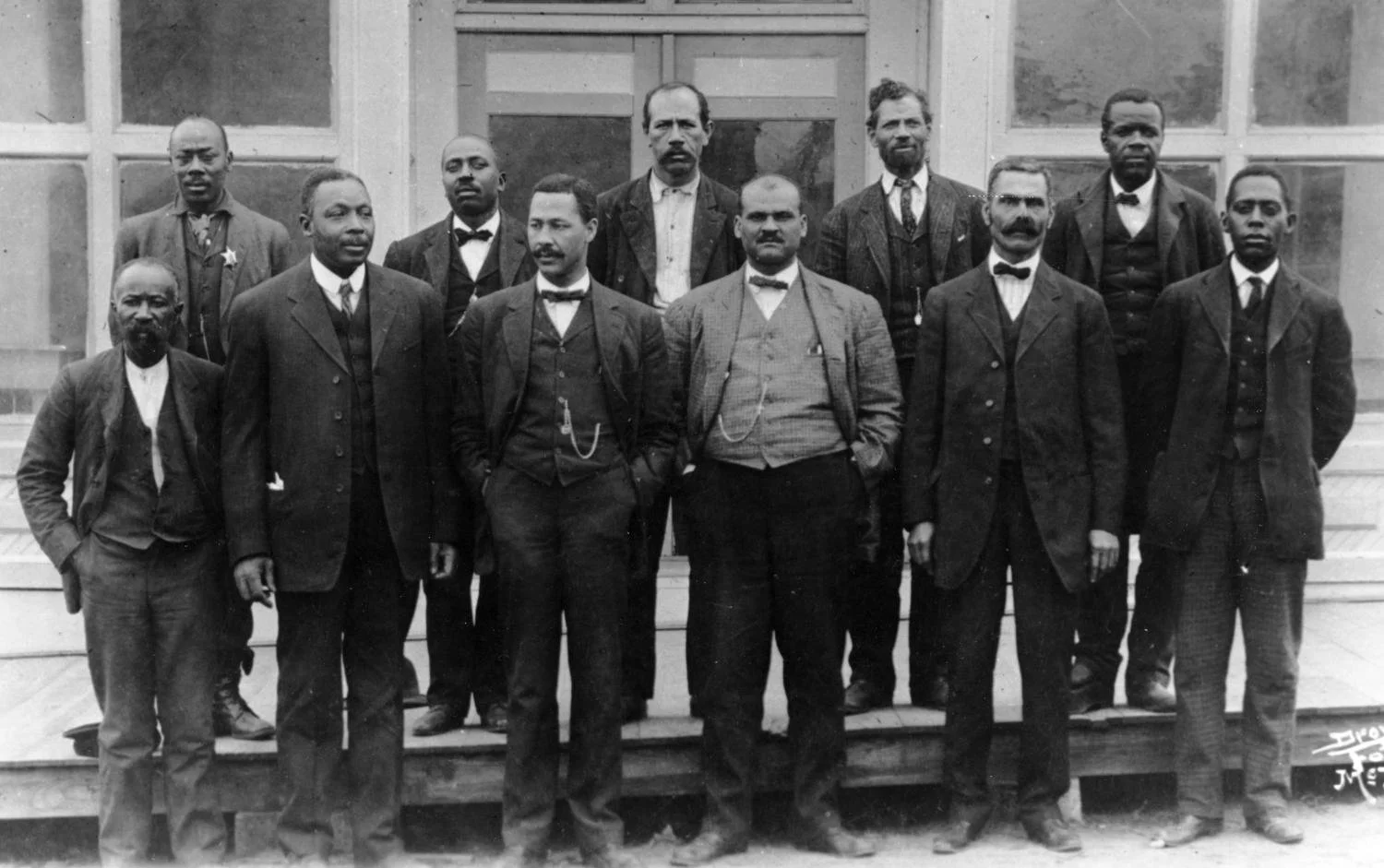
★ c. early 1900s, Photograph of members of the town council in Boley, Oklahoma. Front row, left to right are William H. Wallace, T.B. Armstrong, D.J. Turner, Thomas M. Haynes, H.C. Cavil, M.J. Jones. Back row left to right are Wash Williams, Dr. Calvin Bethel Powell, C.C. Chambers, T.R. Ringo, W.A. Kennedy. Oklahoma Historical Society. OK Historical Society Photograph Collection. ID 3377.D.1.
★ While some were seeking sociopolitical advancement, many were business-minded, taking advantage of money-making opportunities and the various gold rushes of the era. Others were motivated by philanthropic or social-justice pursuits amid the lawlessness of the Wild West.
Keep scrolling for a list of related resources ↓
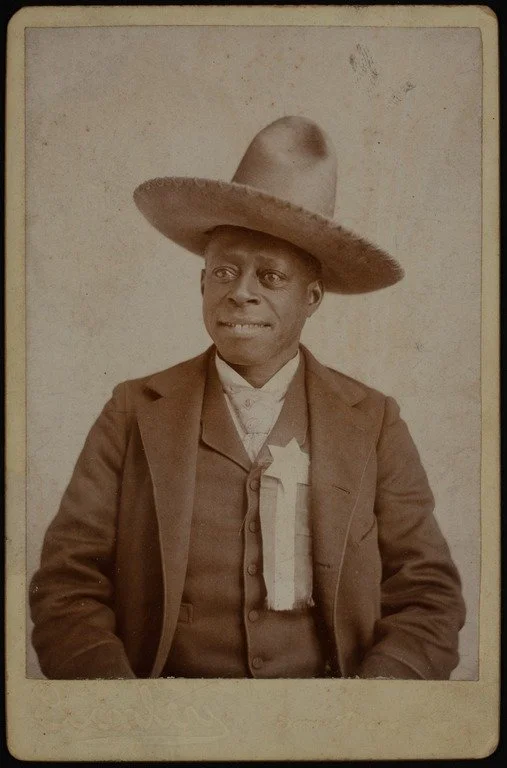
★ c. 1890s, Cabinet card portrait of Reuben the Guide; an African American man who lived in San Diego and worked as a Western tour guide, escorting visitors to Tijuana, Mexico. He was known for wearing this sombrero and often posed for photographs with tourists. ★ University of California, San Diego, Special Collections & Archives [991004637099706535].
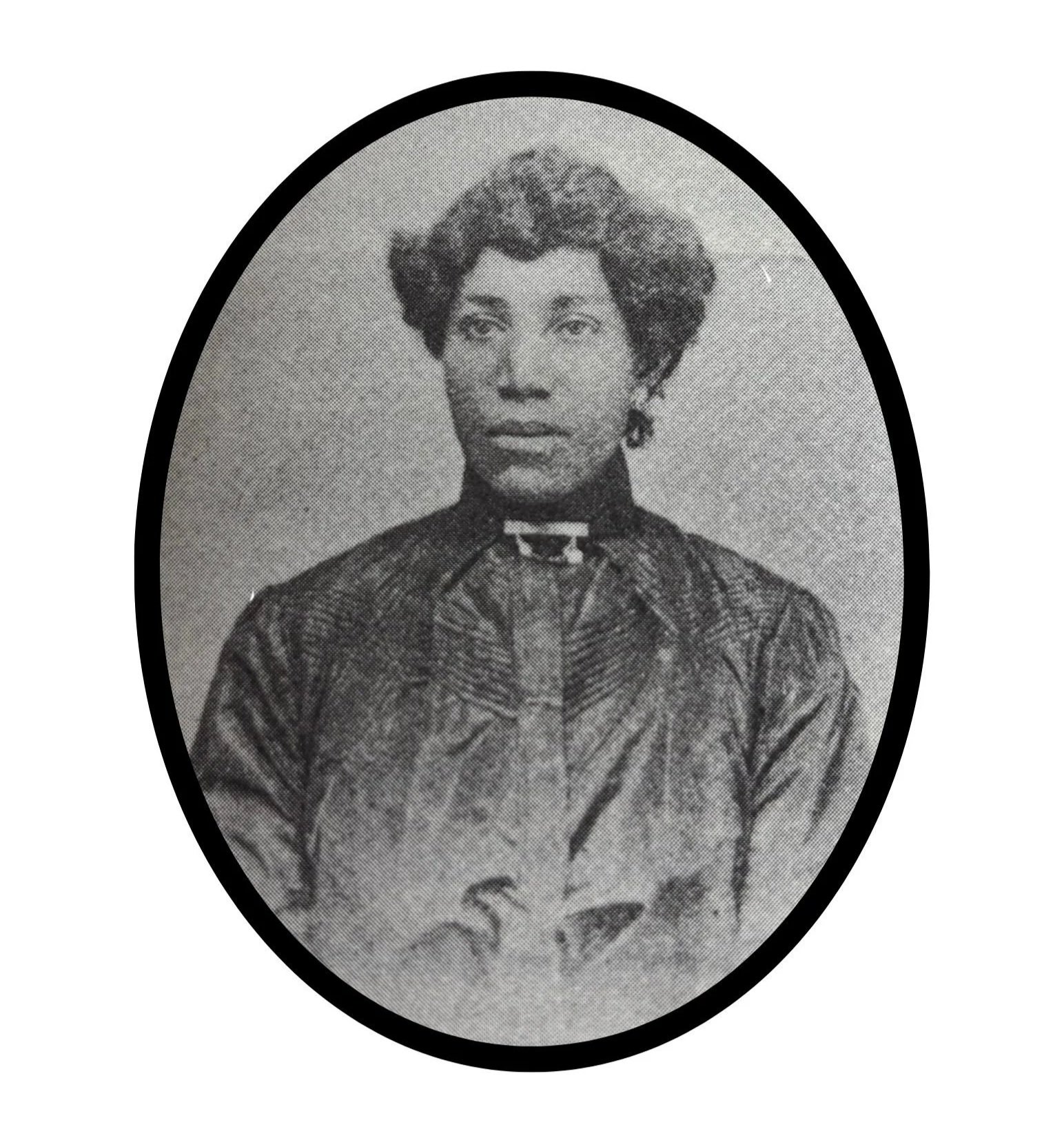
★ mid - late 1800s, Portrait of May B. Mason. Reported to be the first Black woman to participate in the Klondike Gold Rush, returning home with $5000 in gold dust earnings. ★ Public Domain image, Black West (Katz, 1971).
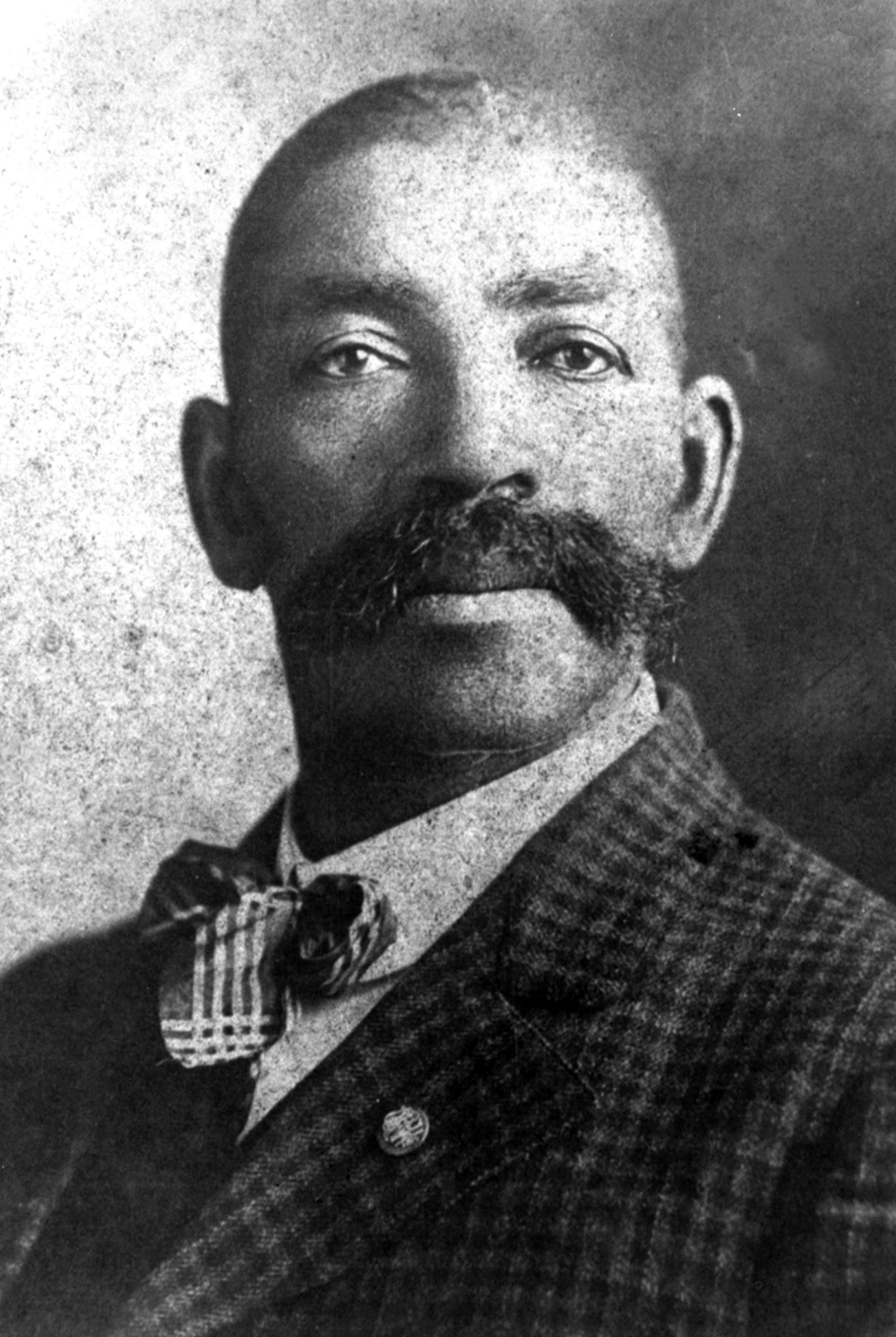
★ c. 1910, Portrait of Bass Reeves, Wikimedia Commons. ★ July 1838 - January 12, 1910 | Born enslaved in Arkansas, Bass Reeves famously fought his enslaver and escaped to what was then called "Indian Territory" of present-day Kansas and Oklahoma. He learned the languages and customs of the indigenous populations of the area, and his knowledge of the land later made him a prime candidate for U.S. Deputy Marshall, appointed by famed Judge Issac Parker. He went on to serve in that role for 32 years. A statue of him stands at Fort Smith, Arkansas, and the recent television miniseries, Lawmen: Bass Reeves, depicts his life story.

★ 1875 - 1880, Portrait of Clara Brown (also known as 'Aunt Clara' or 'Angel of the Rockies') around age 70. ★ Born enslaved in Virginia, Brown migrated to Kansas and later Colorado, in her 50s, once she gained freedom as stipulated in her owner’s will. After experiencing her husband, son, and four daughters being sold to different plantations, Brown found success in Colorado's Gold Rush era and later became known amongst her Denver and Central City, Colorado communities as “Angel of the Rockies.” A woman of enterprise, she opened a laundry, helped found an African Methodist Episcopal church, and gave generously to those in need. She moved to present-day Denver and soon became a well-known philanthropist, helping many locals in addition to helping other formerly enslaved men, women, and children move out west. Her legacy is remembered by the Colorado Women’s Hall of Fame and the Colorado Business Hall of Fame. ★ Denver Public Library, Digital Collections [Z-275].
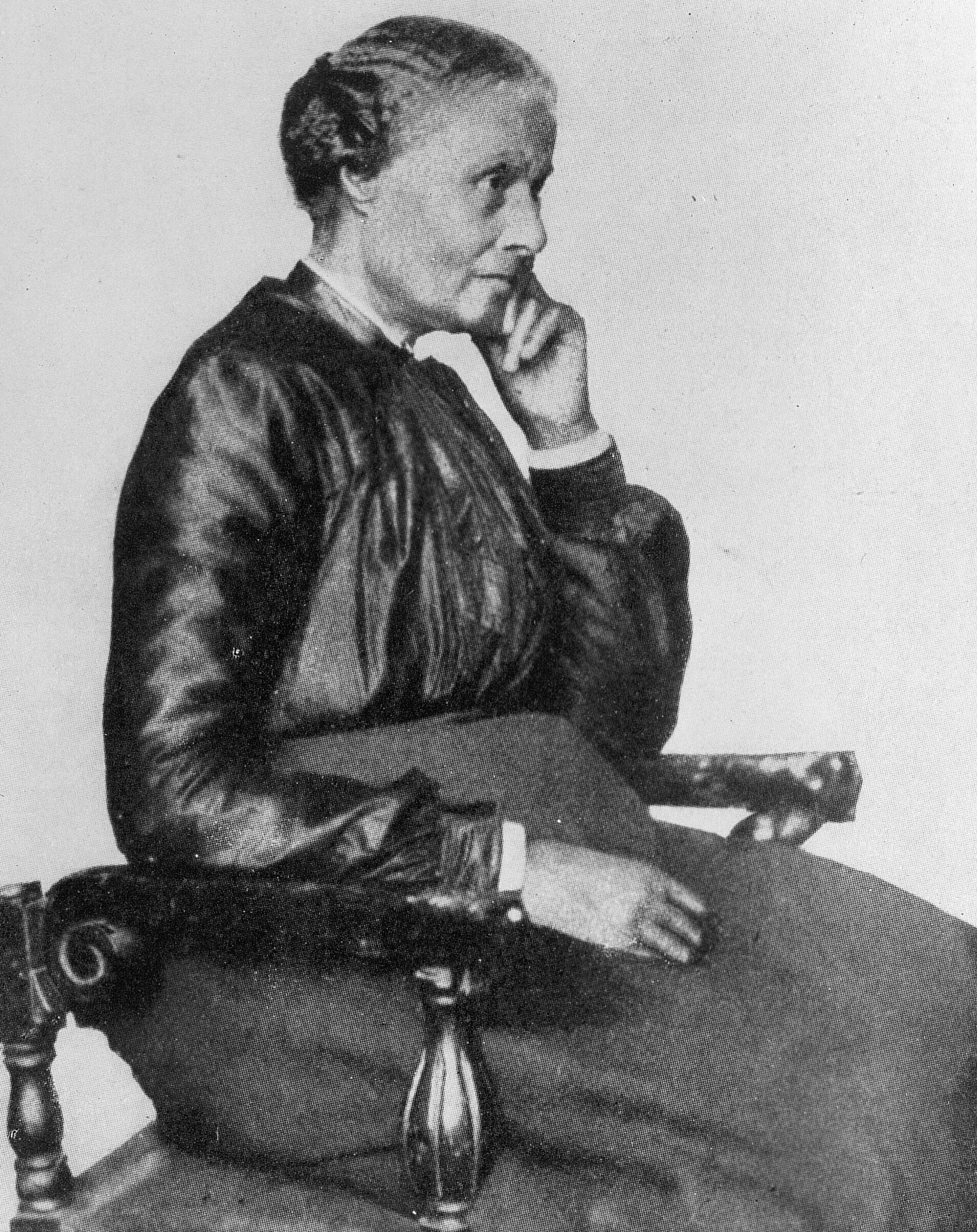
★ c. 1901, Portrait of Mary Ellen Pleasant at age 87. ★ Mary Ellen Pleasant, 1814 - 1904. Although mystery surrounds life and legacy, Pleasant was an entrepreneur, financier, abolitionist, and real estate mogul. She was considered a "conductor" of the Underground Railroad and financially supported John Brown's planned slavery uprising. ★ Miriam Matthews Photograph Collection, UCLA Library Digital Collections (uclalsc_1889_b04_f16_001a).

★ c. 1910 - 1920, Photograph of Alice Pleasant in front of the cafe she owned called Home Café in Havre, Montana. Pleasant was known locally as 'Ma Plas,' and the note accompanying the photo reads, "Came in the Ft. Assiniboin days, her husband a soldier. Owned the Home Café, gave a nickel to every youngster in Havre" (Montana State Library, Photo# 944-366).
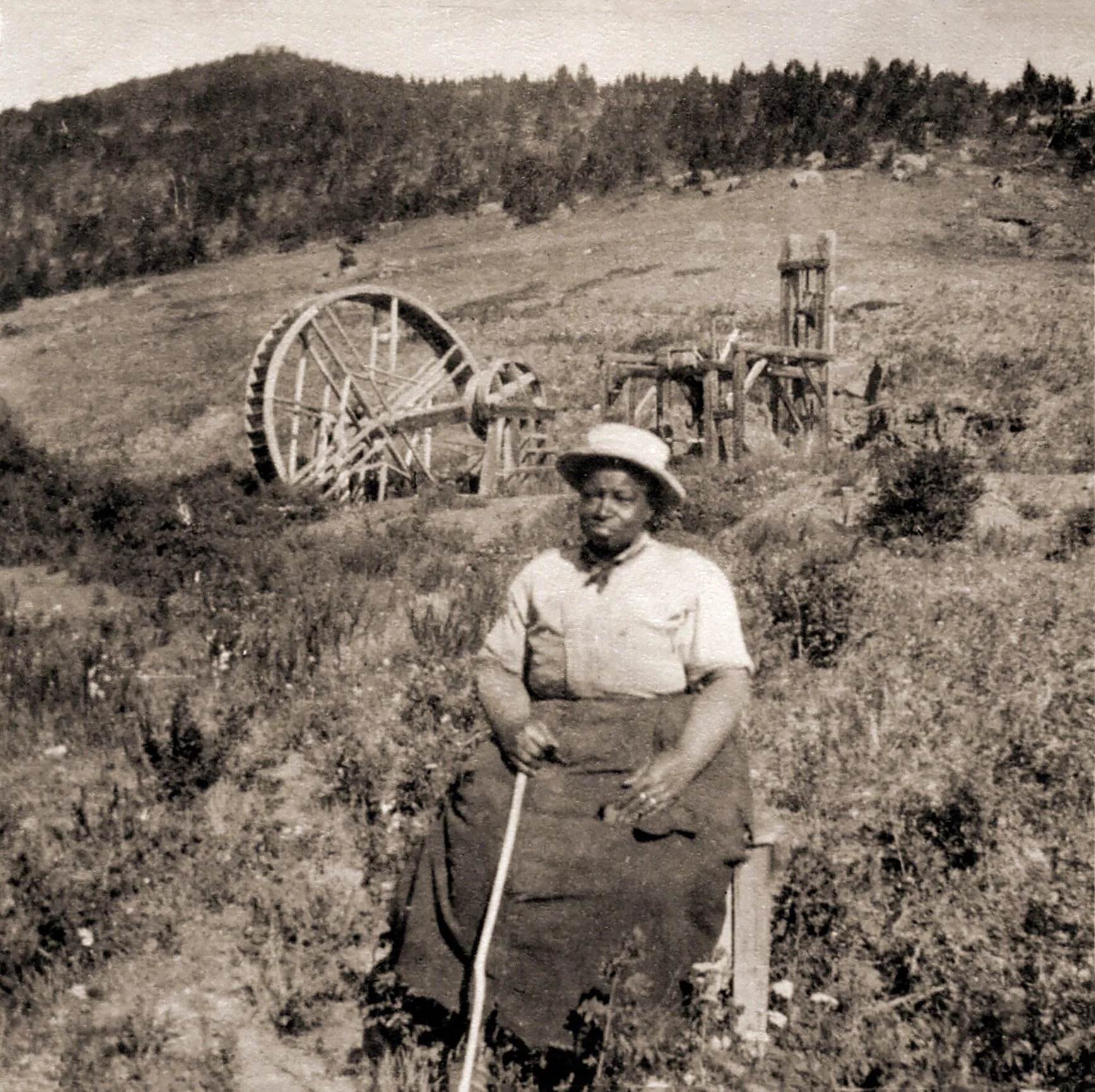
MILLIE RINGOLD
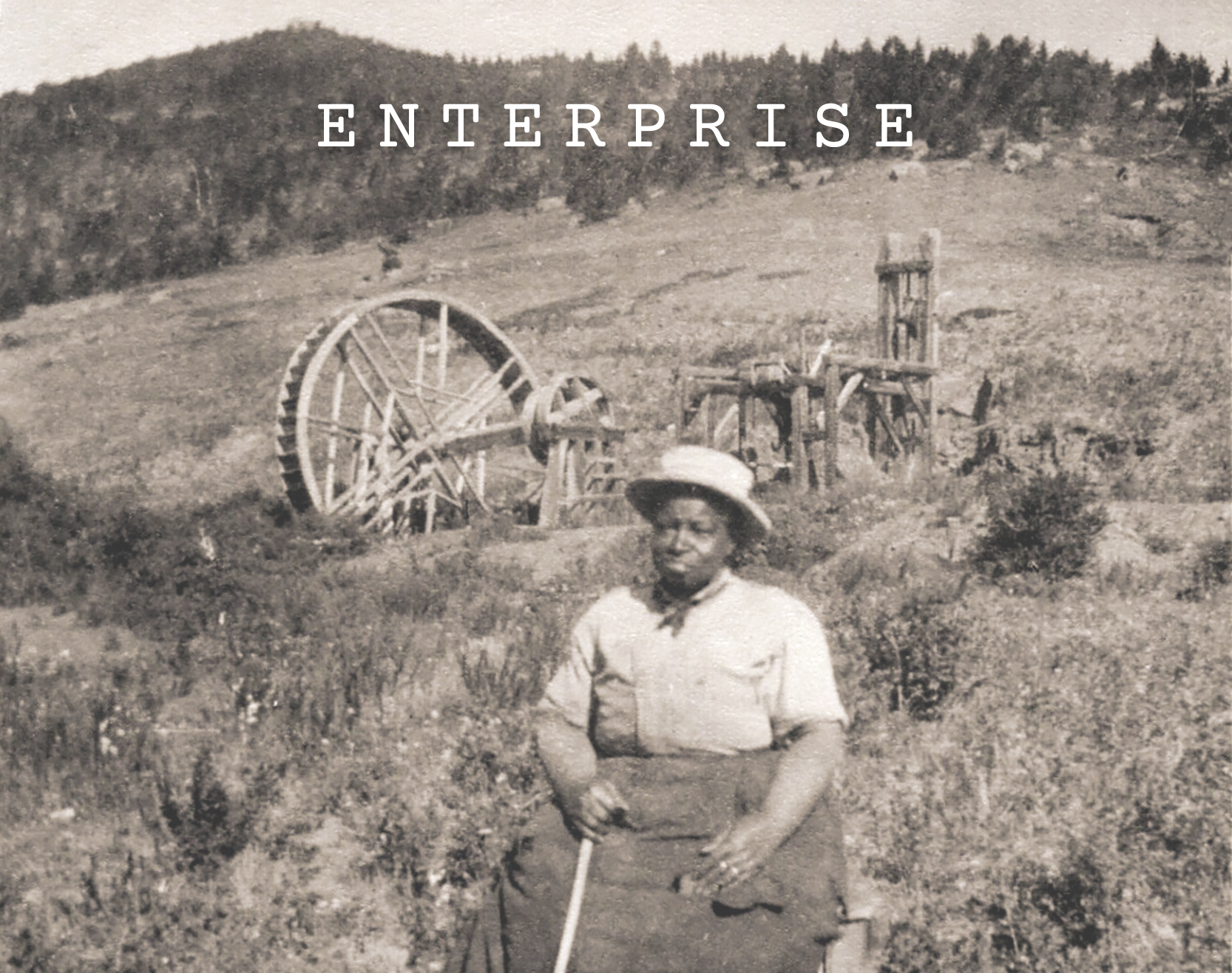
1845 - 1906 | Gold Prospector, Boarding House Owner in Yogo, Montana.
★ Ringold was born enslaved in Virginia in 1845, and by the 1870s, she found her way to Fort Benton, in the Montana Territory, working as a nurse for the U.S. Army.
When gold was discovered in Yogo Creek, Ringold took part in the rush of prospectors and miners, seeking fortunes in the natural resources. By the year 1900, the bustle of the gold rush had quieted the town as many residents relocated when gold was no longer plentiful. The U.S. Federal Census records show Ringold as a landowner and operator of Hotel Ringold, where she welcomed guests to what was described as an immaculately clean space, complete with white linens and polished silverware.
★ PICTURED HERE ★
c. 1890 - 1905, outdoor photograph of Millie Ringold seated in a meadow; milling equipment and forested hills sit in the distance, Yogo, Montana. Montana Historical Society Library and Archives, Montana History Portal [Photo No. 944-586].
![★ c. 1871, Stereograph of Mystic Lake, near Fort Ellis, Montana. The Miriam and Ira D. Wallach Division of Art, Prints and Photographs: Photography Collection, The New York Public Library, Digital Collections. Image ID [G92F117_016ZF].](https://images.squarespace-cdn.com/content/v1/6535b7e96b6e1403bcc579a8/f40822c2-64a6-49f7-9694-00c2f9d7991c/1871%2C+stereograph+of+Mystic+Lake%2C+near+Fort+Ellis%2C+Montana.+-+NYPL+public.jpg)
★ c. 1871, Stereograph of Mystic Lake, near Fort Ellis, Montana. The Miriam and Ira D. Wallach Division of Art, Prints and Photographs: Photography Collection, The New York Public Library, Digital Collections. Image ID [G92F117_016ZF].
Mary “Stagecoach Mary” Fields.
★ 1832 - 1914 | Formerly Enslaved, U.S. Mail Carrier along the Star Route, Cascade, Montana.
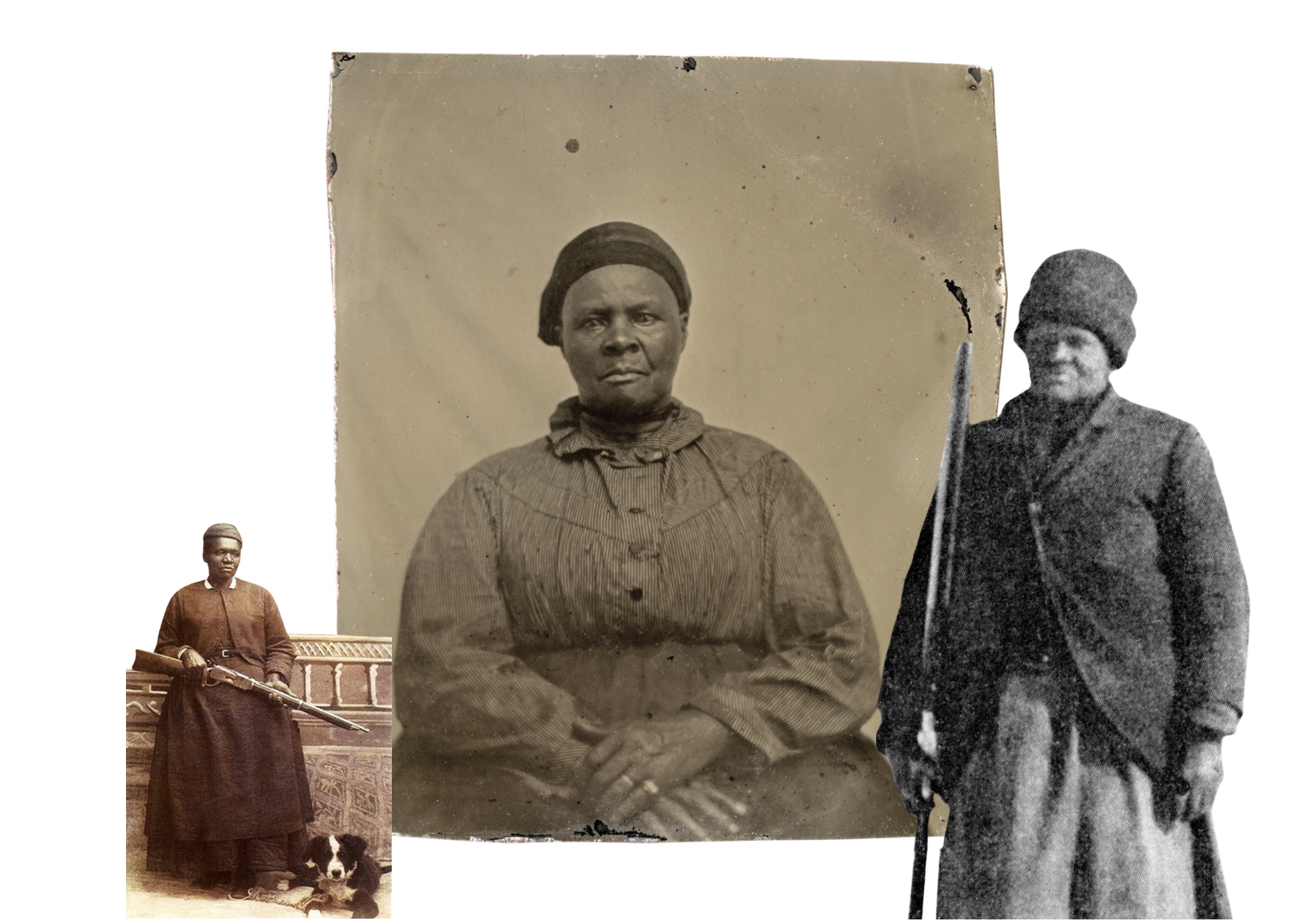
Probably one of the most famous Black figures from the American Western frontier era, Mary “Stagecoach Mary” Fields was a force. Fields was born enslaved in Tennessee in 1832, and after emancipation, she worked on steamboats along the Mississippi River. She later migrated to Toledo, Ohio, and found work at an Ursuline Convent, working amongst the resident nuns and priests. While there, her unapologetic persona clashed with several locals and members within the church leadership; Fields was eventually asked to leave.
This prompted her move to Cascade, Montana, where she connected with the St. Peter’s Mission and worked as a U.S. Postal Carrier for the “Star Route.” Fields was six feet tall and reportedly hot-tempered, which worked to her advantage as a solo traveler delivering her mail route by stagecoach.
★ PICTURED HERE ★
LEFT: c. mid-late 1800s, Studio portrait of Mary “Stagecoach Mary” Fields and her dog. Public Domain Image, Wikimedia Commons.
CENTER: c. 1870 - 1885, Mary 'Stagecoach Mary' Fields seated with hands crossed. Montana Historical Society Library and Archives. Photographs from the Montana Historical Society. Digital Collections Image ID [PAc 2021-02.1].
RIGHT: c. 1890 - 1914, Mary Fields stands holding her rifle. Montana Historical Society Library and Archives. MHS Legacy Photograph Collection. Image ID [942-178].
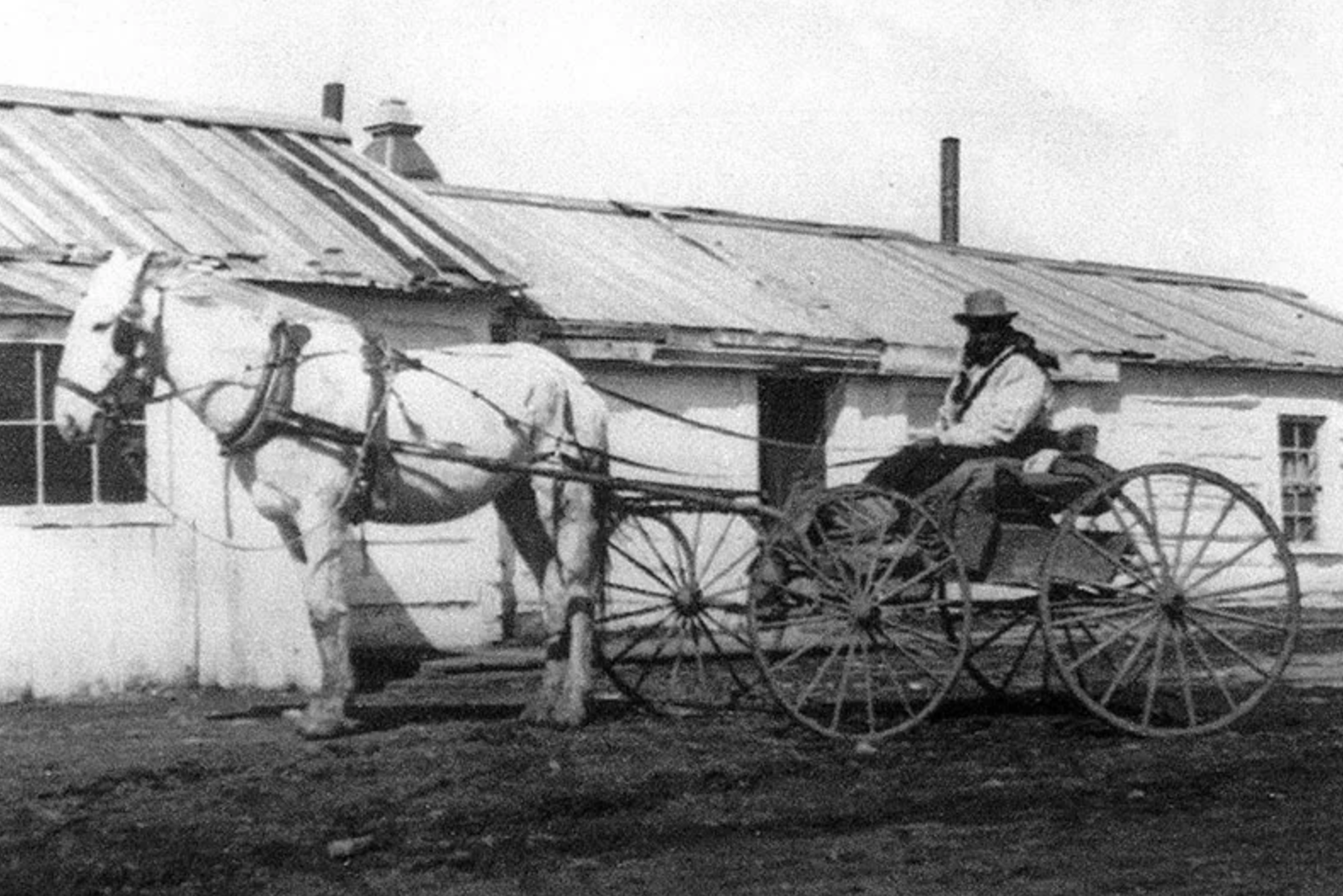
★ c. 1880s, Mary Fields seated on wheeled wagon at the early Ursuline Mission. Ursuline Archives, Great Falls, Montana.
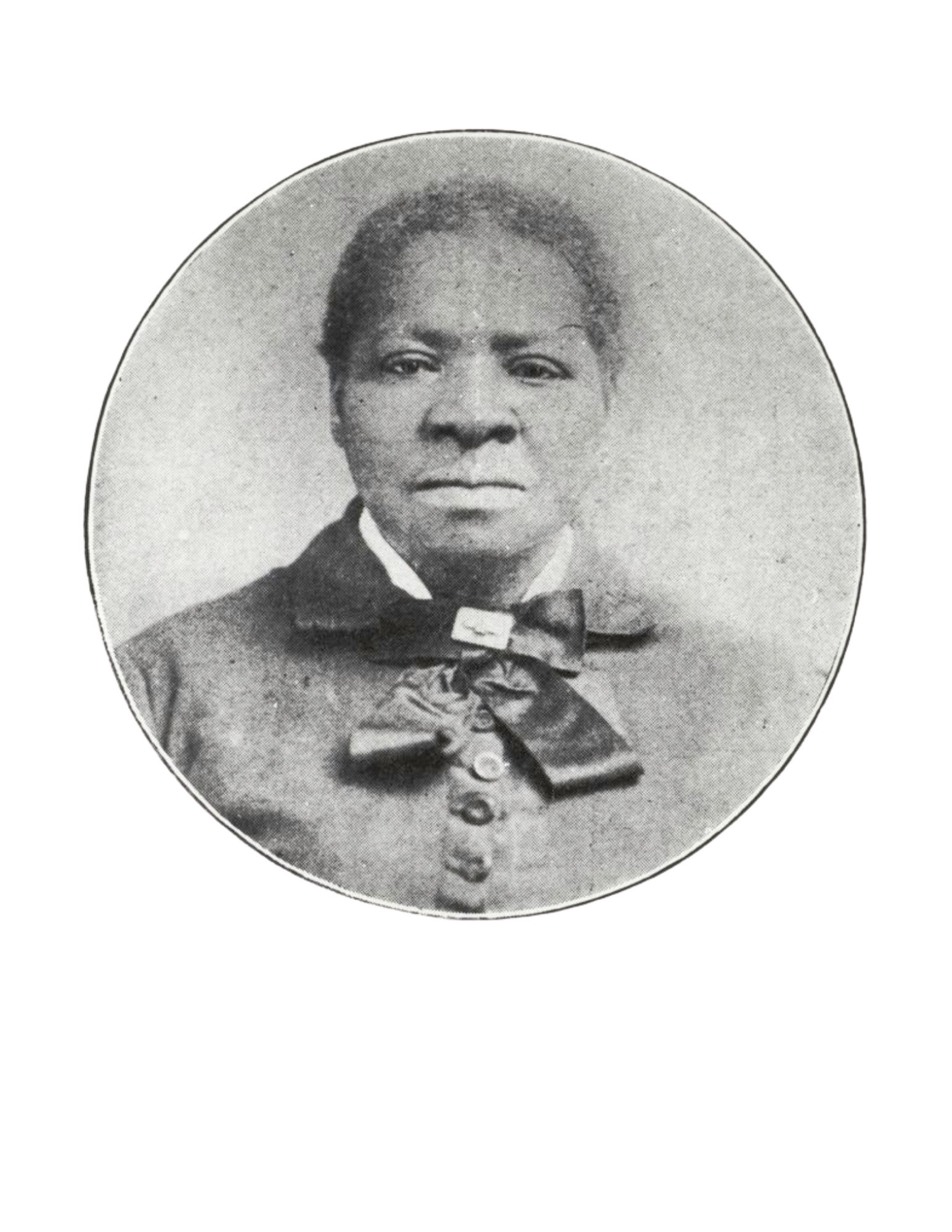
BRIDGET “BIDDY” MASON
1818 - 1891 | Early Los Angeles Pioneer and Founder, Philanthropist, Midwife.
Bridget “Biddy” Mason was born enslaved in Mississippi in 1818. Throughout her early years, she was sold to enslavers across the Deep South. One particular enslaver, Robert Smith of Mississippi, forced her and her family to walk the entirety of his religious pilgrimage to the Salt Lake Valley and later to California to join the Mormon faith.
A remarkable turn of events occurred when Mason’s Mormon enslavers were found to be unlawfully in possession of her and her family in the free state of California. With the support of her peers and law enforcement, she was able to contest her enslavement in a California court and won her freedom on January 21, 1856 (along with her family members), with Judge Benjamin Ignatius Hayes presiding.
Newly freed, Mason worked as a midwife and entrepreneur, saving her earnings to eventually make a savvy business investment with the purchase of a city block for $250 in 1866. Ultimately, she amassed a wealth of roughly $300,000 and helped found the oldest Black church in the city of Los Angeles, First A.M.E. Church, in addition to contributing to countless charitable efforts for the burgeoning Black community in L.A. at the time.
Today, she is honored and remembered for her contributions to the founding of the City of Los Angeles.
*After walking the entirety of her enslaver’s religious pilgrimage to California, Biddy Mason was freed on the technicality that California was a “free state.”
↓ THESE ARE THE COURT PAPERS THAT DECLARED HER FREEDOM ↓
*These papers are preserved by the University of California, Los Angeles
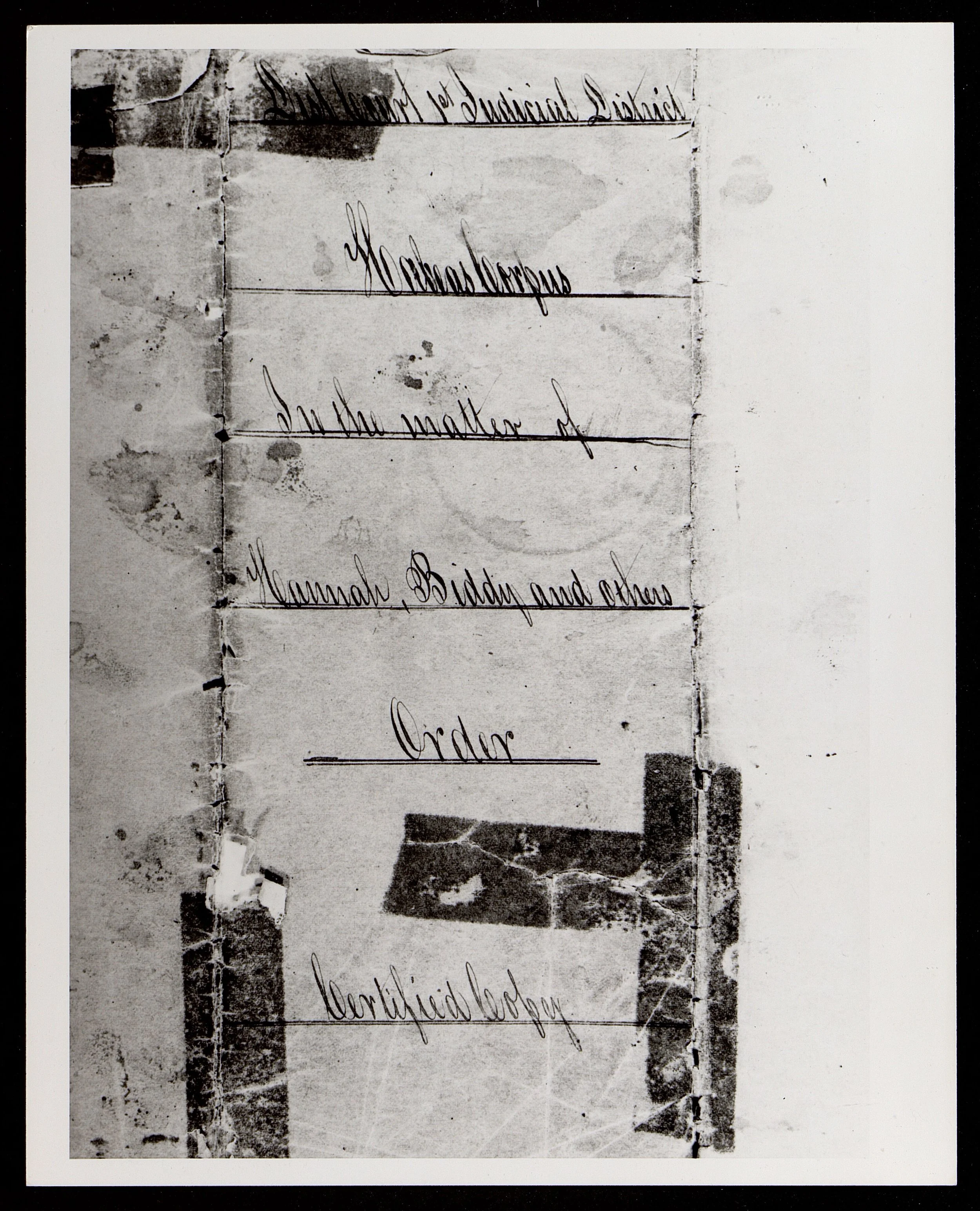
★ 1860, Certified, eight page handwritten documentation of a court order declaring Biddy Mason's freedom from enslavement, composed by Judge Benjamin Ignatius Hayes and copied by the clerk of the District Court. Miriam Matthews Photograph Collection. UCLA Library Digital Collections.
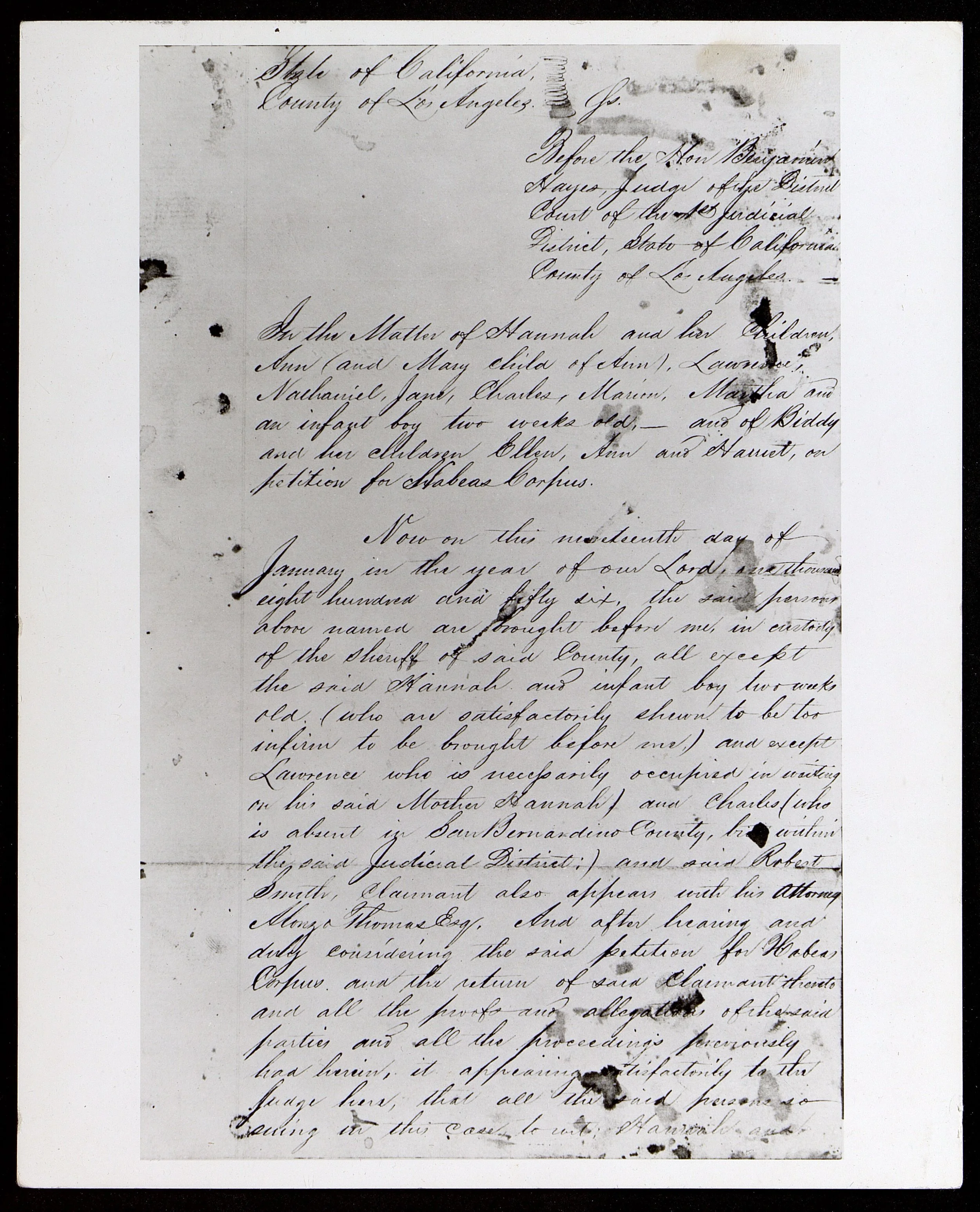
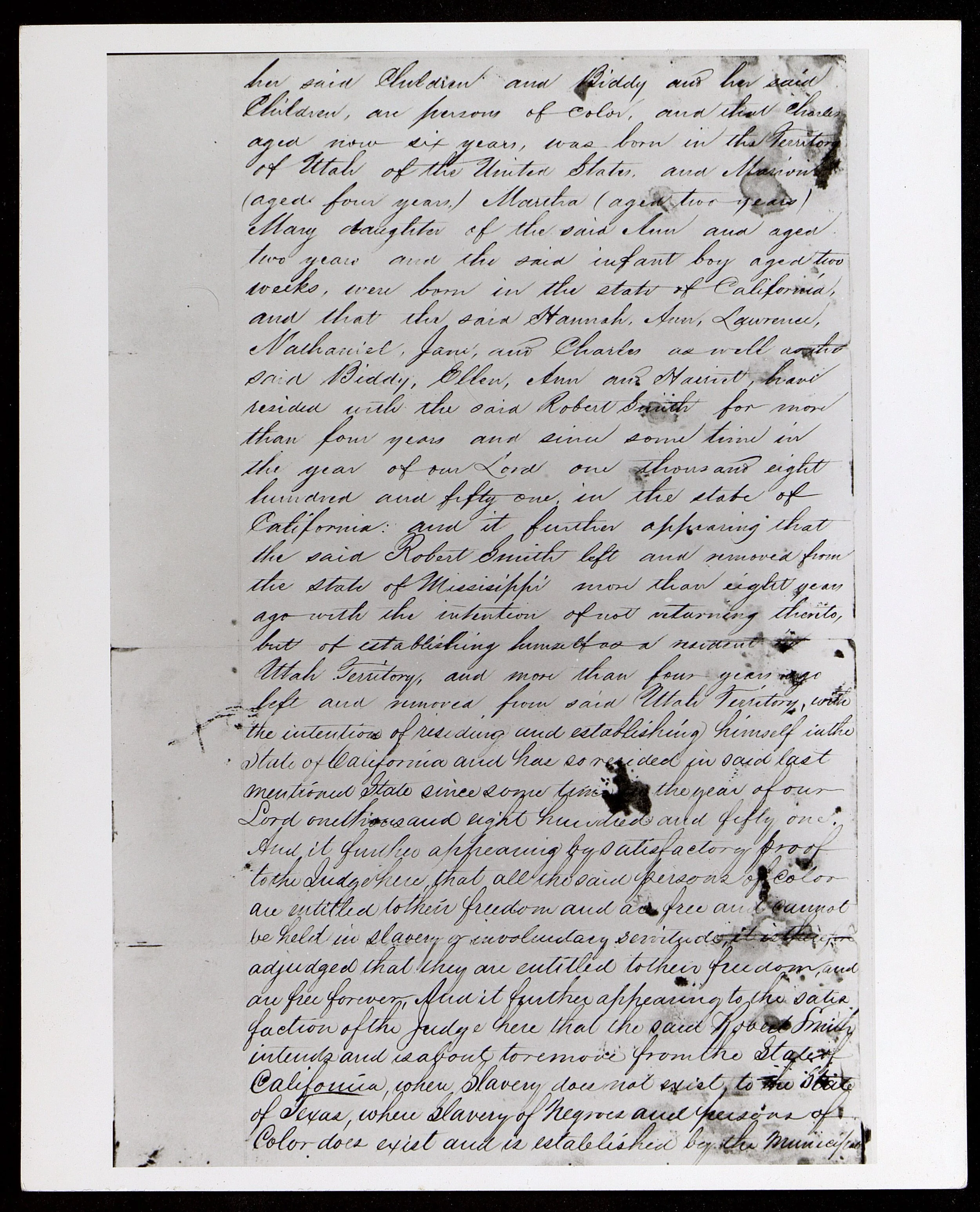
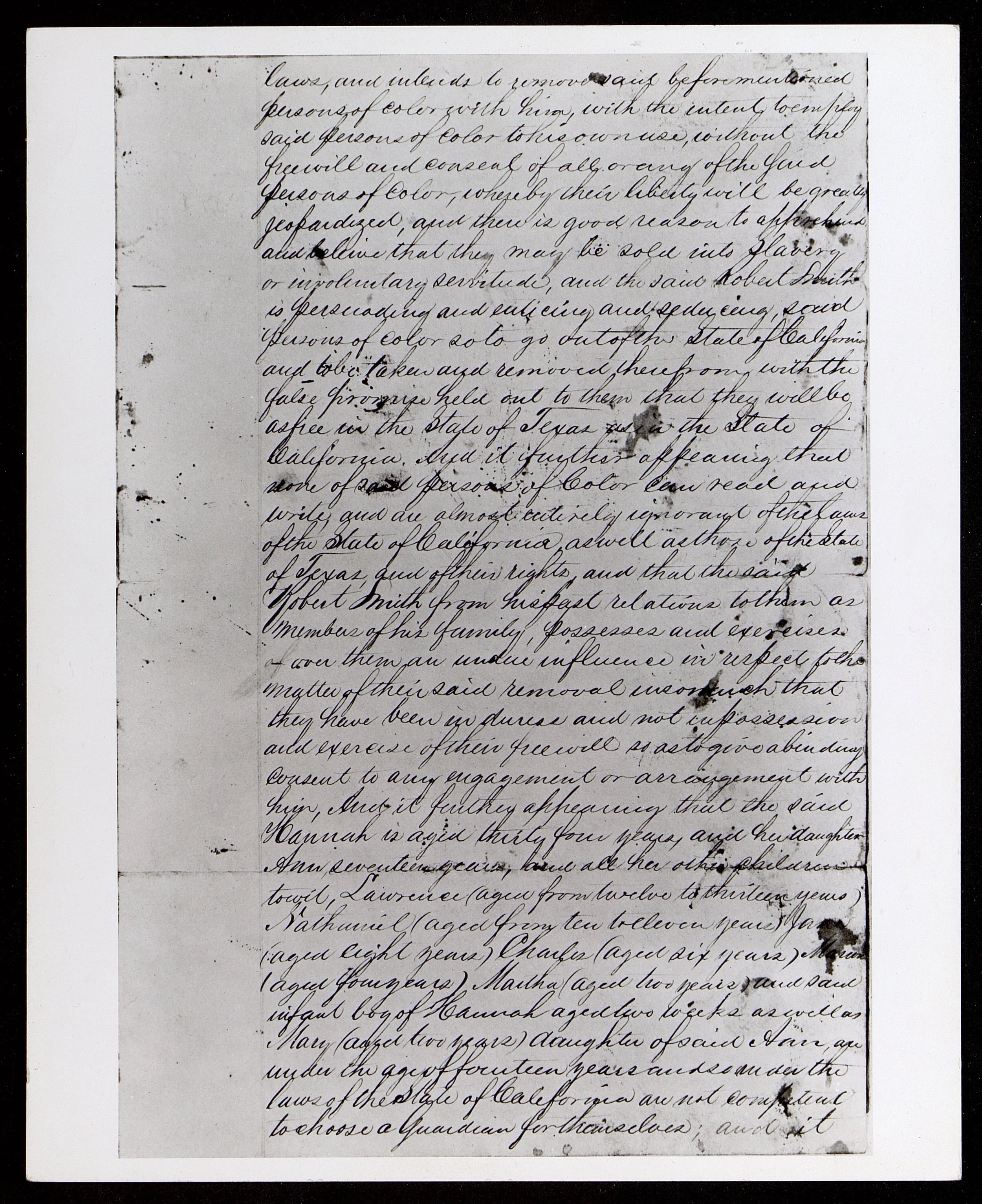
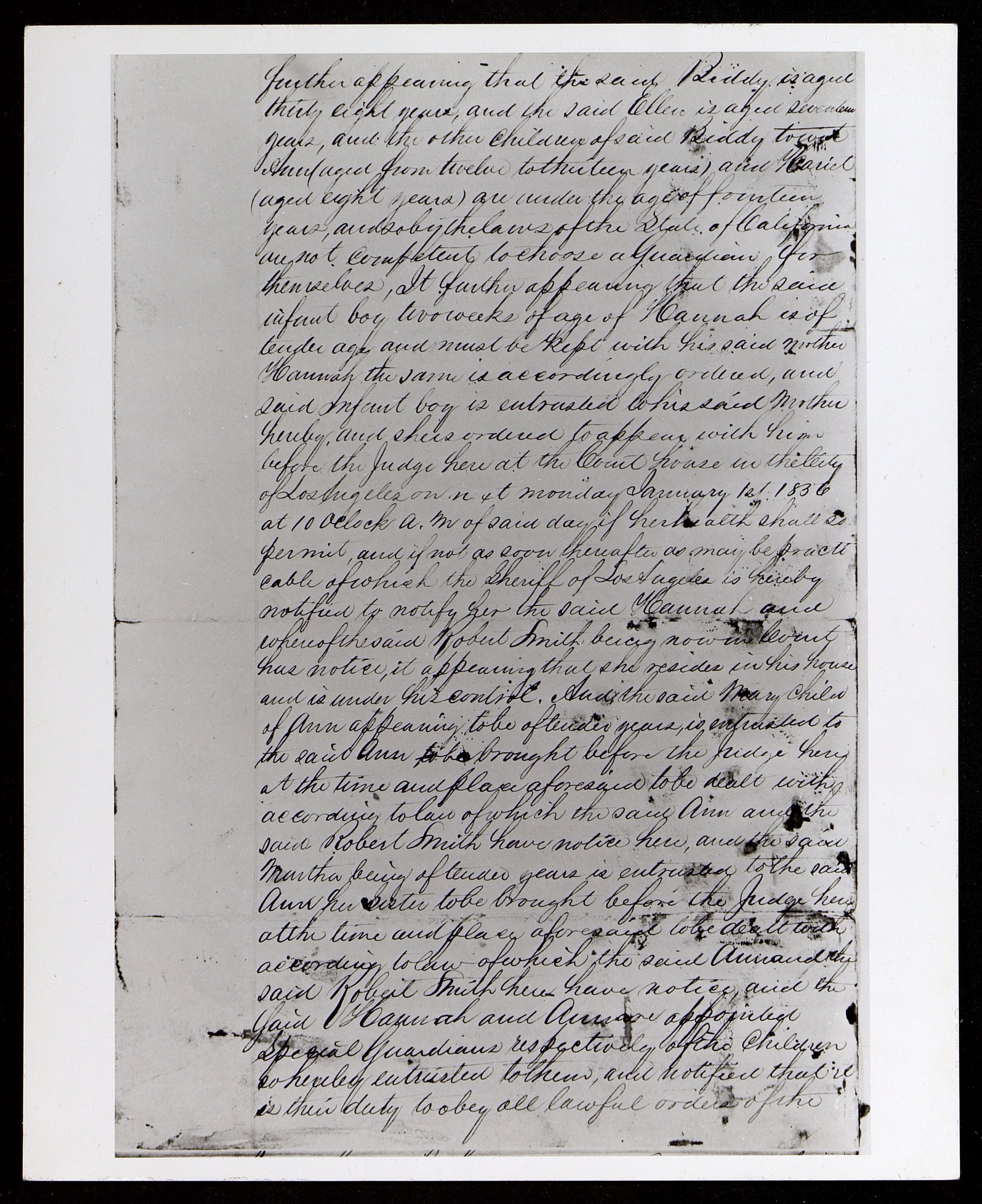
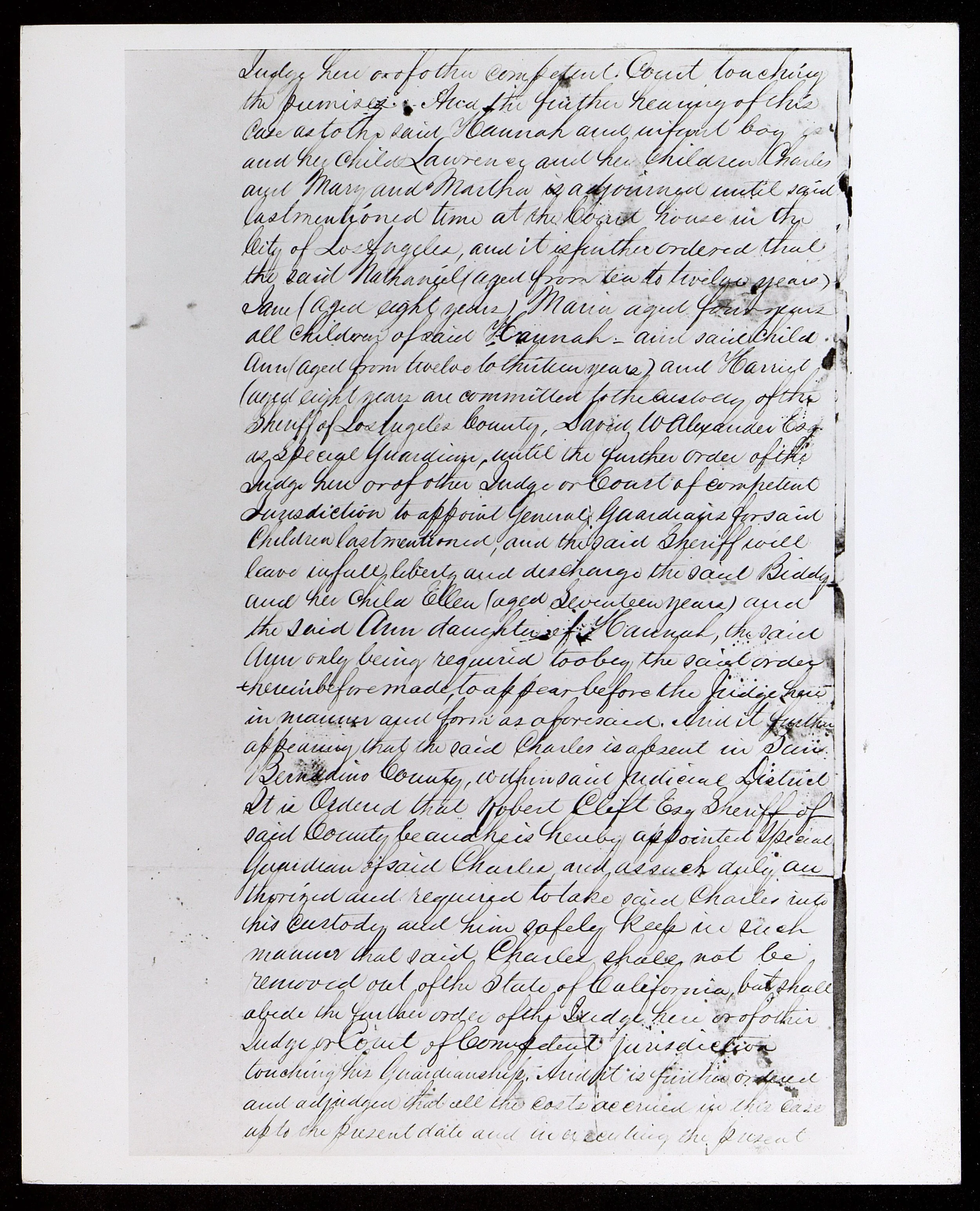
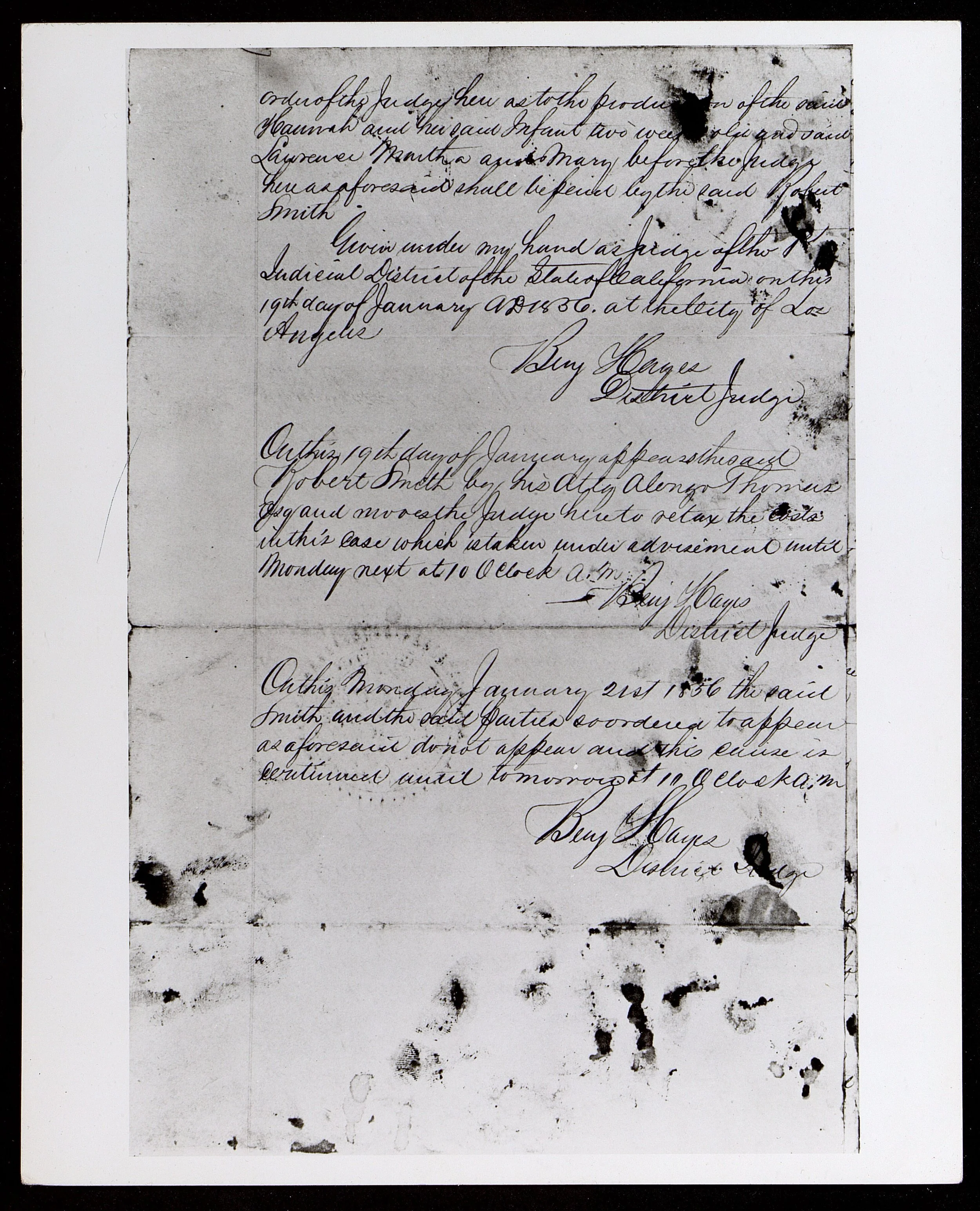
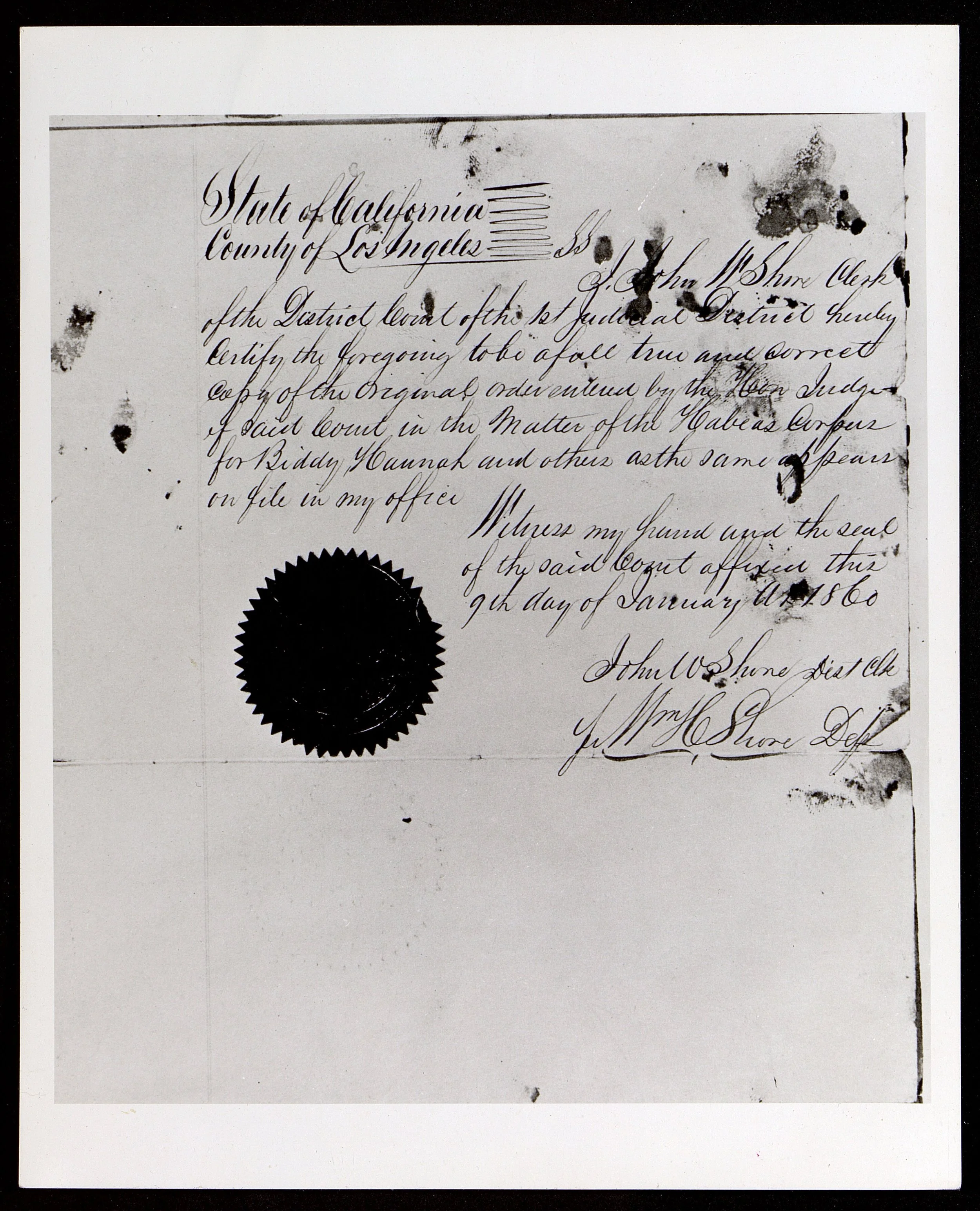
↓ VIEWS OF THE CITY BLOCK BIDDY MASON PURCHASED FOR $250 IN 1866.
After winning her freedom, she got to work building with her local community and saved enough to purchase the city blocks featured in the following photographs, preserved by the UCLA Library.

★ c. 1907 - 1908, Views of the city block that Biddy Mason purchased on November 28, 1866 for $250 (one of two lots purchased), Spring St, Los Angeles. Miriam Matthews Photograph Collection. UCLA Library Digital Collections. Local identifier, uclalsc_1889_b03_f07_003a.

★ c. 1901, Views of the city block that Biddy Mason purchased on November 28, 1866 for $250 (one of two lots purchased), Broadway at 3rd and 4th Streets, Los Angeles. Miriam Matthews Photograph Collection. UCLA Library Digital Collections. Local identifier, uclalsc_1889_b03_f07_005.
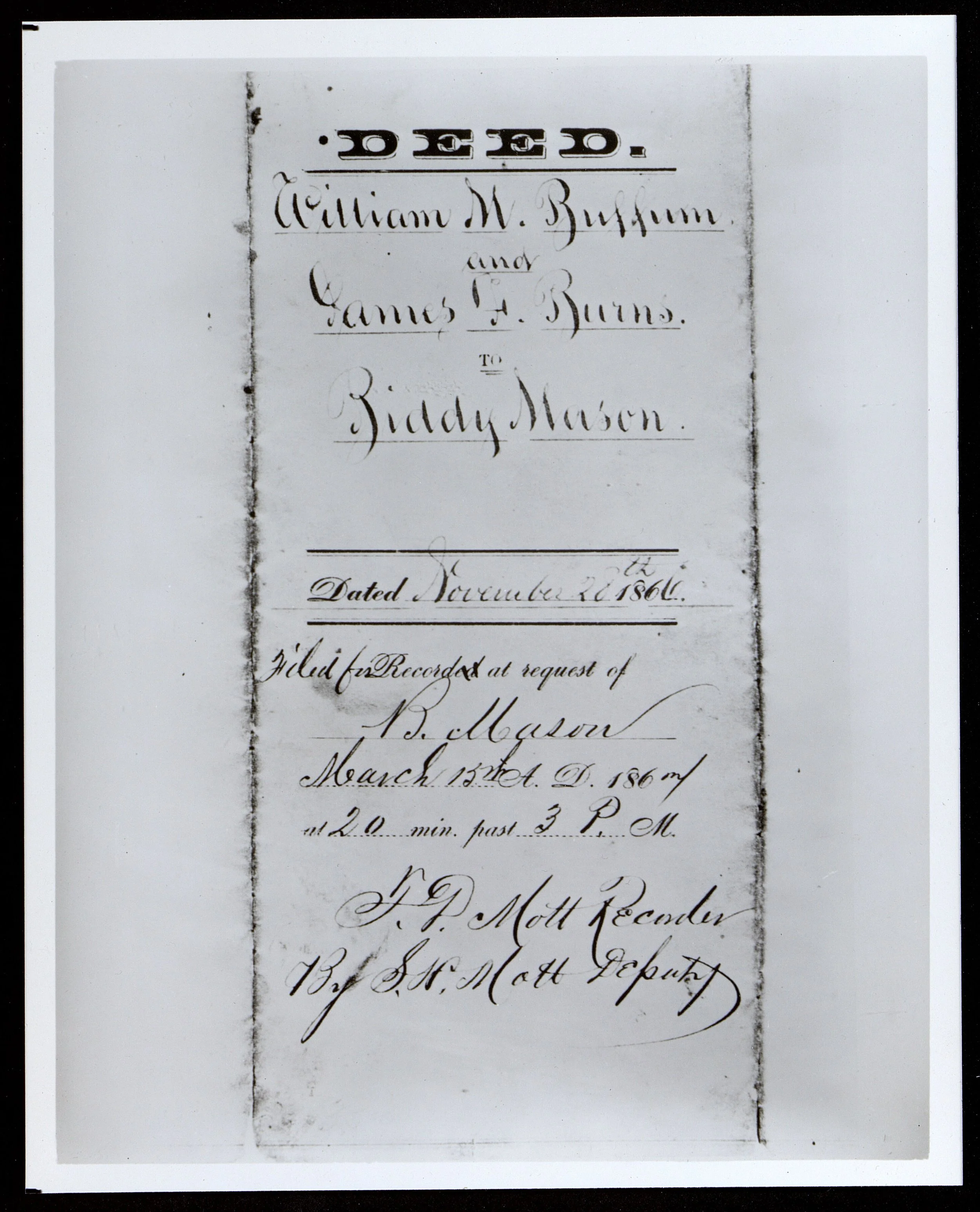
★ November 28, 1866, Biddy Mason's deed to two lots in downtown Los Angeles (photographed 1930-1989). Miriam Matthews Photograph Collection. UCLA Library Digital Collections. Local identifier, uclalsc_1889_b03_f04_002.
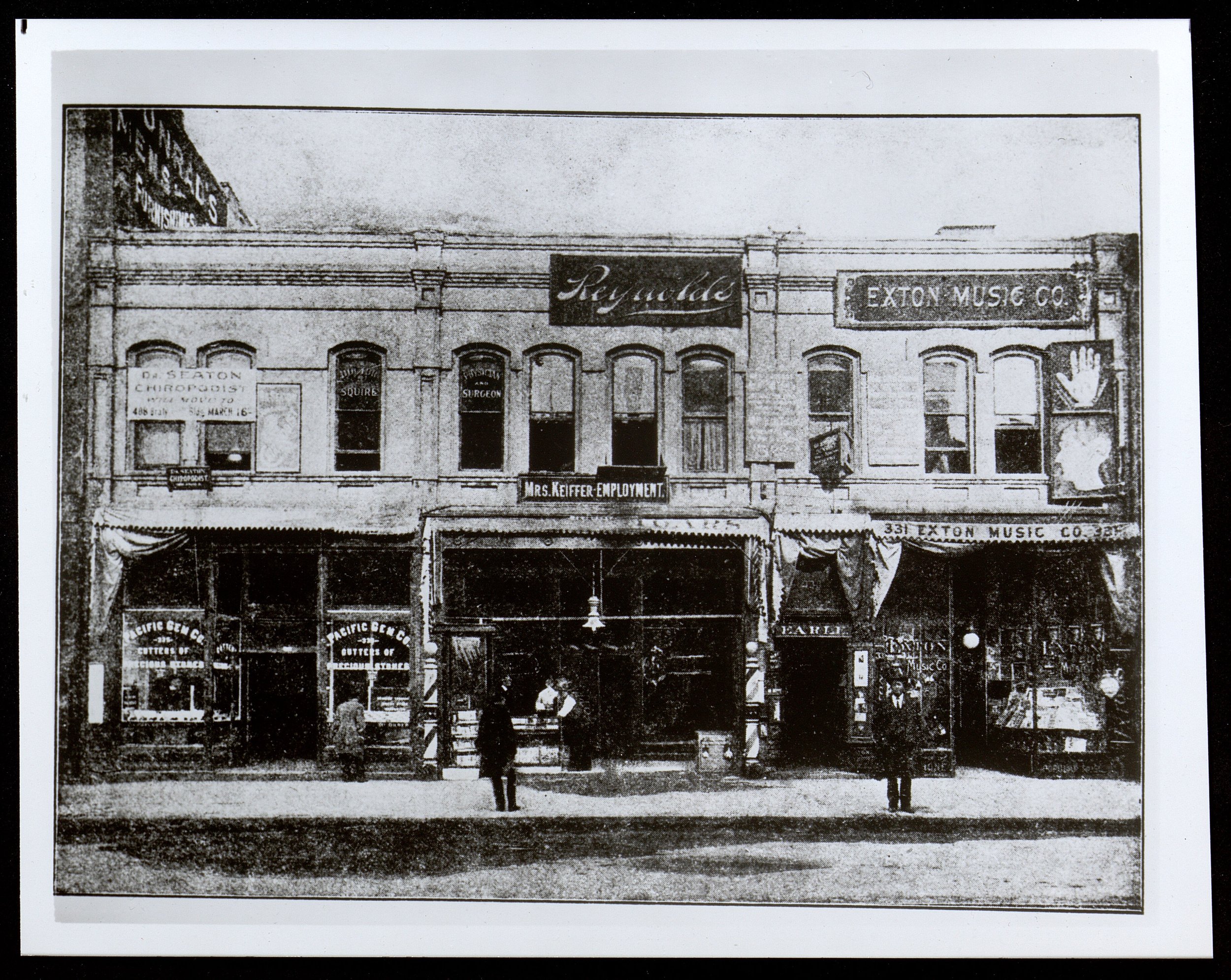
★ c. 1907 - 1908, Views of the city block that Biddy Mason purchased on November 28, 1866 for $250 (one of two lots purchased), Spring Street between 3rd and 4th Streets, Los Angeles. Miriam Matthews Photograph Collection. UCLA Library Digital Collections. Local identifier, uclalsc_1889_b03_f07_002.
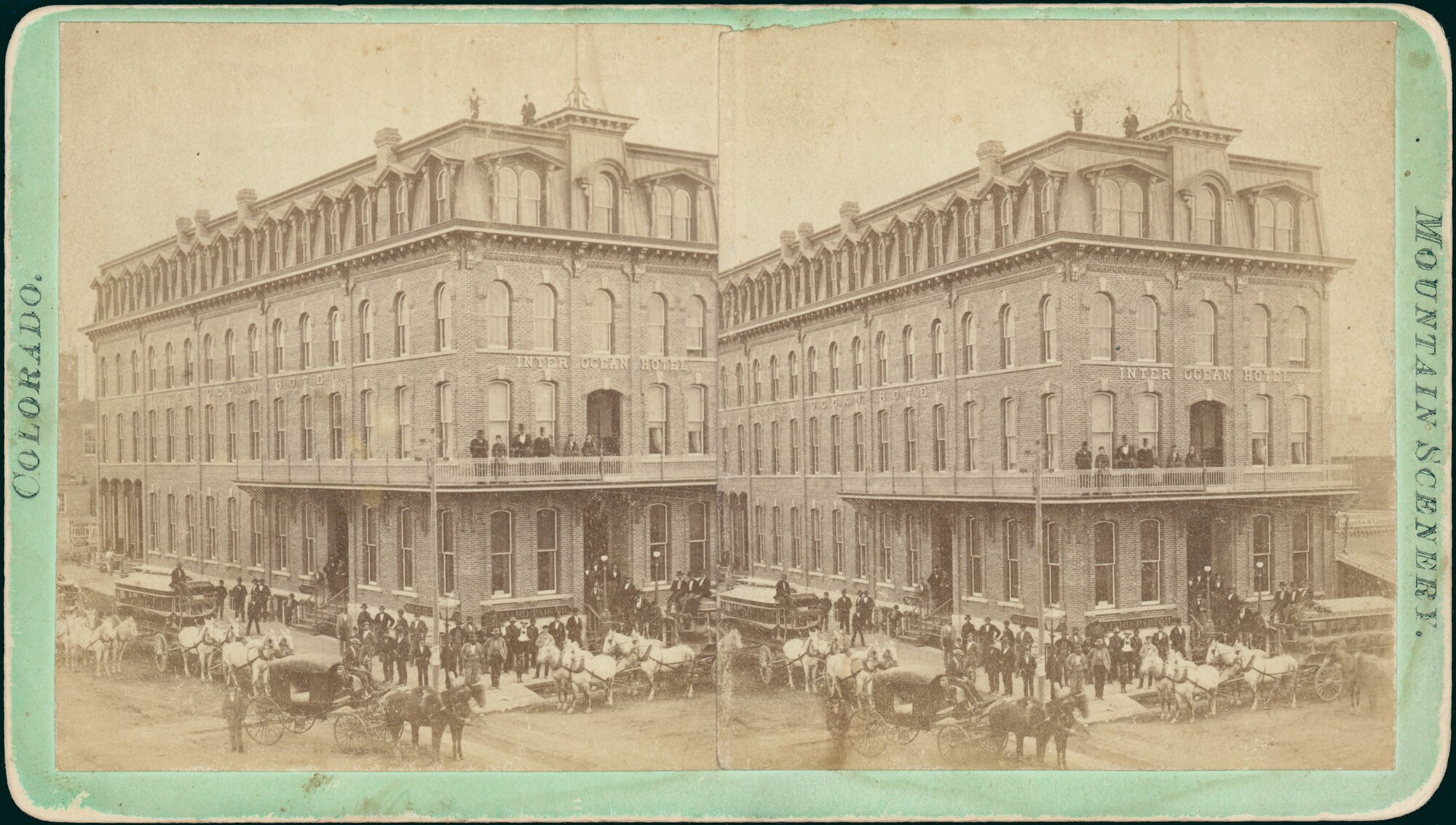
★ c. 1873-1879, Photograph of the InterOcean Hotel, Denver, Co. Denver Public Library Special Collections (Z-8871). ★ THE INTER-OCEAN HOTEL ★ Created by one of Colorado's most prominent formerly enslaved Black Businessmen, Barney L. Ford, the Inter-Ocean Hotel was in service for 100 years from 1873 - 1973. Once located at 1436 16th Street, graced the corner of 16th and Blake Streets in Denver, Colorado.
BARNEY L. Ford
1822 - 1902 | Formerly Enslaved Pioneer, Businessman, Politician, Activist.
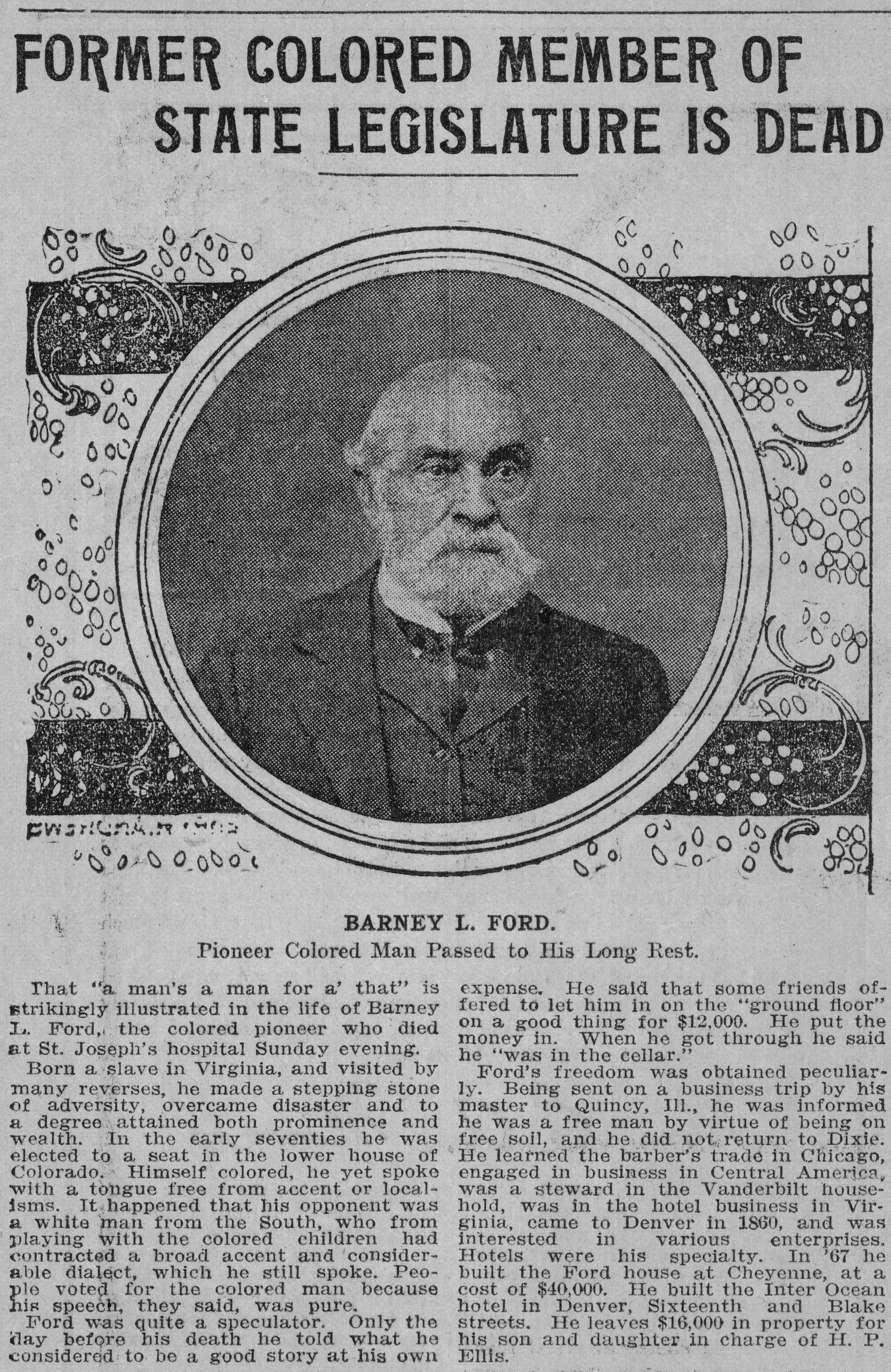
Barney Lancelot Ford was born enslaved in Virginia on January 22, 1822. He escaped enslavement and migrated to Chicago, where his wife later helped him choose the middle and last names, Lancelot Ford, in reference to the name of a steam engine. Throughout his adult life, he moved westward and opened several businesses. Along the way, he resided in Chicago and even Nicaragua for some time before settling in Colorado.
Once in Colorado, he established himself as a businessman and local politician. In 1873, he opened the InterOcean Hotel (pictured above), which operated for 100 years, from 1873 to 1973.
His home is now a museum in Breckenridge, Colorado.
★ PICTURED HERE ★
Digitized view of the December 17, 1902 newspaper article, “Former Colored Member of State Legislature is Dead.” Denver Rocky Mountain News.
★ ENTERPRISE, READING + RESOURCE LIST ★
★ Jean Blackwell Hutson General Research and Reference Division
African American Women of the Old West / by Tricia Martineau Wagner (2007) / Call No. Sc E 08-1.
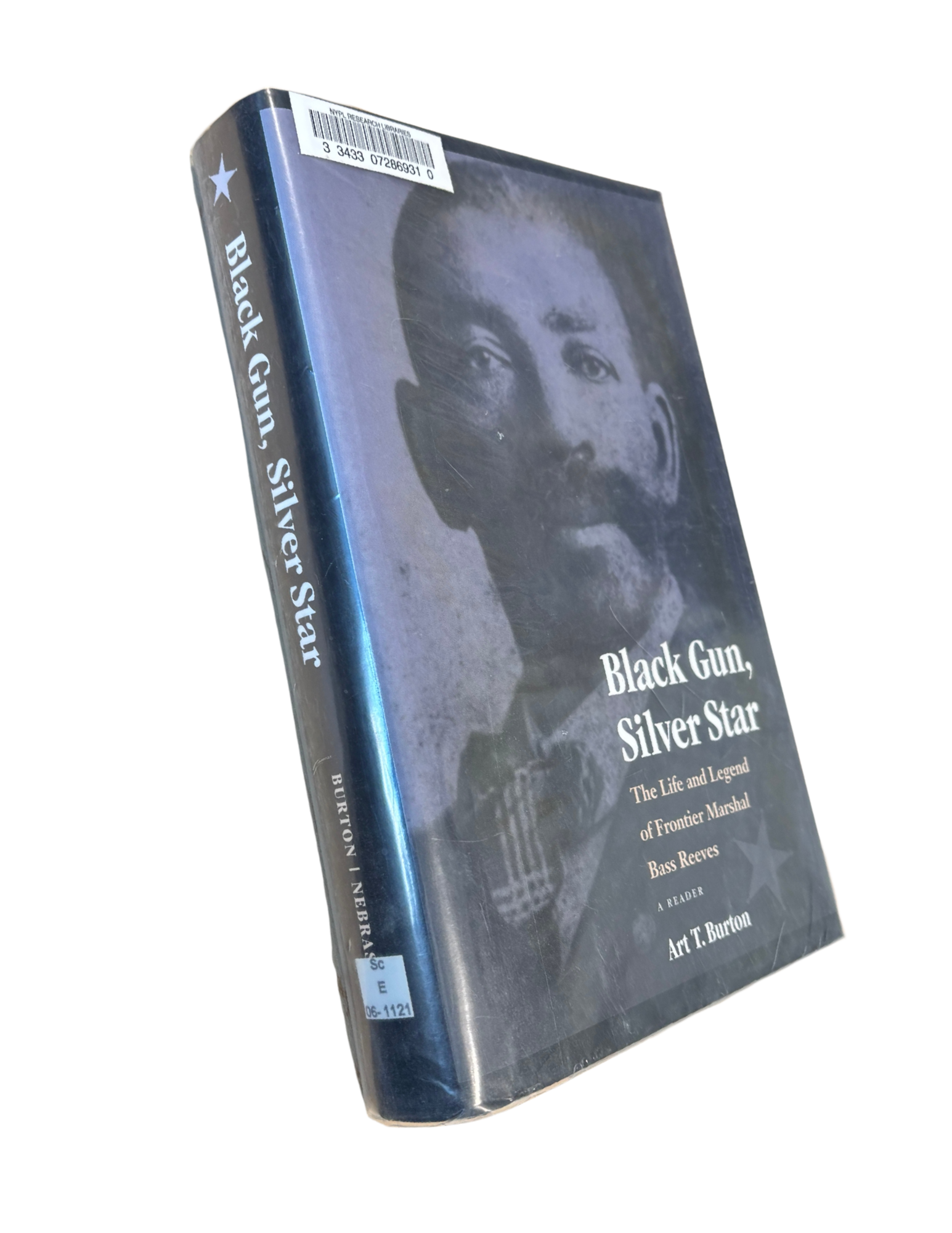
Black Gun, Silver Star: The Life and Legend of Frontier Marshal Bass Reeves / by Art T. Burton (2006) / Call No. Sc E 06-1121.
Barney Ford, Black Baron / by Marian Talmadge and Iris Gilmore (1973) / Call No. Sc B-Ford (Talmadge, M. Barney Ford).
Mister Barney Ford: A Portrait in Bistre / by Forbes Parkhill (1963) / Call No. Sc B-Ford (Parkhill, F. Mister Barney Ford).
Black Moses: A Saga of Ambition and the Fight for a Black State / by Caleb Gayle (2025) / Call No. Sc E 25-384.
Racial Encounters in the Multi-Cultural West / edited with introductions by Gordon Morris Bakken and Brenda Farrington (2000) / Call No. Sc E 04-1433.
African American Women Confront the West: 1600 - 2000 / by Quintard Taylor and Shirley Ann Wilson Moore (2003) / Call No. Sc E 03-1092.
“Aunt” Clara Brown: Story of a Black Pioneer / by Kathleen Bruÿn (2070) / Call No. Sc 917.88-B (Bruÿn, K. "Aunt" Clara Brown).
Race and the Wild West: Sarah Bickford, the Montana Vigilantes, and the Tourism of Decline, 1870-1930 / by Laura Joanne Arata (2020) / Call No. Sc E 21-849.
Notable Southern Californians in Black History / by Robert Lee Johnson (2017) / Call No. Sc E 17-937.
★ ONLINE READING
“African American Women on the Western Frontier,” by Rodger D. Hardaway, Negro History Bulletin, vol. 60, no. 1, 1997, pg. 8-13 (Available via JSTOR).
“American Daughters: Black Women in the West” by Glenda Riley, Montana: The Magazine of Western History, Vol. 38, No. 2 (Spring, 1988), pp. 14-27 (Available via JSTOR).
“From Esteban to Rodney King: Five Centuries of African American History in the West,” by Dr. Quintard Taylor, Montana: The Magazine of Western History, Vol. 46, No. 4 (Winter, 1996), pp. 2-23 (Available via JSTOR).
*CLICK ANY IMAGE BELOW ⇩ to continue exploring related photographs + resources.